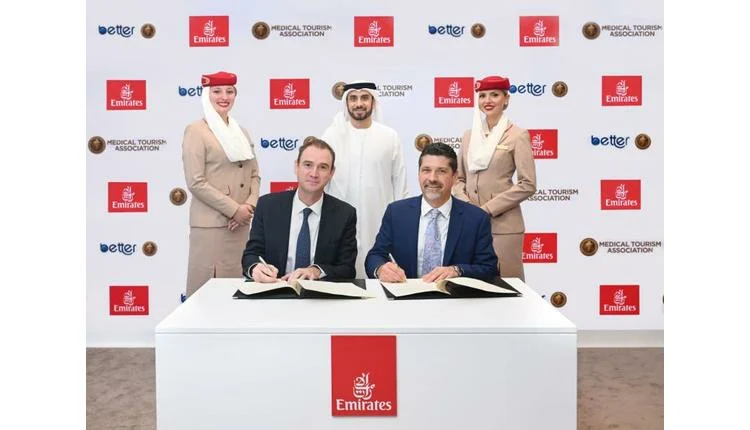
Emirates has formalised its push into medical travel with a memorandum of understanding signed with the Medical Tourism Association (MTA) on 17 September 2026. The agreement positions the Dubai-based carrier to serve as the preferred airline for international patients, building on the emirate's growing reputation as a healthcare hub and the airline's network of nearly 140 destinations.
The move marks a deliberate strategic expansion beyond leisure and corporate flying into a segment that Emirates' deputy president and chief commercial officer, Adnan Kazim, says is becoming one of the most significant drivers of international travel. "Healthcare is among the most important reasons people travel internationally and is growing significantly," Kazim said in a statement.
Targeting medical travel corridors
Under the partnership, Emirates and MTA will identify key markets and medical travel corridors across Africa, Asia, and the Middle East. The airline will develop tailored travel solutions for patients, referring physicians, insurers, and employers, aiming to streamline the entire journey from booking to treatment.
Jonathan Edelheit, CEO and founder of MTA, said the collaboration provides "a direct path from a global airline to accredited providers," reducing friction for international patients. The initiative also seeks to raise international best practices and standards across the medical travel sector, with Emirates aspiring to become the world's first Global Healthcare Accreditation (GHA)-accredited airline.
MTA's network reaches more than 500,000 healthcare providers and industry leaders, giving Emirates a broad channel to coordinate treatment and travel arrangements. The airline expects the partnership to facilitate seamless medical travel experiences for millions of prospective travellers annually.
The announcement comes as Dubai continues to strengthen its position as a medical tourism destination, with investments in specialised hospitals and wellness facilities. Emirates' extensive route network, including connections through its Dubai hub, is central to the strategy, offering patients access to accredited providers across multiple continents.
For travel agents and healthcare facilitators, the partnership could open new opportunities to package medical trips with Emirates' premium cabins and loyalty programme. The airline has been expanding its ancillary services, including recent additions to its payment options, such as the UAE's Jaywan card scheme, which may appeal to international patients.
Industry observers note that medical tourism is a growing niche for full-service carriers, with competitors like Singapore Airlines and Qatar Airways also investing in healthcare-related travel products. Emirates' move, however, is notable for its explicit focus on accreditation and its partnership with a dedicated medical travel association.
The MoU also aligns with broader trends in the travel industry, where wellness and medical travel are increasingly seen as high-yield segments. As older travellers embrace mobile booking, airlines are adapting their digital tools to cater to more complex itineraries, including medical appointments.
Emirates' partnership with MTA is expected to be rolled out in phases, with initial focus on training staff, developing dedicated booking channels, and promoting accredited providers. The airline has not yet disclosed specific financial targets or route-level plans, but the agreement signals a long-term commitment to the sector.
Travel management companies and corporate travel buyers may also benefit, as the partnership could lead to specialised products for employees requiring medical care abroad. Emirates' global sales team is likely to work closely with MTA's network to identify corporate and insurance-linked demand.
The development comes as Dubai's travel market rebounds, with events like the Arabian Travel Market expanding and Gulf carriers restoring networks. Emirates' medical tourism push adds another dimension to its commercial strategy, potentially setting a benchmark for other airlines in the region.