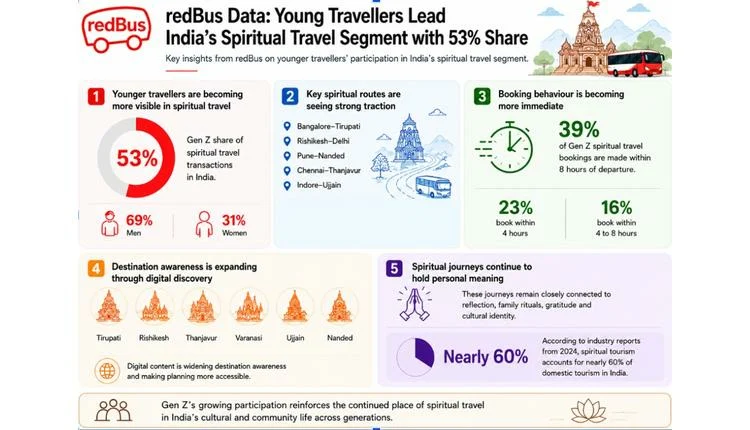
India’s spiritual tourism sector is undergoing a demographic shift, with Gen Z travellers now accounting for over 53% of bookings to religious destinations, according to data from redBus, the world’s largest online bus ticketing platform. The figures for financial year 2026 mark a notable increase from the previous year, challenging the long-held assumption that spiritual travel is primarily the domain of older generations.
Key Routes and Booking Behaviour
Popular corridors such as Bangalore–Tirupati, Hyderabad–Tirupati, and Rishikesh–Delhi are seeing a surge in young travellers. The Bangalore–Tirupati route, in particular, has experienced a significant influx, underscoring the enduring appeal of established pilgrimage circuits. The ease of digital booking and improved connectivity are enabling these journeys, making it simpler for younger demographics to plan trips on the go.
Booking patterns are also evolving. The proportion of tickets purchased within four hours of departure has climbed from 16% in 2022 to 23% in 2026, reflecting a growing comfort with last-minute travel planning. This trend is driven by mobile-first access and the spontaneity that digital platforms afford.
Digital discovery is playing a pivotal role in broadening awareness of spiritual destinations. Through travel videos, community experiences, and social media content, places like Tirupati, Rishikesh, and Varanasi are gaining visibility among younger audiences. This digital engagement is not altering the spiritual purpose of these journeys but is enhancing accessibility and planning convenience.
Industry reports from 2024 indicate that spiritual tourism accounts for nearly 60% of domestic tourism in India, highlighting its enduring significance. As Gen Z continues to engage with this segment, the sector is gaining broader visibility, supported by digital tools and intergenerational relevance.
For travel professionals, this shift presents opportunities to tailor offerings for younger travellers. Airlines such as IndiGo and Air India, which have recently adjusted summer capacity, may need to consider route adjustments to accommodate demand on spiritual corridors. Meanwhile, hospitality players like Ekostay are exploring sustainable alternatives to traditional hotels, which could appeal to eco-conscious Gen Z pilgrims. The broader trend of domestic travel dominance in India for 2026, as noted in recent industry analysis, further reinforces the importance of spiritual tourism as a key driver.
As digital booking platforms and social commerce reshape travel distribution, the influence of younger travellers on spiritual routes is likely to grow. Travel-tech vendors and agents should monitor these behavioural shifts to capture the spontaneous, mobile-first booking patterns that define this demographic.