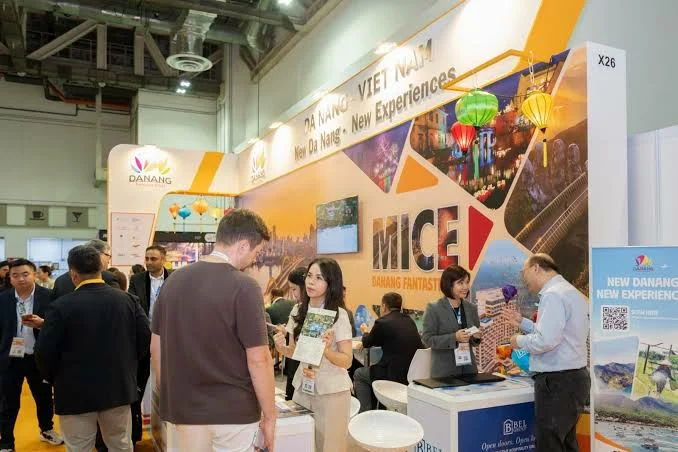
As ITB Asia 2026 convenes at Marina Bay Sands in Singapore, the global travel industry is recalibrating its focus toward the Asia-Pacific region. Far from a simple recovery narrative, APAC is now asserting itself as the primary engine of international travel demand heading into the final quarter of the year.
Projections from industry analysts point to a staggering US$400 billion in corporate travel spending across the region during Q4 alone. Meanwhile, APAC travelers are showing a 50 percent higher intent to increase their holiday budgets compared to their Western counterparts, according to data presented at the show.
Structured intent makes a comeback
After years of erratic, post-pandemic travel behavior, regional mobility has settled into predictable, high-intent seasonal rhythms. East and Southeast Asia now jointly command 31.7 percent of total global international travel demand, yet capturing these journeys requires unprecedented agility from operators.
“What we are seeing across the region isn't a drop in demand, but a fundamental collapse of the lead time,” said a senior executive from a major GDS provider, speaking on condition of anonymity. Led aggressively by outbound Chinese travelers, booking windows have squeezed to ultra-short horizons, forcing hotels and airlines to recalibrate revenue management strategies in real time.
Simultaneously, financial flexibility has emerged as a non-negotiable booking condition. Regional consumers are demanding frictionless cancellation terms and instant automated refunds, prompting travel providers to integrate sophisticated fintech modules directly into their point-of-sale systems. This trend is particularly evident in the growth of China's business travel market, which continues to solidify its global position.
Human-centred tech takes center stage
This emphasis on flexibility aligns with the core thesis of ITB Asia 2026: Experiences in Motion: Human-Centred Design in Travel & Tourism. The industry is pivoting away from dry, transactional booking engines toward holistic, hyper-personalized customer journeys.
At the co-located Travel Tech Asia event, discussions center on embedding artificial intelligence and unified cross-border payment networks directly into consumer apps. The objective is clear: strip away operational friction so the human experience remains front and center. As AI shifts from pilots to profit, travel firms are demanding measurable ROI from these investments.
MICE drives industrial stability
Beyond leisure travel, business travel and MICE remain the region's economic bedrock. Destination marketing budgets across major financial capitals are heavily prioritized around corporate gatherings, shielding the sector from wider macroeconomic headwinds.
Regional heavyweights are leveraging Q4 momentum to stake their claims on long-term luxury and business markets. Vietnam's Sun Group, for instance, is using the ITB Asia platform to position Phu Quoc as a premier MICE hub ahead of the APEC 2027 summit, alongside rolling out its Visit Vietnam digital portal. Meanwhile, primary gateways like Singapore continue to anchor high-capacity business traffic, proving that APAC's momentum is built on solid infrastructure as much as consumer enthusiasm.
The trend is not limited to Southeast Asia. Across the region, K-pop tours are driving record travel demand, adding a cultural dimension to the region's appeal. This cultural pull is complemented by the rise of boutique river cruises, which are outpacing the ocean sector as travelers seek more intimate itineraries.
As Q4 approaches, the message from ITB Asia is clear: the Asia-Pacific travel market is not just recovering—it is redefining the rules of engagement. For airlines, hoteliers, and tour operators, the imperative is to adapt to shorter lead times, embrace fintech-enabled flexibility, and prioritize human-centred design in every customer interaction.