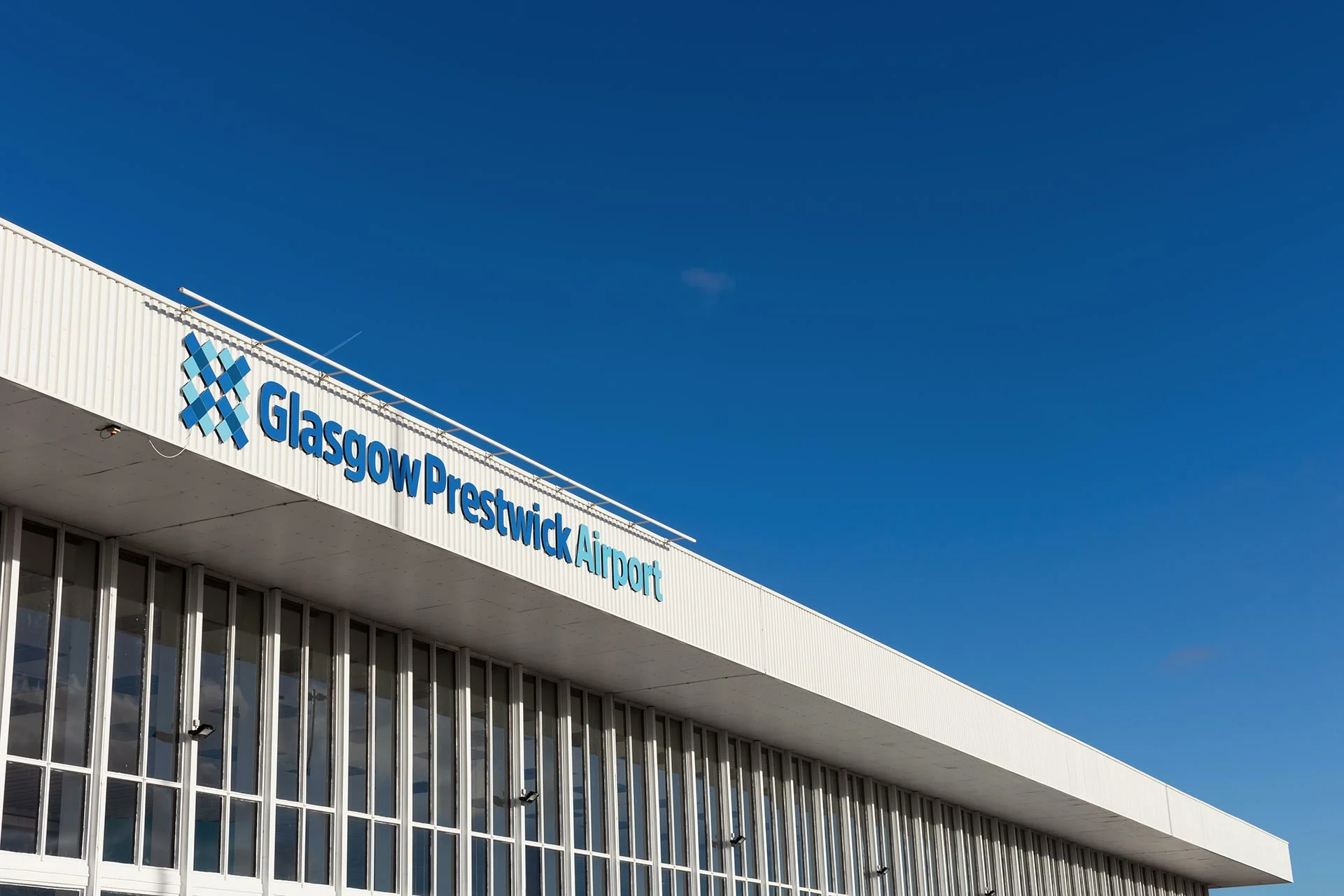
Glasgow Prestwick Airport has reported an operating profit of $4.8 million (£3.9 million) for the fiscal year ending 31 March 2026, an 11% increase year-on-year. This marks the airport's seventh consecutive year of profitability, a milestone that underscores its transformation into a key logistics and passenger hub for Scotland.
Cargo Growth Drives Financial Performance
The primary engine behind Prestwick's financial success has been its cargo operations. Freight volumes have surged to over 46,000 tonnes, quadrupling from previous levels. The airport has cemented its position as a leading UK gateway for air freight to Asia, with Air China Cargo significantly increasing its service frequencies. A newly launched seafood export service, supported by investments in a dedicated cool chain centre and a specialist handling team, has further boosted cargo throughput.
“Cargo has been the primary driver of growth during the year,” said Jules Matteoni, CEO of Glasgow Prestwick Airport. The cool chain investment is particularly strategic for Scottish exporters of perishable goods, including seafood and whisky, which require temperature-controlled logistics to reach markets in Asia and beyond.
Passenger Traffic and Route Expansion
On the passenger side, the airport handled over 600,000 travellers in FY2026, an 11% increase. Ryanair, the dominant carrier at Prestwick, has added frequencies on existing summer routes and announced a new winter route for 2026, further expanding connectivity from the west of Scotland. While the airport remains heavily cargo-focused, the steady passenger growth signals balanced development.
This growth has translated into job creation: Prestwick now employs more than 500 people, with over 200 new positions added during the year. The airport's workforce expansion reflects its broader role in the regional economy.
Military and Strategic Partnerships
Glasgow Prestwick continues to support UK military operations, handling aircraft from NATO-aligned countries. Notably, the Ministry of Defence has relocated its Voyager fleet to Prestwick for five months while RAF Brize Norton undergoes airfield improvements. This arrangement highlights the airport's strategic value beyond commercial aviation.
Chair Dr Willie Mackie emphasised the airport's role as a major trade hub and gateway for Scottish exports. “Our success is a testament to the dedication of our staff and the trust placed in us by our partners,” he said. With ongoing investments in infrastructure and expanding international connectivity, Prestwick is well-positioned for another year of sustainable growth.
Broader Industry Context
Prestwick's performance comes amid a period of robust investment in airport infrastructure across the Asia-Pacific and Middle East regions, where capital expenditure has reached $240 billion, as highlighted at the recent PTE Asia debut in Singapore. While Prestwick operates on a smaller scale, its focus on cargo and niche passenger routes mirrors trends seen at secondary airports globally that are leveraging freight growth to diversify revenue.
For travel professionals, Prestwick's trajectory offers a case study in how secondary airports can thrive by specialising in cargo logistics while maintaining a viable passenger operation. The airport's success also aligns with broader European tourism trends: despite geopolitical headwinds, European arrivals grew 5% in the first half of 2026, according to industry data. Prestwick's ability to capture both cargo and passenger demand positions it as a resilient player in Scotland's travel infrastructure.
As the airport looks ahead, its continued investment in cool chain facilities and route development will be critical to sustaining momentum. For airline executives and cargo operators, Prestwick represents a reliable partner for transatlantic and Asian freight, while tour operators and agents can expect growing leisure options via Ryanair's expanding network.