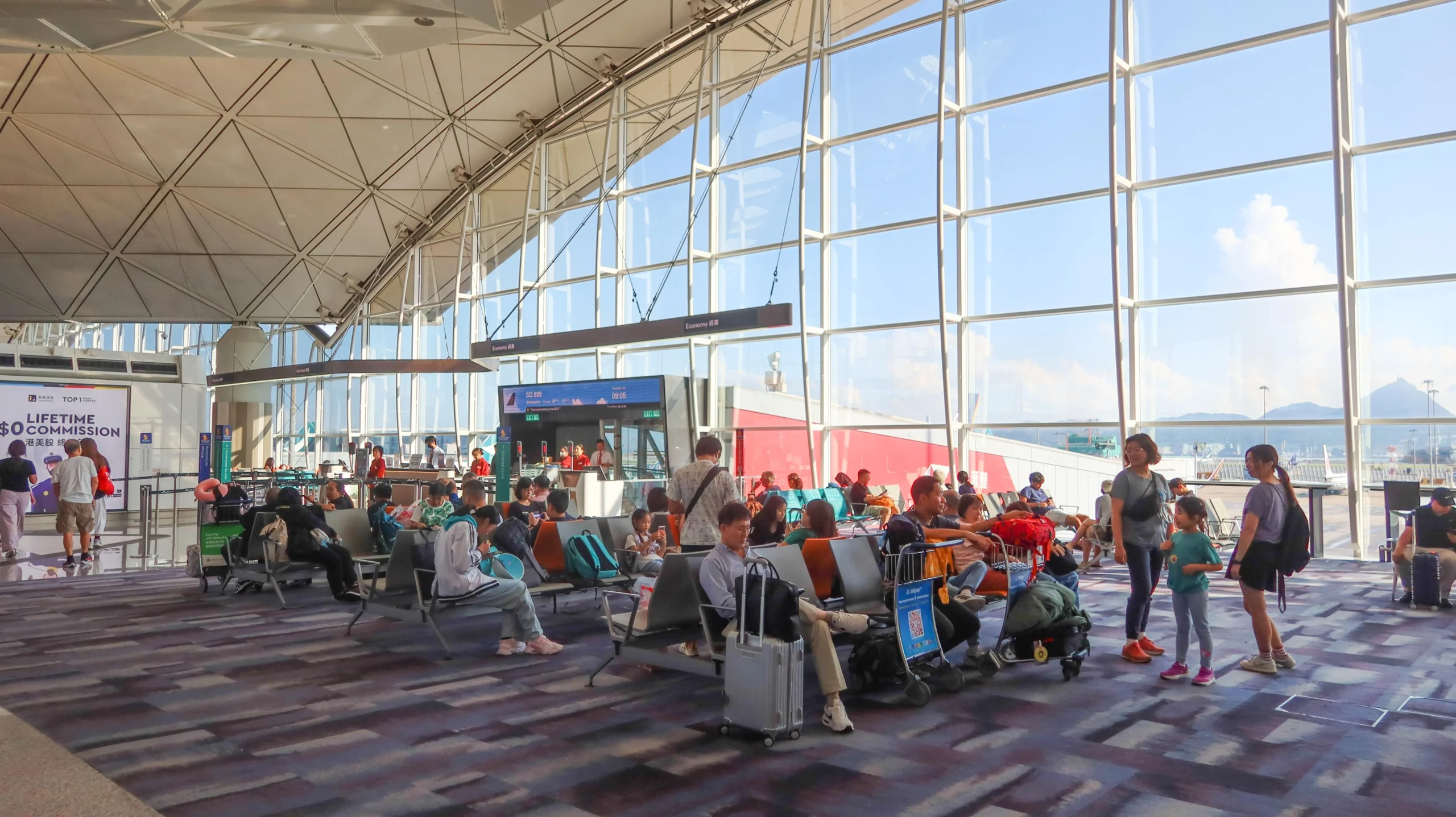
China's 2026 Golden Week is proving to be more than a seasonal surge, with an unusually long holiday encouraging travellers to stay abroad longer, travel further, and combine multiple destinations in a single trip. The Mid-Autumn Festival fell on September 25, immediately ahead of the National Day holiday (October 1–7), allowing workers taking three days of annual leave to create a break of up to 13 days.
Trip.com Group reports that outbound departures began building from September 25, with the average trip length exceeding nine days. More than half of outbound flight bookings were for departures before October 1, as travellers sought to maximise the extended holiday. The longer window is translating directly into longer stays: overseas hotel bookings for stays of seven nights or more jumped 123% year on year, while bookings for multi-destination itineraries increased 84%.
Long-haul demand accelerates
The shift is particularly visible in long-haul travel. Long-haul flight bookings are expected to record double-digit year-on-year growth, with demand concentrated around gateway cities in Europe, Australia, and the United States. Travel agencies report strong demand for long-haul itineraries covering Europe, Central Asia, Australia, and New Zealand. Reuters reported that long-haul packages to Spain and Portugal, the Balkans, Northern Europe, Greece, and New Zealand had sold out by mid-August, while routes to Central Asia, the Caucasus, and Australia also filled ahead of schedule.
Travellers are also using the additional days to see more than one destination. Trip.com Group recorded an 84% year-on-year increase in multi-destination itineraries, with popular combinations including Singapore–Bali, Hong Kong–Sydney, and Amsterdam–Milan. This trend aligns with broader shifts in China's outbound travel market, where travellers are seeking more complex and value-conscious journeys.
Seoul leads destination demand
Seoul ranked as the top overseas holiday destination, with international flight bookings up 91% year on year. Demand is also spreading beyond South Korea's capital, with flight bookings to Busan, Cheongju, and Daegu recording triple-digit growth. Japan remains another major regional destination, while overlapping holiday calendars are creating additional opportunities for travel across East Asia. This year's Mid-Autumn Festival also coincides with South Korea's Chuseok holiday, helping to stimulate regional travel exchanges.
A travel boom, but not necessarily a spending boom
More trips do not automatically mean proportionately higher spending. Last year's Golden Week provides a useful benchmark. During the eight-day 2025 holiday, China recorded 888 million domestic tourist trips, while tourism spending reached RMB809 billion (US$113.52 billion), according to China's Ministry of Culture and Tourism, as reported by Reuters. But Reuters' 2026 analysis of government data found that average spending per trip during last year's Golden Week fell to a three-year low of RMB911.04, illustrating the gap between strong travel volumes and consumer spending.
Chinese consumers continue to show strong demand for travel but remain careful about how much they spend. Mid-range accommodation is proving more popular than luxury options, while travellers are paying greater attention to value for money. This cautious spending pattern is a key consideration for hoteliers and tour operators looking to capture this market.
The shift is also being reflected by airlines. According to The Star, Malaysia Airlines expects to carry more than 52,000 passengers across its China network during the Golden Week travel period from September 26 to October 11, up 21% year on year. The airline now serves nine gateways in China, highlighting the growing importance of air connectivity as Chinese travellers take longer and more geographically diverse trips. This follows the recent codeshare expansion between Malaysia Airlines and China Southern, which adds five routes to their partnership.
What the trend means for destinations
Longer stays, multi-destination itineraries, and stronger long-haul demand are creating more opportunities for airlines, hotels, and destinations to capture value across the entire journey. For destinations, the challenge will be to convert longer travel windows into longer stays and meaningful experiences, while offering enough value to appeal to increasingly price-conscious travellers. As Singapore leads Southeast Asia in China travel searches, destinations across the region are vying for a share of this evolving market.
China's Golden Week is consequently becoming an important indicator of the next phase of outbound travel: not simply more Chinese travellers abroad, but longer, more complex, and increasingly value-conscious journeys. For travel professionals, adapting to this new reality will be key to capturing the opportunities presented by this evolving traveller profile.