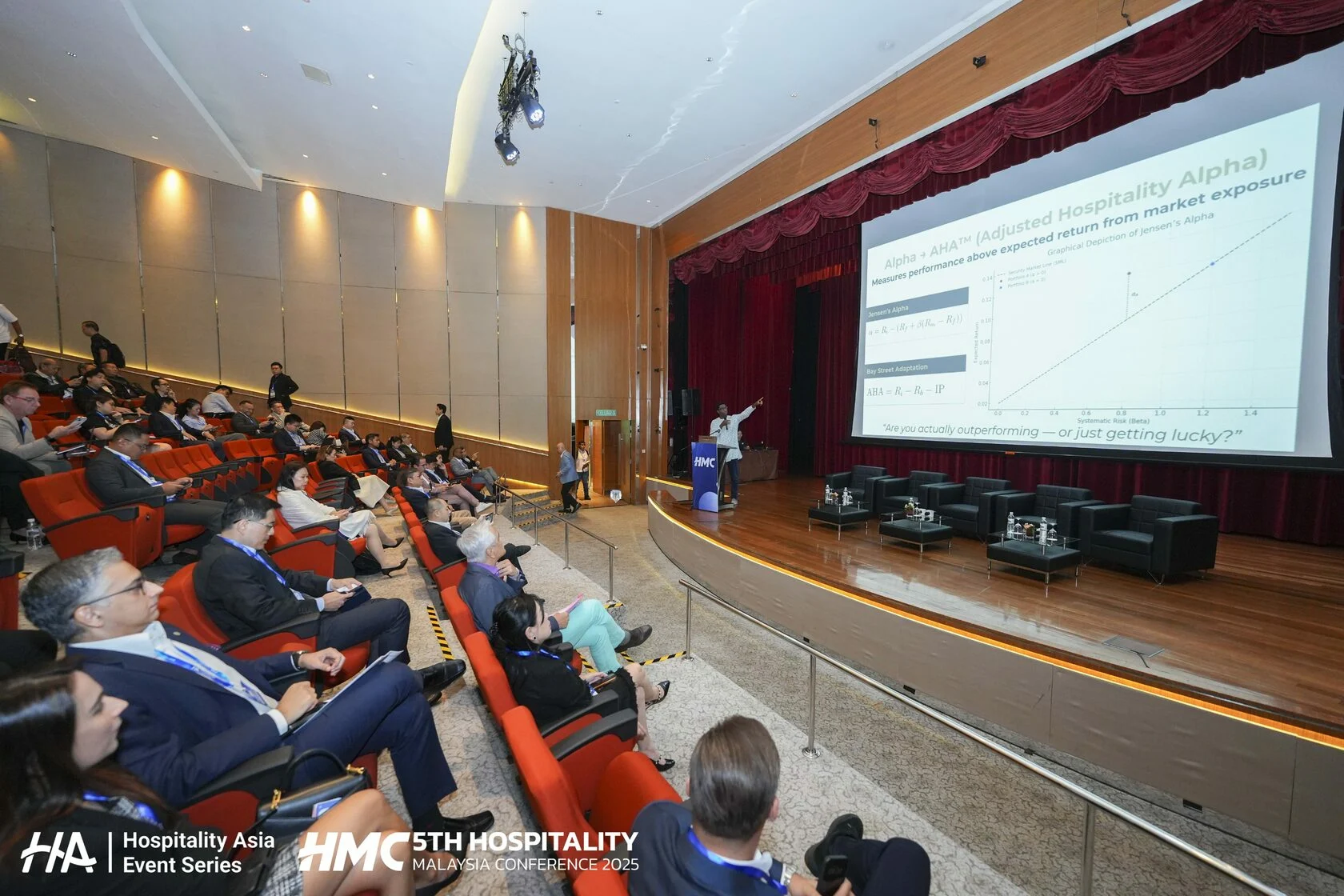
Hospitality Asia is set to host the 6th Hospitality Malaysia Conference (HMC) on 24 June at the Connexion Conference & Event Centre in Kuala Lumpur. The event brings together senior executives from Malaysia's hospitality and real estate sectors to address shifting investor appetites, architectural innovation, and the digital-first revenue landscape reshaping the industry.
Organised by Hospitality Asia, HMC 2026 positions itself as a strategic war room for the region. With over 30 sessions, more than 40 expert speakers, and around 400 pre-qualified delegates, the conference aims to bridge the gap between strategic ambition and operational performance in a post-growth era.
Three Summits for Specific Growth Sectors
This year's conference is structured around three concurrently running summits, each focused on a critical pillar of hospitality: investment, design, and revenue.
Hotel Investment Summit Malaysia
This summit explores how capital strategy aligns with market reality amid complex economic currents. Key discussions include aligning capital allocation with national tourism goals, modernising economy and mid-scale properties, and navigating the rise of branded residences and alternative credit. Panels will dissect capital alignment for VMY 2026, evaluate strategic reinvestment versus property conversion, and explore how ESG-driven hotels are gaining a competitive edge. Experts will also deliberate on shifting from traditional ownership to branded lifestyle destinations, private equity options, and unlocking value through hotel-led mixed-use ecosystems.
Hotel Design Summit Malaysia
Focusing on spatial evolution, this summit brings together leading architects, interior designers, and brand curators. Sessions explore how form, function, and operational value must integrate seamlessly to create hospitality assets that showcase regional integrity and long-term staying power. Interactive panels will move beyond fleeting aesthetic trends to deliver deep emotional and local identity. Designers and developers will debate purposeful spatial design, structural transformations for property conversions, and the specialised architectural demands of integrating global brand identities into local mixed-use assets.
Hotel Revenue Summit Malaysia
Unpacking the commercial battleground of modern hospitality, this summit focuses on data, pricing strategies, tech innovation, and digital guest experiences. Commercial leaders will share predictive tools and models designed to maximise profitability, build smarter systems, and navigate a volatile distribution market. Targeted panels address commercial agility and value over volume in a shifting demand environment. Revenue leaders and tech innovators will collaborate to analyse modern pricing strategies, optimise direct booking channels, and leverage data analytics to streamline F&B and hotel operations for maximum profitability.
The speaker roster includes Reagan Chan (Khazanah Nasional Berhad), Paul D Volodarsky (DFDL), Dr Sri Ganesh Michiel (Malaysia Budget & Business Hotel Association), Harriet Hoong (Meliá Hotels International), Justin Chen (Else Hotel KL), Chris Legaspi (Archipelago International), Steve Tjen (Radisson Hotel Group), Chuiling Lee (JLL | Hotels & Hospitality Group, Asia Pacific), Bastien Touzeau (Hyatt Hotels Corporation), and Viona Zhang (C9 Hotelworks Company Limited).
This conference arrives at a critical moment for the global hospitality sector. Over the past several months, shifting investor appetites, bold architectural revolutions, and a digital-first revenue landscape have demanded fresh approaches. HMC 2026 aims to provide the platform for industry leaders to confront these changing realities and design the future of hospitality in a resilient, post-growth era.
For travel professionals tracking the region's hospitality evolution, the event offers a concentrated look at how Malaysia — and broader Asia — is adapting to new market dynamics. The three-summits format ensures that attendees from investment, design, and revenue backgrounds can dive deep into their specific areas of interest while still benefiting from cross-sector insights.