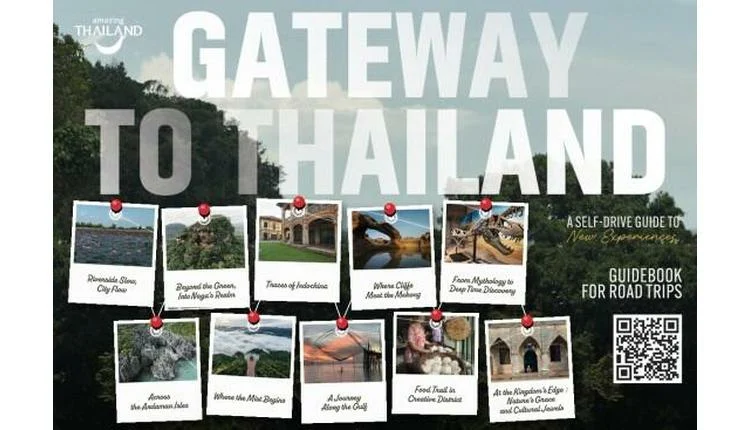
The Tourism Authority of Thailand (TAT) has introduced its latest initiative to tap into the growing overland travel segment: the “Gateway to Thailand” guidebook. Designed specifically for self-drive visitors, the publication outlines 10 curated road trips that begin at nine border crossings, including Nong Khai, Mukdahan, and Nakhon Phanom. The routes weave through 19 provinces, offering a mix of scenic landscapes, cultural heritage, and authentic local experiences.
With a focus on neighboring markets, TAT is targeting road-trippers from Laos and Malaysia, who already form a significant share of Thailand’s overland arrivals. The guidebook is part of a broader strategy to disperse tourism benefits beyond the traditional hubs of Bangkok, Phuket, and Chiang Mai, channeling spending into secondary destinations and rural communities.
Routes and highlights
Each itinerary in the guidebook is designed to showcase a different facet of Thailand. Travelers can follow the Mekong River scenery in Nong Khai, where the river forms a natural border with Laos, or head south to the misty mountain town of Betong in Yala, near the Malaysian frontier. The routes also highlight regional cuisine, historic landmarks, and natural attractions, giving self-drive tourists a structured yet flexible framework for exploration.
The guidebook is available in both print and digital formats. The digital edition supports five languages—Thai, English, Malay, Chinese, and Lao—and includes detailed maps, recommended stops, and activity suggestions. This multilingual approach is intended to lower barriers for international visitors, particularly those from neighboring countries who may be planning their first overland trip into Thailand.
TAT is also leveraging digital influence to promote the itineraries, partnering with travel bloggers and social media influencers who can showcase the routes to their audiences. This aligns with the authority’s ongoing push to position Thailand as a top-of-mind destination for road trips in Southeast Asia, a segment that has seen steady growth in recent years.
The initiative comes as Thailand continues to expand its tourism offerings beyond traditional beach and city breaks. Earlier this year, TAT pitched the kingdom as a wellness hub at CNN Global Perspectives in Bangkok, underscoring the country’s ambition to attract niche travelers. The new guidebook complements these efforts by providing a practical tool for a different type of visitor—the independent, overland explorer.
For travel professionals, the guidebook signals an opportunity to package road-trip itineraries for clients from Laos and Malaysia, as well as long-haul markets seeking self-drive adventures. Tour operators and travel agents can leverage the detailed routes to build customized packages that include accommodation, dining, and activities along the way.
The full itineraries and travel guides are accessible online through TAT’s digital channels, making it easy for both consumers and industry partners to download and share. As Thailand looks to sustain its tourism recovery, initiatives like “Gateway to Thailand” are likely to play a key role in driving regional traffic and supporting local economies.
With the guidebook now live, TAT is expected to roll out additional promotional campaigns in the coming months, targeting key border markets and encouraging repeat visits. The authority’s focus on overland travel reflects a broader trend across Southeast Asia, where road connectivity and cross-border tourism are gaining momentum.