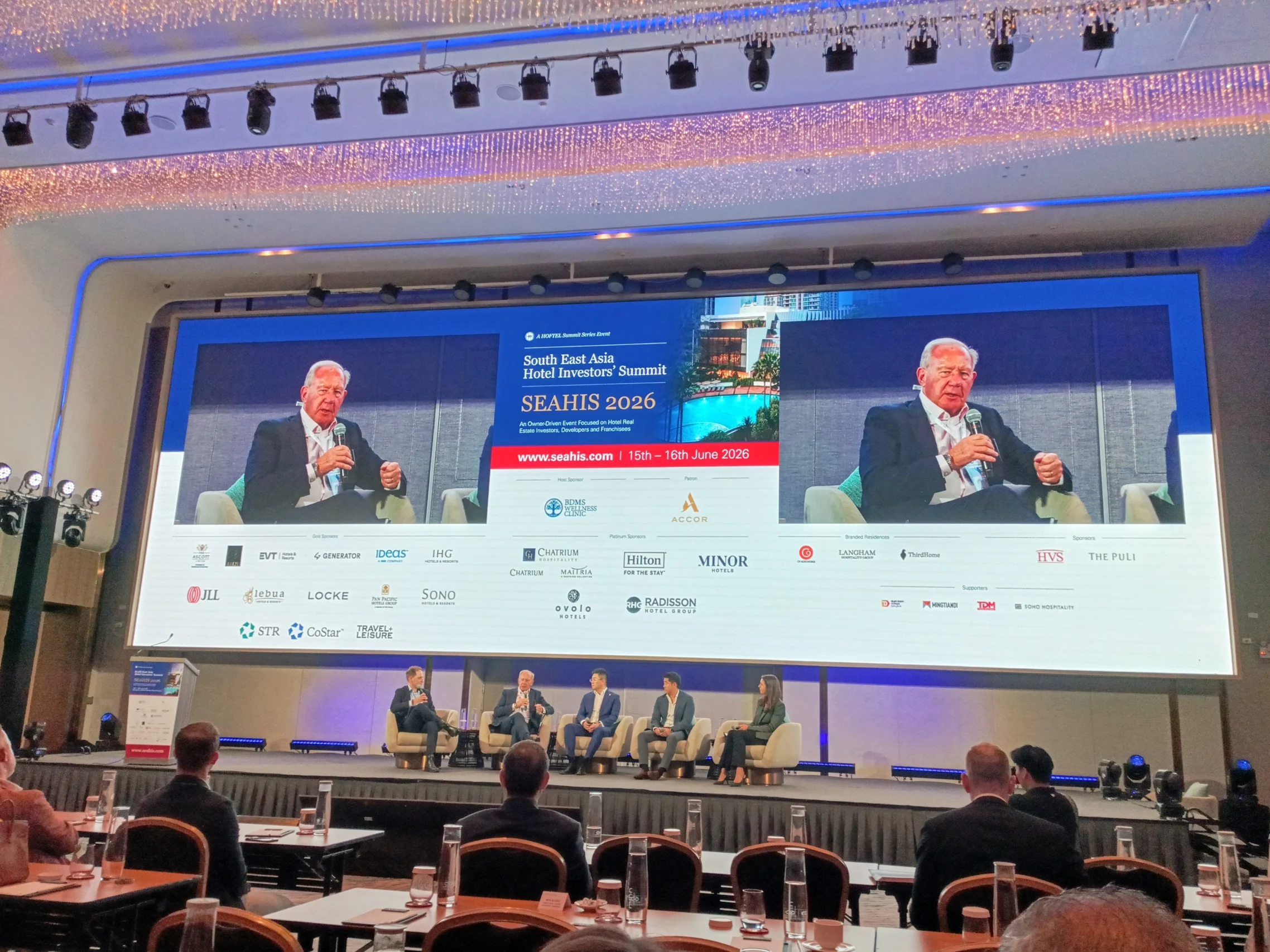
The ninth edition of HOFTEL's South East Asia Hotel Investors' Summit (SEAHIS) concluded on 16 June at the Mövenpick BDMS Bangkok Wellness Residences, drawing more than 350 hospitality, finance, and real estate professionals — surpassing the projected 250 attendees. The audience comprised 53% independent owners and investors, 14% hotel management companies (HMCs), and 40% C-suite or senior executives, reflecting the summit's focus on strategic direction for the second half of 2026.
Branded Residences: A New Value Engine
For the first time, SEAHIS dedicated a session to branded residences, led by C9 Hotelworks' Bill Barnett. The discussion underscored how integrating a hospitality brand from the outset can unlock significant residential pricing premiums and improve capital outcomes in mixed-use developments. However, panelists highlighted persistent challenges in Southeast Asia, including cross-border regulatory risks, capital movement friction, and complex ownership structures — factors that continue to temper investor enthusiasm.
Maximizing Every Square Metre
Sarinrath Kamolratanapiboon, CEO of design collective dwp, moderated a panel on extracting value from hotel properties. The conversation revealed a shift in how hospitality real estate is valued: asset worth is no longer tied solely to physical area or layout efficiency. Instead, long-term commercial success depends on designing non-hotel operating spaces — such as gastronomy venues and holistic wellness facilities — to directly enhance guest experience and operational performance.
The Bougie Gap: Ultra-Luxury Pricing Dynamics
STR's Jesper Palmqvist introduced the concept of the "Bougie Class" — the pricing delta between standard luxury and ultra-high-end assets. His analysis showed that Paris remains the global leader in ultra-luxury premium pricing, but Tokyo is rapidly closing the gap, shifting investor attention to Asia. For retail brands and developers, financial capitals remain reliable bets, but Tokyo's trajectory over the past decade makes it the standout APAC market to watch.
Japan's Certainty vs. China's Potential
While Japan continues to offer stability, experts urged attendees not to overlook China. SC Capital Partners' Suchad Chiaranussati noted that China is now the largest hotel market in Asia-Pacific, and years of oversupply are finally correcting. "For 25 years there has been too much supply. The current economic crisis has put a stop to that construction boom," he said. As new development slows and domestic travel strengthens, he sees substantial long-term upside: "When it wakes up, when the capital is compressed, when the revenue goes up and translates into capital market gain, it will be by far the largest market, possibly in the world." Pan Pacific Hotel Group's Choe Peng Sum offered a more cautious view, noting that while domestic occupancy in China hovers around 90%, oversupply remains a drag on profitability.
Technology and the Staffing Conundrum
The ongoing labour shortage in hospitality remains a heated topic. At SEAHIS, experts pointed to agentic AI as a tool for optimizing operations and enhancing efficiency, enabling properties to maximize profitability. Yet many in the sector worry about disruption to traditional career paths. Younger workers, however, are more open to leveraging these tools. For a deeper dive, see our earlier feature on how AI is reshaping travel workforce needs.
As SEAHIS 2026 wrapped, the overarching message was clear: hotel investors in APAC must look beyond conventional metrics and embrace new value models — from branded residences and space optimization to ultra-luxury pricing strategies and technology adoption — to navigate the region's complex headwinds.