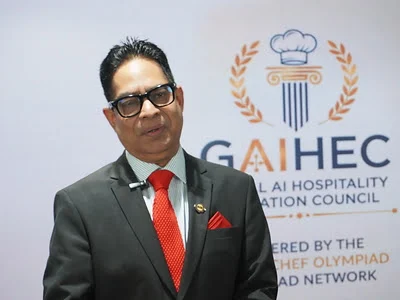
The International Institute of Hotel Management (IIHM) has established the Global AI Hospitality Education Council (GAIHEC), described as the first international body dedicated to integrating artificial intelligence into hospitality education. Announced on World AI Day, the council brings together educators, universities, and industry stakeholders from more than 60 countries to shape how AI is taught and applied in hospitality, culinary arts, and tourism programs.
GAIHEC builds on IIHM's earlier AI initiatives, including the NamAIste project and the IIHM Hospitality GPT, both designed to embed AI into hospitality learning. The council will focus on creating standardized curricula, ethical guidelines, and cross-border academic partnerships. Its philosophy, termed "HighTech Higher Touch," emphasizes that while AI will influence many aspects of hospitality, the core of the industry remains human interaction and emotional intelligence.
Industry Leaders Endorse Human-Centric AI
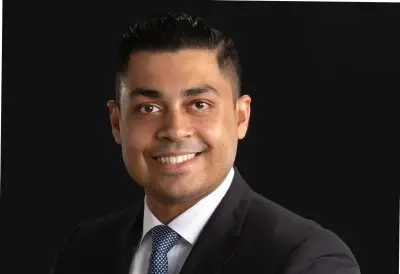
Dr. Suborno Bose, Founder and Chief Mentor of IIHM, stated: "Through GAIHEC, we are bringing together the world's leading educators and industry experts to ensure that AI becomes a force for innovation whilst strengthening the human values that define our profession." Prof. David Foskett, Chairman of the International Hospitality Council UK, added: "Hospitality will always remain a human business because the greatest intelligence is emotional intelligence."
The council has adopted the GAIHEC Manifesto, which opens membership to hospitality institutions and organizations globally. Its guiding principles include "Human First AI Empowered" and "Collaboration Over Competition." The initiative will culminate in the signing of the GAIHEC Global Charter during the Young Chef Olympiad on 8 February 2027, establishing an internationally accepted framework for AI integration in hospitality education.
This development comes as travel technology vendors increasingly deploy AI across the sector. For example, ACE Robotics recently debuted its Kairos 31 AI model at WAIC 2026, targeting hospitality and retail automation. Meanwhile, ATPCO's Architect Pricing Platform is now used by 32 airlines globally, demonstrating AI's growing role in airline revenue management.
GAIHEC's launch signals a broader industry recognition that AI education must keep pace with technological adoption. Hotel groups such as Marriott International, Accor, and Hilton have already begun integrating AI into guest services, from chatbots to predictive maintenance. Cruise lines like Royal Caribbean and MSC Cruises are using AI for personalized itineraries and onboard operations. The council aims to ensure that future hospitality professionals are equipped to work alongside these technologies without losing the human touch that defines the sector.
The council's work will also address ethical considerations, including data privacy, algorithmic bias, and the impact of automation on employment. By establishing global standards, GAIHEC hopes to prevent fragmented approaches that could create disparities in AI readiness across regions.
IIHM's move comes at a time when travel and tourism education is undergoing rapid transformation. Destinations like New York, which topped the 2026 Global Tourism City Attractiveness Index by Yanolja Research, are increasingly relying on AI to manage visitor flows and enhance experiences. The council's cross-border partnerships are expected to facilitate knowledge exchange between institutions in Asia, Europe, North America, and beyond.
For travel professionals—whether airline executives, hoteliers, tour operators, or travel agents—GAIHEC's work may eventually influence how AI tools are taught and deployed across the industry. The council's emphasis on collaboration over competition suggests a collective effort to shape AI's role in hospitality, rather than leaving it to individual companies or regions to set the agenda.