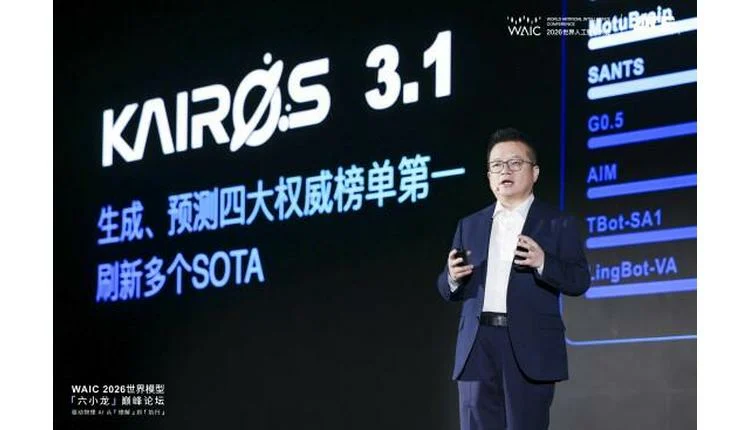
ACE Robotics has introduced its latest artificial intelligence model, Kairos 31, at the World Artificial Intelligence Conference (WAIC) 2026 in Shanghai. The model is designed to enhance robotic operations in complex, real-world environments by integrating generative physical and cognitive intelligence. This launch is part of ACE Robotics' broader strategy to expand its embodied AI stack from data collection to full deployment across commercial sectors.
Kairos 31 is built on a hybrid Transformer architecture, enabling robots to understand, reason, execute, and reflect on tasks in real time. The model supports dynamic decision-making and task execution, with applications spanning retail, hospitality, and outdoor services. Wang Xiaogang, Chairman of ACE Robotics, emphasized the stakes: "In the physical world, an incorrect action can have real consequences." The company aims to provide reliable AI models that can operate safely in environments where errors are costly.
Commercial Solutions and Industry Applications
Alongside Kairos 31, ACE Robotics unveiled the Ambient Capture Engine 2.0, a system for capturing high-density physical interaction data. The company also launched three targeted commercial solutions: Xiaoman for instant retail, Xiaoxin for hotel laundry operations, and Xiaotu for outdoor environments. These solutions are designed to integrate seamlessly into existing commercial workflows, enhancing efficiency and reducing operational pressures for businesses such as hotels, retail chains, and logistics providers.
For the hospitality industry, Xiaoxin specifically addresses the labor-intensive task of hotel laundry, which is a significant operational cost for properties ranging from boutique hotels to large chains. By automating this process, ACE Robotics aims to help hoteliers reduce turnaround times and labor expenses. Similarly, Xiaoman targets instant retail environments, such as convenience stores and kiosks, where rapid restocking and inventory management are critical. Xiaotu extends these capabilities to outdoor settings, including campus delivery and last-mile logistics.
ACE Robotics has announced partnerships with major companies, including PetroChina and SenseTime, to further develop its AI ecosystem. These collaborations will focus on integrating Kairos 31 into broader industrial and commercial applications. The company plans to deploy its solutions across 1,000 retail locations within the next year, with a target of 10,000 stores within two years. This expansion underscores ACE Robotics' commitment to advancing AI technology in practical, real-world applications.
The travel industry is increasingly looking to automation to address labor shortages and improve efficiency. For travel professionals, the deployment of AI-driven robotics in hotel operations and retail environments could streamline back-of-house processes, allowing staff to focus on guest-facing services. As the technology matures, it may also find applications in airport logistics, cruise ship operations, and destination management.
For more on how automation is reshaping travel infrastructure, see Dubai's RTA Unveils Five-Year Soft Mobility Plan to Boost Last-Mile Connectivity. Additionally, the integration of AI in hospitality aligns with trends highlighted in Wellness Tourism Association Unveils First Global Standards for Retreat Sector, where technology supports operational excellence. The broader push for industrial AI in Southeast Asia is also relevant, as noted in SCG Drives ASEAN Industrial Integration with Robotics, AI, and Cross-Border Partnerships.