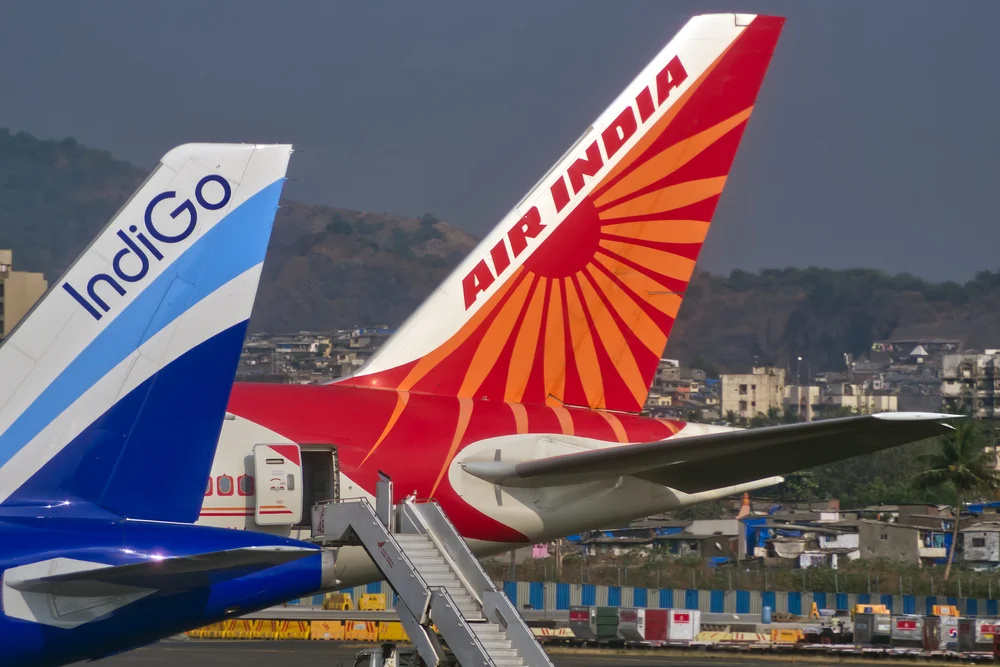
India's aviation market is entering a period of tighter capacity and rising ticket prices, as major carriers including IndiGo and Air India reduce frequencies for the June–August travel season. The moves come amid sustained pressure from elevated aviation turbine fuel (ATF) costs, airspace disruptions linked to geopolitical tensions, and broader operational constraints. For travel agencies, corporate travel managers, and destination marketers, the pricing environment is becoming more challenging even as passenger demand remains robust.
Capacity Cuts by IndiGo and Air India
IndiGo, India's largest airline by market share, has signalled a slowdown in domestic capacity growth and is trimming parts of its international network. Air India has similarly announced operational rationalisation on selected domestic and international routes, citing airspace restrictions and record-high fuel costs that affect route viability. Industry reports indicate that these reductions could tighten seat availability during the peak summer travel period, a classic supply-demand imbalance that is already pushing fares upward on multiple city pairs.
The capacity cuts follow months of disruption caused by Middle East tensions, which have forced airlines to adopt longer flight paths on some routes, increasing fuel burn and operating expenses. Airlines are also managing currency fluctuations, higher maintenance costs, and fleet deployment challenges. For travel sellers, reduced frequencies mean fewer booking options, longer connection times, and faster fare escalation, particularly on high-demand routes such as Delhi–Mumbai, Bengaluru–Delhi, and Mumbai–Dubai.
For context on how airspace disruptions affect route planning, see our coverage of Air Astana Restores Dubai Flights via Pakistan Airspace Bypass.
Fuel Costs Remain the Dominant Pressure
ATF continues to account for as much as 40% of airline operating expenses globally. The recent surge in crude oil and jet fuel prices, driven largely by tensions in West Asia, has significantly affected airline profitability. IndiGo recently reported a quarterly loss, citing soaring fuel prices, foreign exchange losses, and capacity-related challenges. The carrier also indicated that future growth will be more measured than previously anticipated.
Recognising the severity of the issue, the Indian government has approved a ₹10,000 crore fuel stabilisation mechanism designed to cushion airlines from extreme ATF price volatility. The move aims to protect connectivity while preventing a sharp escalation in airfare costs. Industry bodies had earlier warned that sustained ATF price increases were placing airlines under severe financial stress and could threaten operational sustainability without intervention.
Against this backdrop, airlines are becoming more vocal about passing rising costs on to consumers. InterGlobe Aviation Ltd, operator of IndiGo, has indicated that fare increases are likely to continue as the airline seeks to offset mounting expenses.
"For us, it is very clear that we need to take fares up to protect ourselves against some of these additional costs that are showing up. For the moment, what we are discovering is that the fares are sticking. The demand is there."
Bhatia added: "You obviously have to take the pricing up to the point where you start to see elasticity come in. For the moment, what we are seeing is as we take the fares up, the market is inelastic to these hikes in fares. We just deal with this on a daily basis and see where we go."
The comments suggest that airlines currently see little resistance from travellers despite higher prices. Strong leisure demand, growing business travel, and limited seat supply are enabling carriers to maintain pricing power.
Implications for Travel Professionals
Advance booking is becoming increasingly important as fares rise closer to departure dates. Dynamic pricing models mean that even modest reductions in seat inventory can trigger significant fare increases on popular routes. Corporate travel managers may face higher travel budgets in the second half of the year, particularly on metro routes where demand remains robust. Meanwhile, destinations dependent on domestic air connectivity could experience changes in visitor flows if reduced frequencies make access more expensive or less convenient.
From an airline perspective, the ability to sustain higher fares without materially impacting demand reflects the maturity of India's aviation market. Domestic air travel has evolved from being largely discretionary to becoming an essential component of business, leisure, and visiting-friends-and-relatives (VFR) travel. While recent government measures aimed at stabilising fuel costs may provide some relief, industry fundamentals suggest that airfare pressure is unlikely to ease immediately. Airlines remain focused on protecting margins, managing fuel volatility, and maintaining operational resilience.
For the broader travel ecosystem, capacity discipline and elevated operating costs are reshaping India's airfare landscape. Unless fuel prices moderate significantly or airlines restore capacity at a faster pace, travellers should expect higher ticket prices through much of the summer season and potentially beyond. For travel businesses, proactive planning, earlier bookings, and close monitoring of airline schedules will be critical in navigating a market where demand remains strong but seats are becoming increasingly scarce.
For more on how low-cost carriers are adapting to market shifts, see Low-Cost Carriers Face Existential Threat as High-Speed Rail and Premium Demand Reshape Aviation.