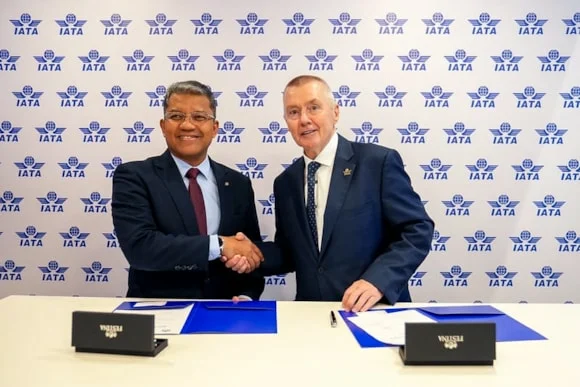
Captain Nasaruddin A. Bakar, President and Group CEO of Malaysia Aviation Group (MAG), has been appointed to the Board of Governors of the International Air Transport Association (IATA) during its 82nd Annual General Meeting in Rio de Janeiro. The appointment, effective immediately, runs through 2029 and places the veteran airline executive at the heart of global aviation policymaking.
Captain Nasaruddin brings more than three decades of industry experience to the IATA board, which sets strategic direction for the world's airlines. His career includes leadership roles at Malaysia Airlines, where he began as a pilot and rose through operational and executive ranks. He currently chairs the Association of Asia Pacific Airlines Executive Committee and sits on the oneworld Governance Board, giving him a broad view of both regional and alliance dynamics.
Strategic Implications for Malaysia and Asia Pacific Aviation
The appointment is expected to amplify Malaysia's voice in international aviation forums, particularly on issues such as sustainability, digital transformation, and air connectivity. Dato' Amirul Feisal bin Wan Zahir, Non-Executive Director of Malaysia Aviation Group Berhad, noted: "His appointment is a testament to his deep expertise, leadership, and long-standing contributions to the aviation industry."
Captain Nasaruddin himself framed the role as both an honour and a responsibility. "This appointment carries both privilege and responsibility, particularly at a critical time for global aviation. I look forward to working alongside fellow Governors to contribute meaningfully to strategic dialogue and policy direction," he said.
The IATA Board of Governors comprises senior executives from member airlines worldwide, setting priorities on safety, security, environmental sustainability, and industry standards. With Captain Nasaruddin's operational background—he holds an Airline Transport Pilot License and has flown Boeing 737 and Airbus A330 aircraft—his perspective will be grounded in real-world flight operations.
MAG, which operates Malaysia Airlines, Firefly, MASwings, and the MAB Engineering and MAB Kargo divisions, has been navigating a post-pandemic recovery while investing in fleet modernisation and sustainability initiatives. The group recently announced plans to retrofit its Boeing 737-800 fleet with new cabin interiors and to explore sustainable aviation fuel partnerships.
Industry observers see the appointment as a signal that IATA values leadership from carriers that bridge developed and emerging aviation markets. Malaysia's position as a hub for Southeast Asian travel, with Kuala Lumpur International Airport serving as a key connection point for routes to destinations like Singapore, Bangkok, and Jakarta, makes the country's representation on the board strategically important.
Captain Nasaruddin's tenure on the IATA board coincides with several pressing industry challenges: the push for net-zero carbon emissions by 2050, the need for modernised air traffic management in Asia, and the ongoing digitalisation of airline retailing through initiatives like IATA's New Distribution Capability (NDC). His experience with MAG's own digital transformation efforts—including the rollout of NDC-enabled booking channels—will inform board discussions on technology standards.
The appointment also comes as IATA continues to expand its financial services for airlines, such as the IATA Financial Gateway, which recently added Kora to simplify African airline payments. Captain Nasaruddin's familiarity with payment challenges in emerging markets could prove valuable as the industry seeks to streamline cross-border transactions.
For travel professionals across the aviation ecosystem—from airline revenue managers to travel technology vendors—the composition of the IATA board influences the pace and direction of industry standards. Captain Nasaruddin's appointment ensures that the voice of a major Southeast Asian carrier is represented in decisions that affect everything from baggage handling protocols to interline settlement systems.
As the global aviation industry continues its recovery and transformation, the addition of a seasoned pilot-executive to the IATA board underscores the importance of operational expertise in shaping policy. Captain Nasaruddin's three-year term will see him contribute to discussions that will define the industry's trajectory through the remainder of the decade.