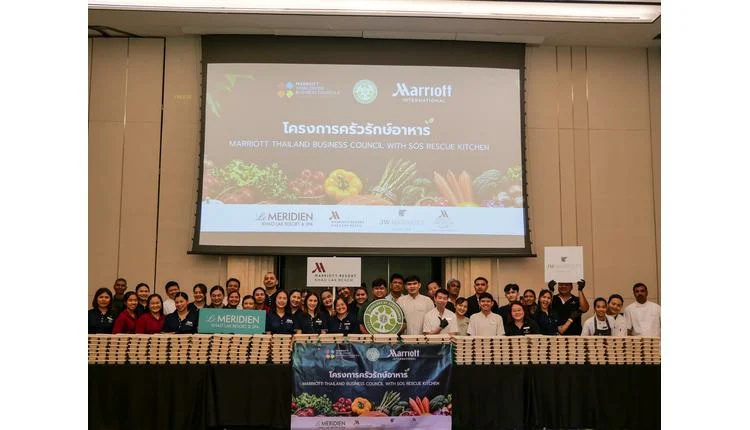
Marriott International's Thailand portfolio has marked World Food Day and World Food Awareness Month 2026 by channeling surplus hotel food into more than 11,500 meals for vulnerable communities. The effort, run under the group's Serve360 sustainability platform, brought together associates from Bangkok, Phuket, and Khao Lak with local charities to tackle food waste and bolster food security.
In the capital, 31 Marriott-branded hotels partnered with the Bangkok Community Health Foundation, raising US$7,800 (THB 285,000) and providing upwards of 6,900 meals. The campaign also introduced a "No Food Waste Bin Day" and chef-led training sessions, nudging hotel teams toward more sustainable kitchen practices.
Brad Edman, Regional Vice President for Thailand, Cambodia, Laos, and Myanmar, underscored the dual impact of the drive. "By joining forces with our outstanding local partners to reuse and upcycle excess food from our restaurants, we are not only providing nutritious meals to the people who need them most; we are also preventing unnecessary waste from entering landfill," he said.
Beyond Bangkok, Marriott expanded its southern Thailand outreach through an ongoing collaboration with Scholars of Sustenance Thailand. That group ran a week-long campaign across Phuket and Khao Lak, culminating in a World Food Day event at Courtyard by Marriott Phuket Town, where 12 hotels prepared 5,000 meal boxes for local communities.
Hospitality's role in food waste reduction
Daryn Hudson, Chair of the Thailand-Cambodia Marriott Worldwide Business Council, framed the initiative as a model for how hotel groups can align social responsibility with environmental goals. "Together, we are not only reducing food waste and lowering carbon emissions but also ensuring that quality surplus meals reach the vulnerable communities that need them most," he said.
The programme reflects a broader push across Marriott's Asia Pacific operations to embed sustainability into daily hotel management. Similar food-rescue efforts have been rolled out in other markets, and the group continues to expand its Asia Pacific footprint with new openings and conversions.
For travel professionals, the initiative offers a case study in how hotel food and beverage operations can be repurposed to serve local needs while cutting operational waste. It also highlights the growing importance of community engagement in hotel brand positioning, particularly in resort destinations like Phuket and Khao Lak where tourism's social footprint is under scrutiny.
Marriott's Thai properties have been active in sustainability efforts beyond food. The group's regional leadership has championed waste-reduction targets and community partnerships as part of its Serve360 commitments. The recent Hua Hin Marriott Resort's November dining lineup similarly showcases how F&B programming can attract guests while supporting local sourcing.
As the travel industry grapples with food waste—a significant contributor to hotel carbon footprints—initiatives like these demonstrate practical steps that can be replicated across chains. The Bangkok campaign's chef training and bin-day concept offer low-cost, high-impact tactics that other hoteliers could adopt.
With the global push toward net-zero hospitality, Marriott's Thailand food-rescue programme serves as a benchmark for integrating social good into daily operations. The company's ability to mobilize dozens of properties across multiple destinations underscores the scalability of such efforts, a lesson relevant for hotel groups, tour operators, and destination management companies alike.