Earlier this year, Travelmao reported on how hotels across Southeast Asia were overhauling their operations to cater to the booming medical tourism sector. Now, the concept known as medical hospitality is blurring the lines between clinical care and luxury hotel experiences, driven by value-based care and consumer demand for personalized, seamless journeys.
Hospital staff are increasingly trained in hospitality-style people skills—empathy and personalization—to create stress-free care experiences outside traditional clinical settings. A February 2026 report from PrometAI notes: “Healthcare is expanding outward into homes, communities, and digital spaces, bringing care directly to the patient. This evolution captures the essence of modern health care industry trends, where accessibility, flexibility, and personalisation define the next era of medicine.”
Hospitality Bridges Healthcare (H2H)
One key trend is the involvement of hotel management companies in medical tourism. In the H2H model, these companies act as partners in a patient’s healthcare journey, both in and out of the hospital. They facilitate seamless end-to-end medical journeys by combining clinical care with specialized recovery environments, customized wellness programs, and dedicated patient concierge services.
In a 2024 study for Hoapitality.net, researchers Fred DeMicco, Abigail Hunsaker, and Helin Kaymaz wrote: “The H2H model proposes various ways in which hospitals and hospitality services can be operationally merged to provide superior service quality. This includes offering comprehensive service packages that encompass both medical treatment and hospitality amenities, as well as creating integrated medical resorts designed to optimize patient comfort and recovery.” The researchers also noted that adopting H2H principles can become a key differentiator for healthcare organizations aiming to improve patient outcomes.
By prioritizing patient-centered care, service excellence, and a culture of compassion, hospitals and their hospitality partners can create more satisfying experiences for patients and caregivers. This trend aligns with broader shifts in the travel industry, such as real-time payouts helping Southeast Asian hospitality firms tackle labor shortages, which also focus on enhancing service delivery.
Other Developments in Medical Hospitality
Beyond H2H, four other developments are reshaping the landscape:
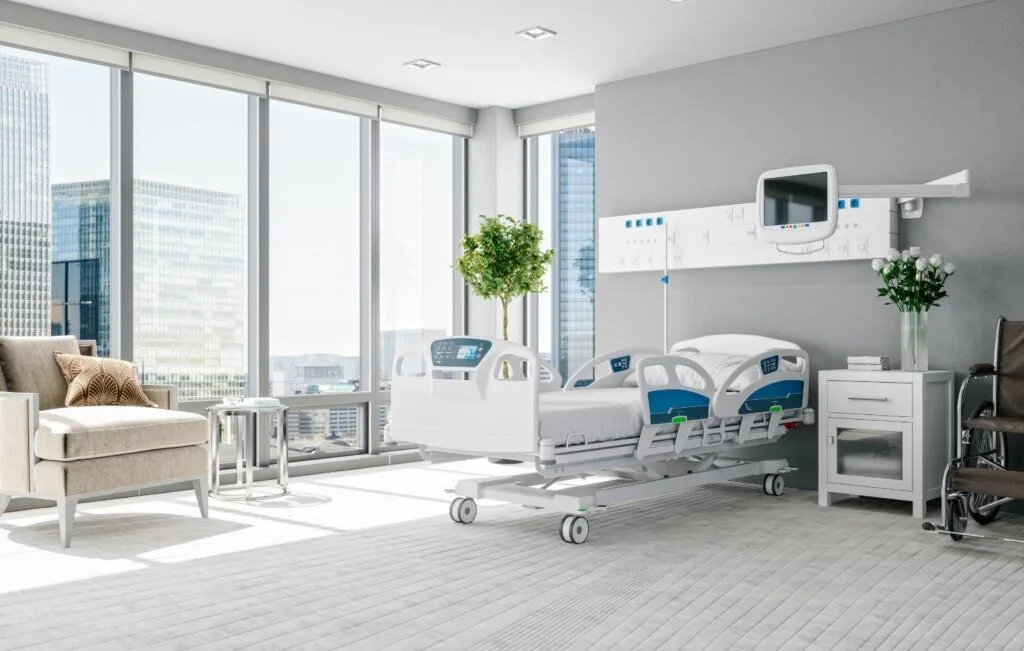
- Infrastructure dedicated to recovery: Hospitals are upgrading rooms with accessibility measures, walk-in showers, adjustable beds, improved alert systems, and bedside controls to ensure comfort.
- Safe seclusion via private access: Alternative entrances, express check-ins, and secluded areas allow patients to avoid crowded public spaces.
- Partnerships with key hospitality players: Hospitals are partnering with Hilton, IHG, and Marriott to offer integrated care packages, including on-site dietitians, specialized nurses, medical coordinators, prescription deliveries, and translation services for international patients.
- Holistic wellness centers: World-class hospitals in medical tourism hubs like Thailand are teaming up with hospitality brands to develop wellness-centric properties. Examples include the Movenpick BDMS Wellness Resort in Bangkok and Wellness Elite at St Luke’s Medical Centre in Manila. These resorts combine post-operative recovery with preventative care, mindfulness, and bespoke dietary programs.
As medical tourism grows, these trends are creating new opportunities for travel professionals—from airlines and hoteliers to tour operators and agents—to cater to a discerning clientele seeking integrated health and travel experiences. For instance, Air Mauritius expanding its London Gatwick non-stop service could facilitate patient travel to recovery destinations. Similarly, private villas redefining luxury travel in Southern Europe may appeal to those seeking secluded recovery environments.
The convergence of healthcare and hospitality is no longer a niche—it is a strategic imperative for hotel management companies and healthcare providers alike. Travel professionals should monitor these developments to capture the growing demand for medical hospitality services.