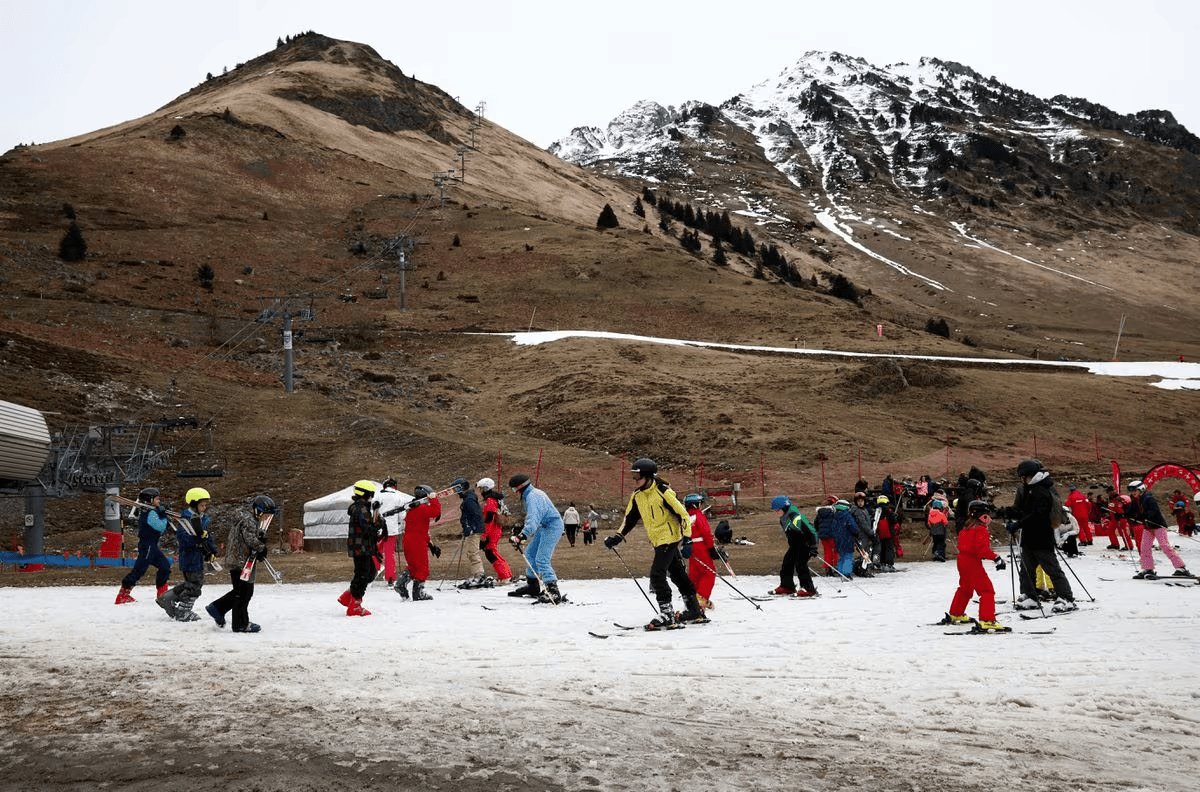
The global winter tourism industry is confronting a structural shift as rising temperatures and erratic snowfall erode the reliability of traditional ski seasons. From the Japanese Alps to the Swiss and Austrian resorts, operators are rethinking their business models, moving away from a pure ski-centric approach toward year-round offerings that can withstand climate volatility.
Historically, mountain destinations could count on consistent cold fronts arriving in November and persisting through March. That predictability is fading. Resorts such as Zermatt, St. Moritz, and Niseko are seeing shorter windows, with snow arriving later and melting earlier. The commercial implications are significant: fewer ski days mean reduced lift ticket revenue, shorter hotel occupancy peaks, and pressure on ancillary spending.
Snowmaking hits its limits
To compensate for the lack of natural snow, many resorts have invested heavily in snowmaking systems. But this technical fix is becoming both financially and environmentally costly. Snow cannons require vast amounts of water and electricity, driving up operating expenses that are often passed on to guests through higher lift pass and accommodation prices.
More critically, snowmaking has a hard thermal ceiling. It requires sustained sub-zero temperatures to produce snow. As baseline winter temperatures climb, the overnight windows cold enough to operate snow guns are shrinking. In some lower-altitude resorts, the equipment sits idle for much of the season, rendering the investment useless.
Industry experts argue that relying solely on snowmaking is no longer a viable long-term strategy. "The climate is closing the thermal envelope," notes one Alpine resort manager. "We are spending millions to produce a product that nature no longer guarantees."
Beyond skiing: the rise of four-season resorts
In response, forward-thinking operators are pivoting to a diversified leisure model. Marketing campaigns now emphasize activities that do not depend on snow depth: wellness retreats, forest bathing, gastronomy, and indoor sports facilities. Resorts are converting ski slopes into downhill mountain biking trails in summer, and staging cultural events in spring and autumn to attract visitors during shoulder seasons.
This shift is not just about survival; it is about capturing new demand. Travellers are increasingly seeking multifaceted mountain experiences, not just skiing. A recent survey by a leading travel association found that over 60% of mountain visitors are interested in non-ski activities, including hiking, spa treatments, and local food tours.
Properties that fail to evolve risk becoming exceptionally vulnerable. "If you are still just a ski resort, you are betting your future on unpredictable snowfall," says a hospitality consultant specializing in alpine destinations. "The winners will be those who decouple their appeal from the weather forecast."
Implications for travel trade
For travel agents and tour operators, selling mountain destinations now requires greater transparency and flexibility. Curating itineraries that mix skiing with other activities, and offering weather-flexible booking options, will be essential in managing client expectations as peak seasons drift.
Some operators are already adapting. For example, Maine's winter season has expanded beyond skiing to include snowshoeing, fat biking, and cultural festivals, attracting adventure travellers even in low-snow years. Similarly, Holland America Line's Alaska Heritage Tours highlight how destinations can leverage local culture to extend their appeal.
The trend is also visible in luxury hospitality. Four Seasons' 2027 pipeline includes mountain properties in the Caribbean and Africa, signalling a broader move toward year-round destinations. Even Ritz-Carlton Bali's festive programme reflects the industry's focus on non-ski holiday experiences.
Ultimately, this disruption is compelling a long-overdue evolution across mountain hospitality. Success will no longer belong to resorts that merely pray for blizzards, but to agile operators that curate compelling, year-round value regardless of what falls from the sky.