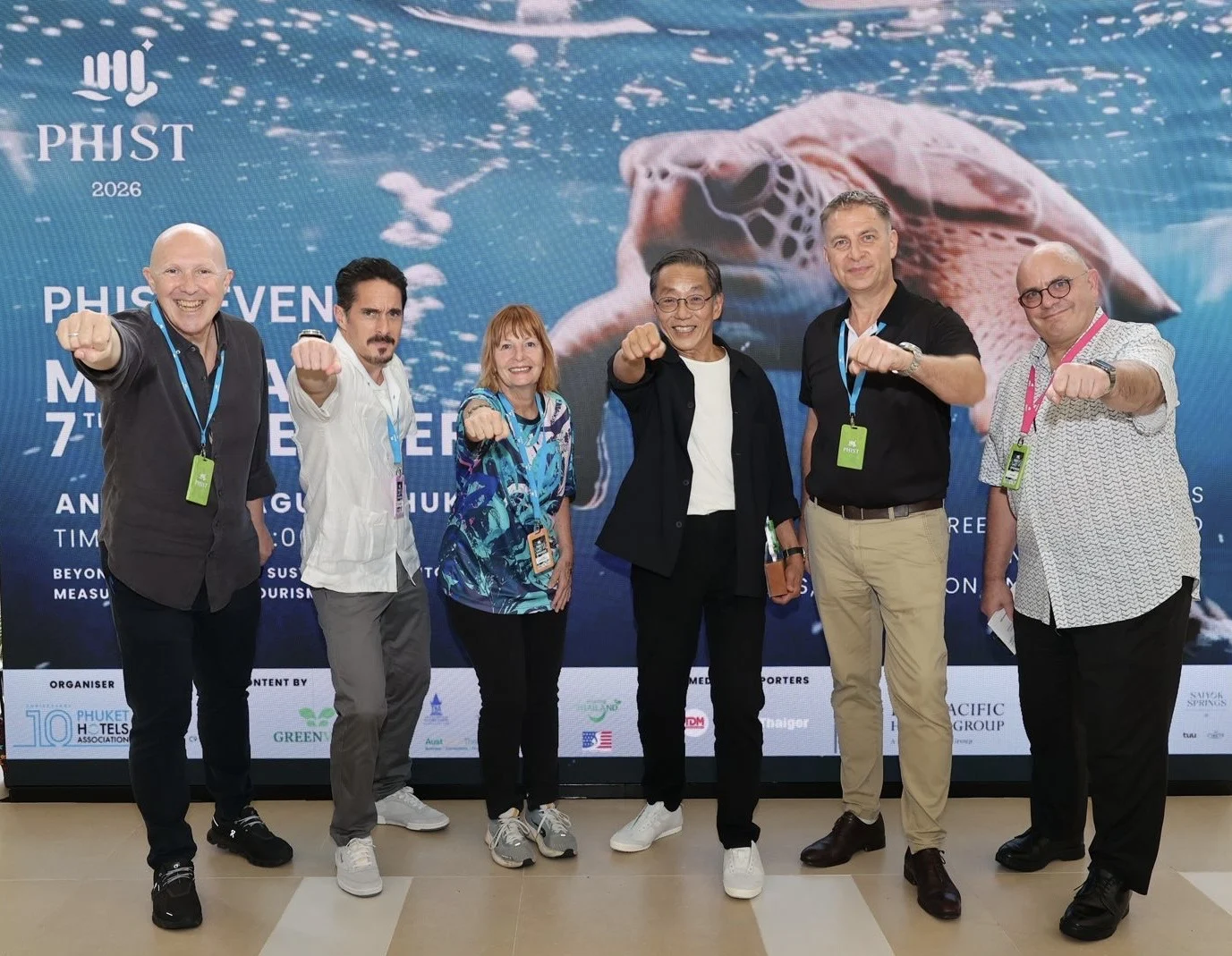
The ninth edition of the Phuket Hotels for Islands Sustaining Tourism (PHIST) gathering, held at Angsana Laguna Phuket, turned a sharp lens on how the travel sector must evolve its approach to sustainability. With destinations under mounting climate and environmental strain, industry leaders, government representatives, and experts debated a central question: is reducing emissions enough?
Beyond Green: A Broader Mandate
Ho Kwon Ping, founder of Banyan Group and executive chairman of Laguna Resorts and Hotels, delivered a pointed critique of the industry's current sustainability playbook. "Being green is great, but sustainability is a bigger concept," he argued, noting that the term has become too narrow and, at times, too polarised to address the real challenges facing tourism businesses. He suggested the sector still operates on a definition forged decades ago, one that no longer captures the full scope of responsibility.
Ho was clear that cutting emissions, waste, and resource consumption remains vital—but those efforts should be part of a wider assessment of what companies can influence and what they are willing to own. For hospitality, that means pairing mitigation with serious climate adaptation. As disruptions to water, energy, and infrastructure become harder to avoid, hotels and destinations must prepare for resilience, not just efficiency.
Laguna's own Phuket developments illustrate this shift. Ho pointed to investments in backup power generation and reverse-osmosis facilities to guard against electricity shortages and water stress, as well as underground car parks that preserve green space above ground. The approach extends beyond the property line: at Laguna's Lakelands, plans include 12–15 kilometres of cycling and hiking trails and public botanical gardens, reflecting a view that resorts should enrich shared community life rather than operate as isolated enclaves.
Tourism's role, Ho argued, goes beyond economics. Citing Banyan's operations in AlUla, Saudi Arabia, and upcoming projects in Mongolia, he said travel can deepen visitors' understanding of local cultures while supporting communities through employment, local sourcing, and other opportunities. Ultimately, sustainability should be about taking responsibility for problems businesses and governments have the power to address—not just doing good deeds.
Community and Nature as the Blueprint
Chakrit Chakrabandhu Na Ayudhya, advisor to Matalay, outlined a master plan at Memories Beach in Khao Lak that places community and nature at its core. Rather than building a standalone resort, the Boonsong family's project is shaped around an existing surfing and local business community. A 100-rai (16-hectare) green area and 50 rai (8-hectare) of lagoons form a "green spine" from the main road to the beach, while the development includes spaces for local vendors, an international school, and medical facilities—responding to needs identified across the wider Khao Lak area. The next phase of tourism here is not about adding rooms but about creating a destination where nature, tourism, and local life can grow together.
From Reducing Impact to Restoring Nature
Marat Khaidarov, sustainability manager and marine biologist at Hyatt Regency Phuket, offered a practical model for moving beyond impact reduction toward active restoration. He stressed that nature is a core tourism asset: Phuket's beaches, coral reefs, and marine ecosystems are what draw visitors, so their health is directly tied to the tourism economy.
Khaidarov outlined five steps for hotels: know your nature, build a science baseline, turn conservation into an experience, connect restoration with the community, and tell the story. At Hyatt Regency Phuket, this has led to a Marine Biological Center that serves as an educational hub, plus a coral restoration programme at Kamala Beach. Working with Thailand's Department of Marine and Coastal Resources, the resort secures coral fragments damaged by fishing nets and other human activity onto specially designed frames, allowing them to stabilise and regrow.
So far, 16 frames support 110 coral fragments, with 79 surviving—a 71.8% survival rate. The programme also engages the community: Phuket Technical College students help build the frames as part of their vocational training. Local schoolchildren learn about coral reefs and marine pollution, while guests can join beach clean-ups and turtle releases. The goal is to make conservation something visitors can see, understand, and participate in.
Khaidarov's principle is simple: a hotel doesn't need to become a research institute to contribute to its destination's health. It can act as a gateway connecting visitors and communities with local ecosystems, science, and conservation. The ambition extends beyond minimising harm—it's about leaving the destination better than found.
As climate pressures intensify, the message from PHIST 2026 is clear: sustainability in tourism must evolve from a narrow focus on carbon to a broader commitment to adaptation, community, and restoration. For operators, that means rethinking not just what they build, but how they integrate with the places they call home. The industry's next chapter will be defined by those who embrace this expanded responsibility.