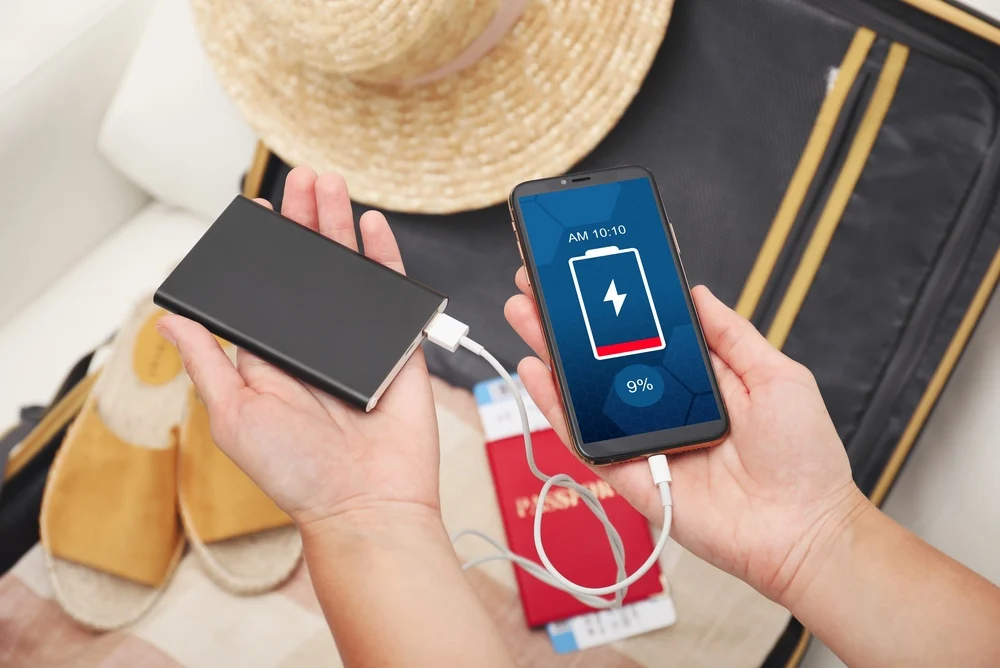
For years, travellers have worried about lost luggage, flight delays and turbulence. Increasingly, however, airlines are paying close attention to something much smaller that passengers carry almost without thinking: the humble power bank. Portable chargers have become an essential travel companion, keeping smartphones, tablets and laptops running throughout long journeys. But behind that convenience lies a growing aviation safety challenge.
Recent incidents involving overheating lithium-ion batteries, combined with fresh warnings from aviation authorities, are prompting airlines around the world to tighten policies on how power banks are carried and used onboard. As passenger demand for electronic devices continues to grow, so too does the industry's need to manage one of the fastest-rising cabin safety risks.
A small device with potentially serious consequences
Unlike ordinary batteries, lithium-ion batteries store a significant amount of energy in a compact space. If damaged, poorly manufactured or exposed to excessive heat, they can enter what experts call "thermal runaway"—a chain reaction that causes the battery to rapidly overheat, release flammable gases and potentially ignite. The danger is particularly acute inside an aircraft. A fire in the passenger cabin can usually be tackled quickly by trained cabin crew using specialised firefighting equipment. But if a spare battery catches fire inside checked baggage, it becomes much harder to detect and significantly more dangerous. That is why aviation regulators across the world have long prohibited spare lithium batteries from being packed in checked luggage.
The numbers are heading in the wrong direction
The aviation industry is seeing more battery-related incidents simply because travellers are carrying more rechargeable devices than ever before. According to the U.S. Federal Aviation Administration (FAA), reports involving lithium batteries producing smoke, excessive heat or fire have steadily increased over recent years. The agency recorded a record number of incidents during 2024, reflecting the growing number of electronic devices passengers now bring onboard. Research from UL Standards & Engagement latest aviation safety review found that lithium battery thermal runaway incidents now occur, on average, around twice every week on commercial flights. In nearly one in five cases, the incident was serious enough to cause operational disruption, including emergency landings, aircraft returning to the gate or passenger evacuations. For airlines, even a single diversion can mean significant operational costs, delayed schedules, missed passenger connections and additional aircraft inspections before returning to service.
Power banks are receiving special attention
While smartphones and laptops also contain lithium-ion batteries, power banks present a unique challenge. Unlike other electronic devices, their primary purpose is to store energy. Many passengers also purchase inexpensive portable chargers online, some of which may not meet recognised safety standards. Counterfeit products, ageing batteries, physical damage or poor manufacturing quality all increase the chances of battery failure. Power banks, alongside electronic cigarettes, now rank among the leading fire risks carried onboard aircraft because they contain high-capacity lithium batteries that can overheat if mishandled. With millions of passengers travelling daily, airlines are increasingly viewing these devices as a manageable risk—but only if passengers follow the rules.
Authorities are stepping up passenger awareness
Recognising the growing concern, the UK Civil Aviation Authority recently launched its "Pack Right. Safe Flight." campaign ahead of the busy summer travel season. The campaign followed warnings that more than 100 million lithium batteries had been incorrectly packed into checked baggage. Officials are urging travellers to: always carry power banks in cabin baggage; never place spare lithium batteries in checked luggage; avoid using damaged or swollen batteries; stop using any device that becomes unusually hot; and follow airline instructions regarding charging portable batteries during flights. While these recommendations are not new, regulators believe many passengers either remain unaware of them or simply underestimate the risks. For more on the UK CAA's efforts, see UK CAA Urges Travelers to Keep Lithium Batteries in Cabin Bags Amid Rising Fire Incidents.
Airlines are responding with tighter policies
For airlines, battery fires represent more than an isolated safety issue. Every onboard incident places enormous pressure on cabin crews, who must quickly identify the source, contain the overheating battery and reassure passengers while continuing to manage the flight safely. Many airlines have responded by enhancing crew training and equipping aircraft with specialised fire containment bags designed specifically for lithium battery incidents. Some carriers have also introduced stricter rules on charging power banks during flights or storing them in overhead lockers where overheating may go unnoticed for longer periods. These measures reflect a broader industry shift from simply reacting to incidents towards preventing them altogether. As part of this trend, Asiana Airlines and other carriers are reviewing their cabin baggage policies.
Education may be the industry's strongest defence
Despite years of aviation guidance, research suggests many travellers still do not understand which items contain lithium-ion batteries or how they should be packed. Portable chargers, wireless headphones, cameras, drones, laptops, tablets and e-cigarettes all contain rechargeable batteries that require careful handling during air travel. Industry experts believe clearer messaging at airports, check-in counters and boarding gates could significantly reduce risky passenger behaviour. For travel advisors, tour operators and corporate travel managers, battery safety is also becoming another important pre-departure briefing point alongside passport validity, baggage allowances and visa requirements. The wider impact on the travel industry is clear: as airlines like Emirates continue to enhance the passenger experience, safety remains the top priority.