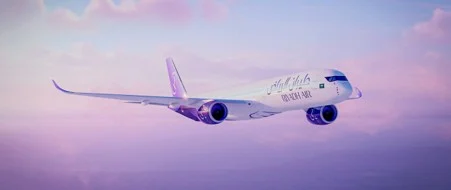
Riyadh Air is accelerating its long-haul strategy with a major fleet expansion that underscores its ambition to become a premium global carrier. At the Farnborough International Airshow 2026, the airline announced firm orders for six additional Airbus A350-1000s and 28 more Boeing 787 Dreamliners, including 20 converted to the larger 787-10 variant. This brings its total confirmed A350-1000 orders to 31 and its 787 firm order count to 67, once finalised.
A fleet built for luxury and reach
The dual announcement signals more than just capacity growth. Riyadh Air is positioning itself to compete on comfort and service quality across Asia, Europe, Africa, Oceania and the Americas. The A350-1000, powered by Rolls-Royce Trent XWB-97 engines, offers the range and cabin flexibility needed for ultra-long-haul routes, while the 787-10 adds capacity and operational efficiency as the network expands.
For travel professionals, this means a new premium player entering key city pairs. Riyadh Air already serves London, Cairo, Dubai, Jeddah, Malaga, Madrid, Dhaka, Islamabad, Kuala Lumpur, Lahore, Manchester and Mumbai. The fleet boost will support further route development, potentially challenging established carriers on high-yield long-haul corridors.
Cabin identity rooted in Saudi culture
Riyadh Air is developing a distinct onboard experience that blends modern luxury with Saudi hospitality, known as Hafawa. The A350-1000 will feature a digitally immersive cabin with home-inspired fabrics, lavender accents and smart ergonomics. This approach aims to differentiate the airline in a crowded premium market, where many new entrants promise luxury but fail to create a memorable brand identity.
The focus on cultural authenticity could appeal to discerning travellers seeking elegance with a sense of place. It also aligns with broader trends in luxury travel, where personalisation and local character are increasingly valued. For hoteliers and tour operators, this presents opportunities to package Riyadh Air flights with Saudi-focused itineraries or branded residences in the Kingdom.
Sustainability as a competitive edge
The fleet expansion supports Riyadh Air's sustainability roadmap. The airline states that the A350-1000's composite design and efficient engines deliver 25% lower fuel burn and CO₂ emissions compared to previous-generation widebodies. It is also targeting 100% SAF compatibility by 2030. This matters for corporate travel buyers and MICE planners who increasingly require lower-carbon options for their programmes.
Riyadh Air is not alone in pursuing sustainable luxury. Other carriers like Emirates are retrofitting cabins with new seat designs, as seen in their U-Dream headrest rollout. But Riyadh Air's greenfield approach allows it to build sustainability into its fleet from the start, avoiding the retrofit challenges faced by legacy airlines.
Implications for the travel industry
For airline executives, Riyadh Air's rapid expansion signals intensifying competition on long-haul premium routes, particularly between Europe and Asia. Hoteliers and cruise lines may see increased demand for Saudi Arabia as a destination, especially as the Kingdom invests in tourism infrastructure. The airline's focus on luxury could also drive partnerships with high-end hospitality brands, similar to Aman at Sea's yacht launch or Silversea's golf-themed cruises.
Riyadh Air is building in real time. With a clear fleet strategy, a culturally rooted cabin concept and a sustainability commitment, it is positioning itself as a serious contender in the premium long-haul market. For travel professionals, the message is clear: a new luxury carrier is taking shape, and it intends to make the journey itself part of the experience.