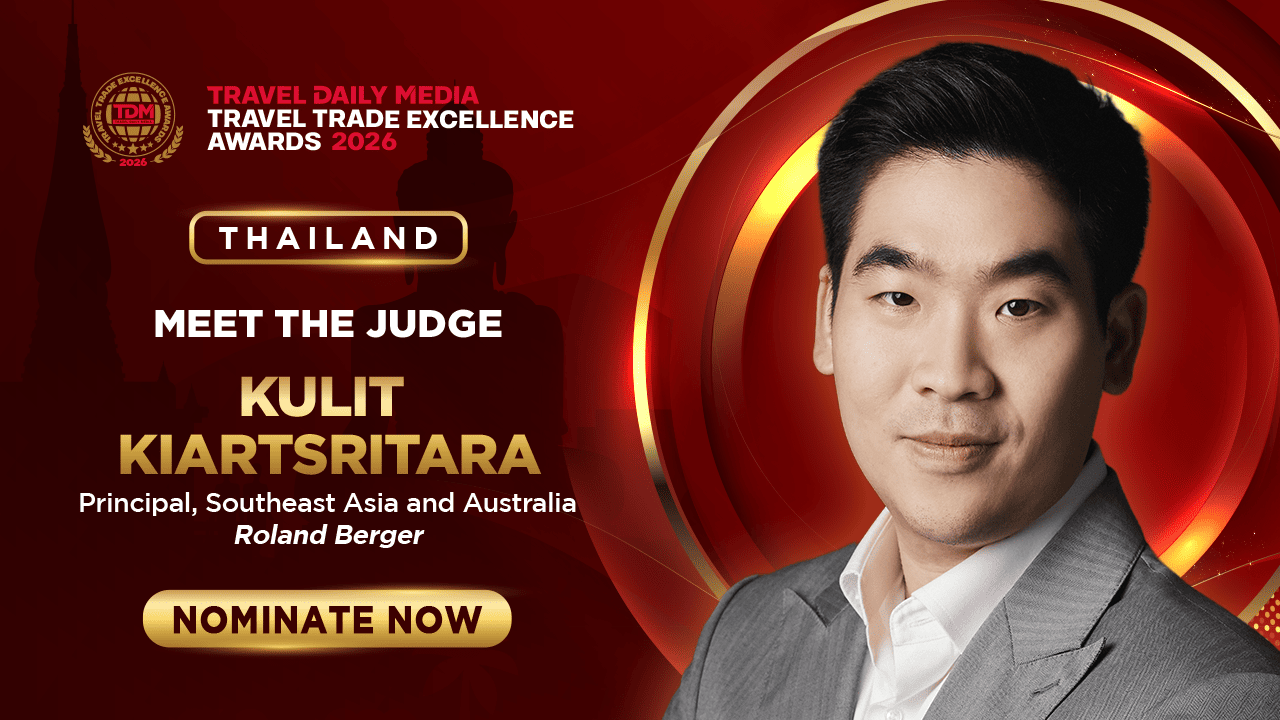
Thailand’s tourism industry must move beyond chasing visitor numbers and instead design journeys that weave together its diverse assets—beaches, food, culture, medical care, and retail—into seamless, high-value experiences. That is the core message from Kulit Kiartsritara, Principal at Roland Berger Southeast Asia, who brings over a decade of experience in management consulting, investment banking, and retail to the debate.
Speaking as a judge for the TDM Travel Trade Excellence Awards 2026 – Thailand, Kiartsritara argued that the country’s competitive advantage lies in its ability to offer multiple experiences in a single trip. “A visitor can come here for medical care, transition into a wellness retreat, discover local food, shop, and hang out in Bangkok neighbourhoods all in one trip,” he said. Yet he warned that these strengths remain “too fragmented” and underused. The next step, he stressed, is not louder promotion but smarter integration.
From Volume to Value
Kiartsritara emphasised that tourism’s role in Southeast Asian economies extends far beyond hotels and airlines. In Thailand, the sector is deeply intertwined with restaurants, retail, healthcare, transport, real estate, and local agriculture. “A healthy tourism industry injects income directly into a much wider economic base, especially when we look beyond Bangkok and the main gateways,” he noted. The key, he added, is managing for value rather than raw volume. “The question we should be asking isn’t just how many people landed today, but also where their money is actually going and who is benefitting.”
This shift aligns with broader trends across the region. As Gen Z redefines luxury travel in Asia Pacific, travellers are becoming more intentional, choosing destinations that reflect their personal lifestyle and values. Kiartsritara identified three major shifts: intentionality in destination choice, a redefined sense of value that demands transparency and safety, and the growing influence of online communities, social platforms, and AI planning tools on booking decisions.
Data and Ecosystem Leadership
On technology, Kiartsritara called AI a “game-changer” on the consumer side, helping travellers map itineraries and compare options. But he sees the real opportunity on the operator side. “When used right, data and tech help businesses spot what’s actually gaining traction, anticipate demand, and pivot quickly when traveller behaviour shifts,” he said. He criticised the current state of Thailand’s tourism data, which he said sits in silos rather than shaping better products or policies. The innovations that will matter most, he argued, are those that remove friction for travellers while giving local businesses sharp insights.
Leadership in this new environment demands adaptability and ecosystem thinking. “Tourism value is created across an entire ecosystem, not by one hotel, airline, or restaurant acting alone,” Kiartsritara said. He pointed to the need for leaders who can look beyond their own front door and collaborate across sectors. This echoes developments elsewhere, such as Mediterranean hospitality evolving through private villas, where partnerships are reshaping luxury travel.
Kiartsritara’s vision for Thailand’s tourism future is one where smarter partnerships, data-driven decisions, and curated experiences replace the old volume-based model. For travel professionals—from airline executives to tour operators and hoteliers—the message is clear: the winners will be those who connect the dots across the ecosystem and deliver journeys that feel personal, seamless, and worth repeating.