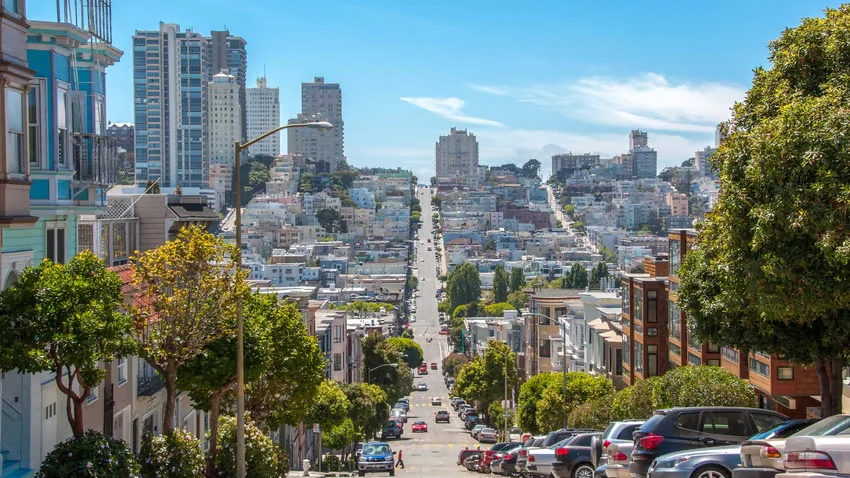
San Francisco’s hotel sector delivered a $12 billion economic contribution to the city in 2025, according to a new report from Oxford Economics commissioned by the American Hotel & Lodging Association (AHLA) and the California Hotel & Lodging Association (CHLA). The figure underscores the industry’s central role in the city’s post-pandemic revival and its broader tourism ecosystem.
Key Metrics: Jobs, Spending, and Tax Revenue
The report calculates that each occupied hotel room night generates approximately $900 in citywide spending per visitor. Hotel guests collectively spent $8 billion at properties and local businesses, reinforcing the sector’s multiplier effect across retail, dining, and entertainment. The industry supported 50,000 jobs — 16,000 direct positions within hotels and 34,000 ancillary roles in supply chains and adjacent services. Tax contributions reached $2 billion, funding municipal priorities from public safety to infrastructure.
“Hotels are the cornerstone of the city’s economy and pivotal to accelerating San Francisco’s comeback as a top global destination,” said Rosanna Maietta, President and CEO of AHLA. Lynn S. Mohrfeld, President and CEO of CHLA, added: “The guests that stay in San Francisco hotels spend 70 pence of every dollar in the community.”
Mayor Daniel Lurie highlighted tourism as the city’s number one industry, crediting improved public safety and revitalized commercial districts for boosting convention and leisure travel. “We’ve reframed San Francisco’s global reputation,” he said, pointing to a rebound in group bookings at venues like the Moscone Center and increased demand from international source markets.
The findings align with broader trends in urban hospitality recovery. Cities such as Málaga have similarly leveraged evening economy strategies to drive visitor spending, while destinations like Ras Al Khaimah are expanding airlift to capture inbound demand. For hoteliers and tour operators, the San Francisco data reinforces the value of destination-level collaboration between public officials and private stakeholders.
The report also notes that the $12 billion impact reflects a full-year recovery from pandemic-era lows, with occupancy rates and average daily rates approaching 2019 benchmarks. Major hotel groups — including Hilton, Marriott, and Hyatt — have resumed capital investment in the market, with several properties undergoing renovations to cater to the return of MICE and luxury segments.
For travel agents and corporate buyers, the findings signal that San Francisco remains a competitive hub for both leisure and business travel. The city’s airport, SFO, has also seen a resurgence in international routes, with carriers like United and Delta adding frequencies to Asia-Pacific and European gateways.
The Oxford Economics analysis was based on 2025 operational data from hotels across all segments, from boutique independents to branded full-service properties. It did not break out spending by traveler type, but industry observers note that the mix of convention, leisure, and corporate guests contributed to the broad-based economic footprint.
As San Francisco continues to rebuild its tourism brand, the hotel sector’s $12 billion contribution provides a benchmark for other urban destinations seeking to measure the return on hospitality investment.