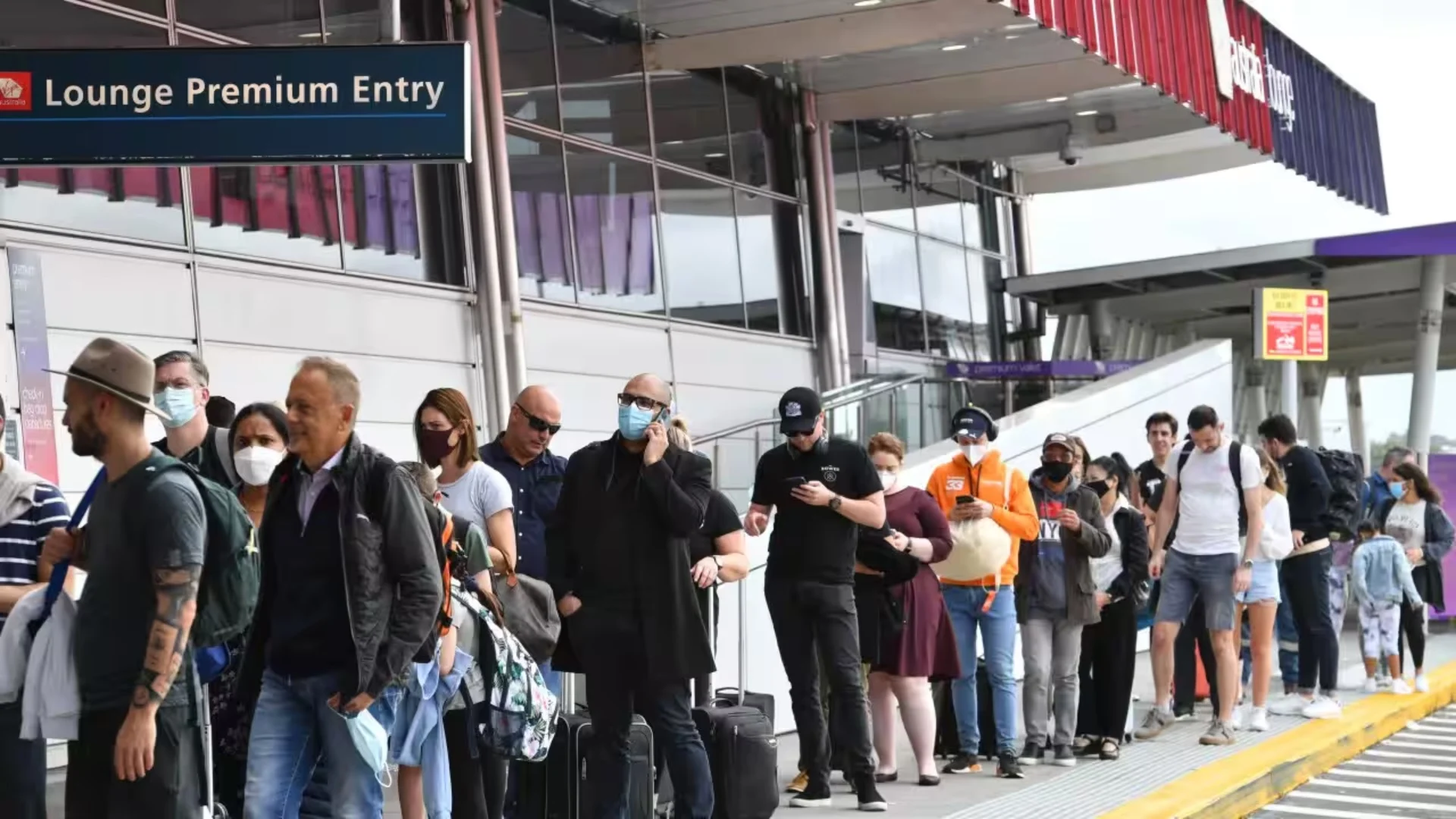
Passengers departing from Sydney Airport on Saturday, August 8, faced significant delays as a shortage of air traffic controllers forced Airservices Australia to implement strict departure spacing and ground delay programs. The disruptions primarily hit Qantas Network services, including 25 QantasLink flights, while Virgin Australia also saw 18 flights impacted, according to a report from 7NEWS Sydney.
Witnesses described long queues and frustration. One traveler told 7NEWS: “Passengers left waiting for an average of 60 minutes, some for far longer. You spend a lot of money and all you do is wait in a line here. It's frustrating.”
Airservices Australia, the government-owned air traffic control provider, acknowledged the issue, stating that it was managing reduced air traffic movements network-wide. The company said it had enacted air traffic-flow management measures, including spacing out departures, to maintain safety amid the staffing shortfall.
Operational responses and government pressure
To mitigate the impact, Sydney Airport and its partners have introduced several measures. Airservices Australia is enforcing strict spacing intervals and ground delay programs to manage safety with reduced tower numbers. Worker fatigue has also come under scrutiny, with a significant increase in short-notice sick leave and chronic roster constraints prompting a harder look at welfare measures.
Federal transport authorities are now demanding formal explanations and immediate action plans from Airservices Australia to restore operational stability. The government's intervention underscores the severity of the situation, which has been building for years.
The root cause is not infrastructure but a serious lack of competent human resources, particularly in the wake of the pandemic. Airlines for Australia and New Zealand (A4ANZ) highlighted that Airservices Australia was unable to roster enough air traffic controllers over the weekend. A4ANZ chief executive Stephen Beckett said: “We’ve just had three days in a row [where] Australia has not been able to roster enough people in the air traffic control centres. They continue to tell us they have recruited enough people to staff the tower. If so, why do we have these persistent problems?”
Beckett added that the problem in the tower has been ongoing for years and should have been addressed long ago. “While safety is currently being maintained, it is throwing the schedules out the window and impacting the travelling public. Many people are missing international connections and vital connections to regional Australia,” he said.
The delays come as airports worldwide grapple with staffing challenges, a trend that has also affected Ontario International Airport's record passenger numbers and prompted investments in green upgrades at cruise ports. For Sydney, the immediate priority is restoring confidence in its air traffic management system.
Travel industry professionals, including airline executives and tour operators, are watching closely. The disruption highlights the fragility of air travel operations when critical staffing is stretched. As one industry analyst noted, the situation underscores the need for robust workforce planning and investment in training to prevent such cascading delays.
For now, Sydney Airport and Airservices Australia are working to clear the backlog, but the recurring nature of these shortages raises questions about long-term resilience. The federal government's demand for action plans suggests that more systemic changes may be on the horizon.