At the recent South East Asia Hotel Investors’ Summit, hospitality consulting firm C9 Hotelworks presented a report on the branded residences sector in Thailand, revealing a strategic pivot driven by financial pressures. Managing director Bill Barnett stated that the economic case for integrated real estate models is now a matter of survival for developers.
Traditional hotel projects face difficulty clearing internal rate of return hurdles due to escalating construction costs. Barnett noted, "Property prices are exceptionally expensive. If you simply want to build a standalone hotel, it’s very hard to make that investment return threshold." Developers are increasingly asking what the highest and best use of land is, often choosing co-located hotel and residence projects or standalone residences.
Regulatory Landscape and Long-Term Rentals
Thailand's complex hotel licensing regime makes it difficult for standard condominium buildings to operate short-term daily rentals. This has pushed buyers and institutional operators toward sustained asset growth through long-term leasing. "Many people are buying branded real estate to rent long-term," Barnett explained. "If you can’t get a hotel license for a condominium, they are forced to rent by the month or the year."
This shift aligns with broader trends in the Asia's $40B branded residences market, where urbanization and new rules are reshaping investment strategies.
Non-Hospitality Brands Enter the Fray
Traditional hospitality giants now face competition from ultra-luxury automotive names and high-end fashion houses. Projects like the Porsche Design Tower Bangkok and upcoming fashion-branded developments are teaching hotel chains how to target true luxury buyers. Barnett observed, "When a luxury fashion house launches a new product, they already have a list of people. They know how to deal with luxury customers and how to create a limited edition where people will pay more. Hotel groups are still learning how to do this."
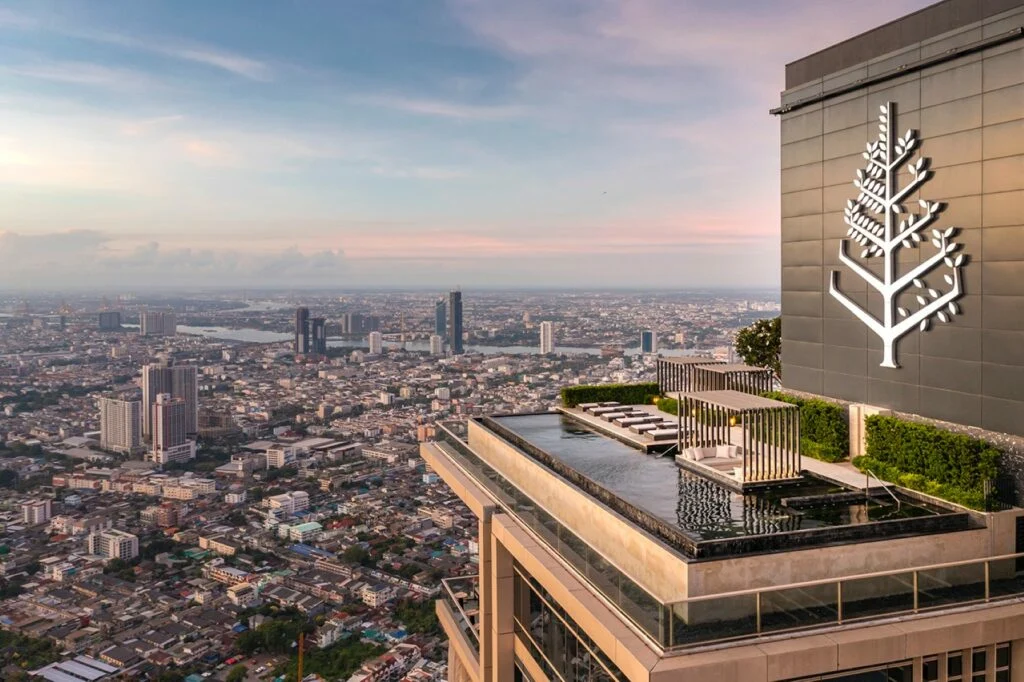
This injection of lifestyle scarcity has caused a paradigm shift in pricing metrics across Bangkok's urban real estate. Foreign buyers now compare Bangkok directly with global markets like Dubai, Marbella, or Australia's Gold Coast. Pricing has jumped dramatically: Aman residences rose from 400,000 Baht to 650,000–700,000 Baht per square meter, while the Porsche project exceeded one million Baht per square meter.
Resort Destinations Attract Foreign Capital
With inventory constraints in Bangkok, capital is migrating to resort destinations such as Phuket, Koh Samui, Hua Hin, and Pattaya. Major listed Thai developers are diverting resources to these areas, where they operate almost entirely on non-leveraged foreign capital. "In Phuket, you’re selling to a customer who will pay cash for the property," Barnett said. "It's a cash market." This migration allows developers to fund projects by targeting overseas demographics.
This trend mirrors shifts seen in other markets, such as hospitality investors shifting focus to regional Japan as urban construction costs double.
Global Hotel Groups Embrace Licensing
Global hotel conglomerates like Marriott, Hilton, IHG, and Hyatt are adapting by monetizing brand equity through licensing, avoiding heavy balance-sheet debt. Barnett concluded, "They want to start licensing their hotel name across a broader base. They don't only want to make management fees; they want to make licensing fees. These are listed companies, and their earnings are heavily based on growing their licensing income."
This strategic shift is also evident in the cruise sector, where Four Seasons II unveils residential suites for ultra-luxury yachting, further blurring the lines between hospitality and residential living.