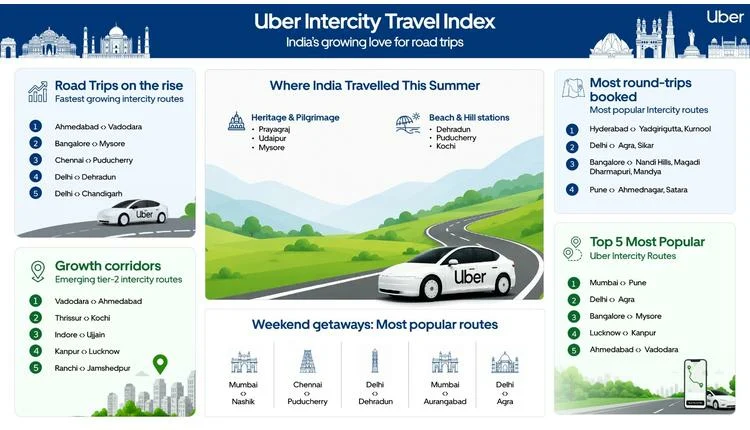
India's road trip culture is accelerating, according to the latest Uber Intercity Travel Index covering April to June 2026. The data reveals a significant uptick in intercity travel, fueled by improved highway infrastructure and a growing preference for experience-led journeys. While established corridors like Mumbai-Pune and Delhi-Agra remain popular, the fastest growth is now concentrated on routes connecting Tier-II cities and leisure destinations.
Key routes showing strong demand include Ahmedabad-Vadodara, Delhi-Dehradun, and Chennai-Puducherry. Weekend getaways to destinations such as Dehradun, Puducherry, and Nashik are particularly popular, while heritage and pilgrimage sites like Agra and Mysuru also attract substantial traffic. The index indicates that some travelers completed nearly 30 intercity trips over the three-month period, covering up to 1,500 kilometers.
Safety and Convenience Drive Adoption
Shiva Shailendran, Director of Revenue and Category Management at Uber India and South Asia, attributed the trend to a combination of factors. "A combination of safer intercity travel options like Uber Intercity along with an expanding and improved road infrastructure is driving road trips across India," he said. The company has introduced features such as Call2Ride, which enables bookings via phone without app access, and round-trip options to enhance convenience. Safety features including a 24x7 Safety Line and RideCheck further bolster the service's appeal.
The index also highlights spikes in demand around long weekends, such as May Day and Bakrid, underscoring the shift toward experience-led travel. This aligns with broader trends in the Indian travel market, where road trips are increasingly seen as a viable alternative to short-haul flights, especially on routes where airfares have risen sharply. For context, India's regional airfares have surged due to fuel costs and aircraft shortages, making road travel more competitive.
For travel industry professionals, the Uber Intercity Index offers actionable insights. Hoteliers and tour operators in Tier-II cities and leisure destinations should prepare for sustained demand from road-trippers. Destinations like Dehradun, Puducherry, and Nashik are emerging as key weekend markets, while heritage sites such as Agra and Mysuru continue to draw longer stays. The data also suggests that travelers are willing to cover significant distances, opening opportunities for multi-destination itineraries.
The trend also has implications for the aviation and rail sectors. As road infrastructure improves, airlines may need to reassess route profitability on short-haul corridors where road travel is becoming more attractive. Similarly, railway operators could see shifts in demand on routes paralleled by highways. For travel-tech vendors, the rise of app-based intercity mobility underscores the importance of seamless booking and safety features.
Uber's investment in safety and convenience features is likely to further accelerate adoption. The company's focus on round-trip bookings and phone-based reservations caters to a broader demographic, including those less comfortable with smartphone apps. As India continues to invest in road connectivity, Uber Intercity is positioned to facilitate city-to-city travel, offering both riders and drivers new opportunities.
For travel agents and tour operators, the index provides a roadmap for packaging road trip experiences. Combining Uber Intercity with hotel stays, guided tours, and local experiences could create compelling offerings for domestic travelers. The trend also aligns with the growing demand for sustainable travel, as road trips can be more carbon-efficient than short-haul flights when shared among multiple passengers.
In summary, the Uber Intercity Travel Index confirms that India's road trip surge is not a passing fad but a structural shift driven by infrastructure improvements and changing traveler preferences. For travel professionals, adapting to this trend will be key to capturing a growing segment of the domestic market.