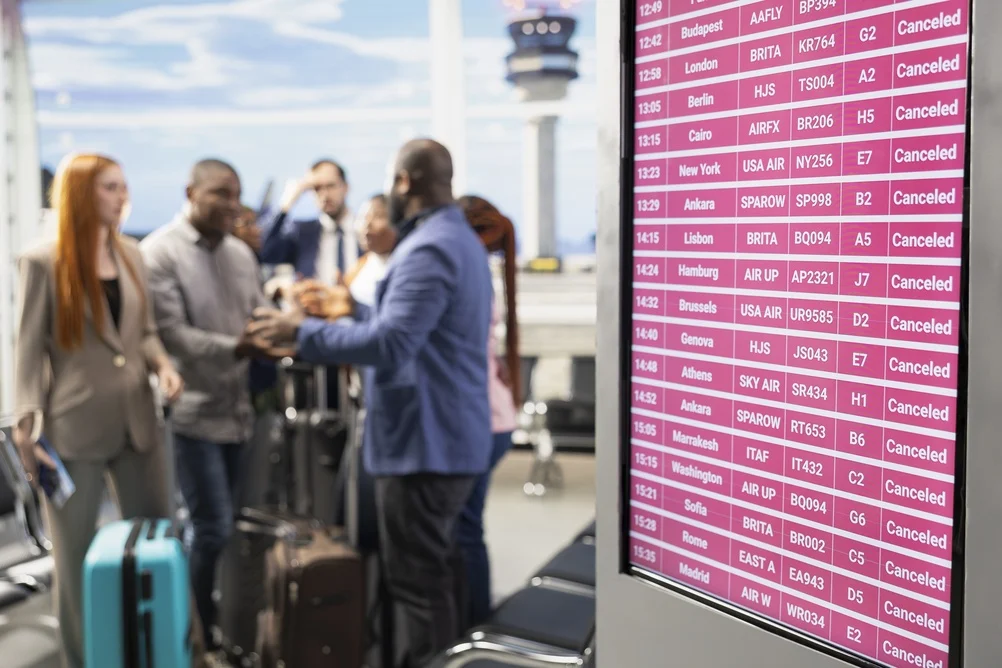
British travellers are bearing the brunt of flight disruptions financially, according to new data from AirHelp. The survey of nearly 2,000 passengers across the UK, Europe, the US, and Brazil found that UK passengers lose an average of $735 (£603) per major disruption — well above the global average of $535 (£439).
The findings underscore a persistent pain point for the travel industry: the financial and emotional toll of delays and cancellations. For airlines, hoteliers, and tour operators serving the UK market, this data signals a need for clearer communication and proactive support.
Self-employed travellers hit hardest
Among UK passengers, 75% report financial losses when flights are delayed or cancelled. Self-employed travellers are particularly vulnerable, losing nearly $829 (£680) in potential earnings per disruption. Tomasz Pawliszyn, CEO of AirHelp, noted: “UK travellers are paying the highest price in the world for flight disruption, and the damage goes well beyond the bank balance.”
Stress is also a major factor: 46% of UK passengers said the emotional impact of disruption outweighs the financial loss. This presents an opportunity for airlines and travel management companies to differentiate through better real-time support and compensation processes.
Low awareness of passenger rights
A striking 62% of respondents said airlines failed to inform them of their rights to compensation under UK261, the regulation that protects passenger rights for flights departing from or arriving in the UK. Nearly a third of UK passengers were unaware of existing regulations, and 25% did not claim compensation simply because they did not know they were entitled.
Pawliszyn emphasised the importance of making passenger rights clear to ensure travellers can confidently claim what they are owed. For travel professionals, this gap represents both a compliance risk and a service opportunity — especially as carriers like British Airways expand long-haul networks and face increased scrutiny on operational reliability.
The data aligns with broader industry trends. As Finnair and other carriers ramp up UK schedules for summer events, the potential for disruption — and associated costs — grows. Meanwhile, the UK CAA has warned that lithium battery mishandling could further disrupt peak summer flights, adding another layer of risk for passengers and airlines alike.
For travel agents and tour operators, the AirHelp survey reinforces the value of educating clients about their rights and offering compensation-claim assistance as a value-add service. For airlines, it highlights the need for transparent communication and streamlined claims processes — not just to comply with regulations, but to build trust and reduce the emotional toll on passengers.
AirHelp encourages travellers to visit their website or download their app for more information on passenger rights and compensation eligibility.