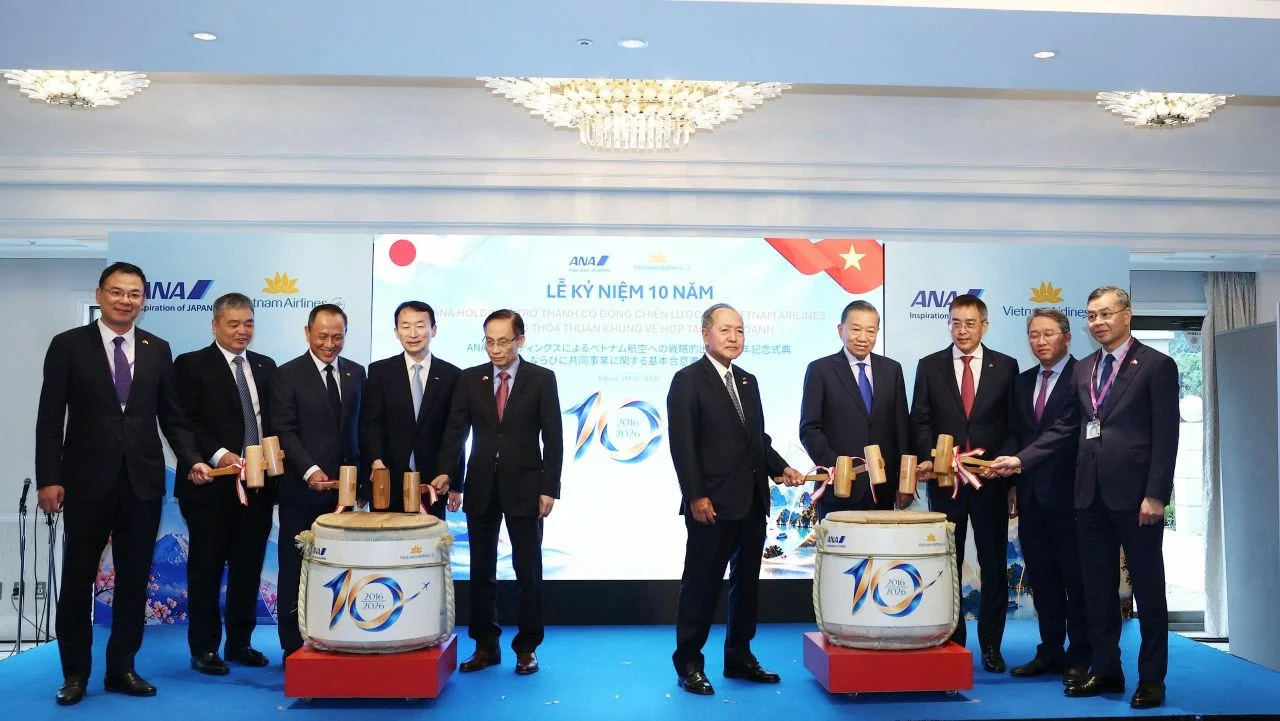
Vietnam Airlines and ANA Holdings have taken a significant step in their long-standing partnership by announcing plans to establish a joint venture. The agreement, exchanged in Tokyo on 9 November, was witnessed by Vietnam's General Secretary and President To Lam, underscoring the strategic importance of the move for bilateral economic ties, tourism, and cultural exchange.
The proposed joint venture, subject to regulatory approval, aims to deepen commercial cooperation between the flag carriers of Vietnam and Japan. For travellers, this could translate into more seamless booking processes, smoother connections, and a broader array of travel options across the two countries' extensive networks. The collaboration is also expected to stimulate trade and tourism flows, a key priority for both governments.
Expanding regional connectivity
Beyond the joint venture, Vietnam Airlines has signed three Memoranda of Understanding (MOUs) with Nagasaki Prefecture, Shimane Prefecture, and Narita Airport. These agreements focus on exploring the development of scheduled and charter flights, as well as promoting destinations in these regions. This move aligns with a broader trend of carriers seeking to tap into secondary Japanese markets, where demand for outbound travel to Southeast Asia remains robust.
The partnership between Vietnam Airlines and ANA is not new; the two carriers have collaborated for over a decade, including codeshare agreements and frequent flyer reciprocity. The joint venture would represent a more integrated approach, potentially aligning schedules, pricing, and revenue management on key routes between Hanoi, Ho Chi Minh City, and major Japanese cities such as Tokyo, Osaka, and Nagoya.
Industry observers note that the move comes as the Asia-Pacific aviation market continues its recovery, with Vietnam emerging as one of the fastest-growing aviation markets in the region. The country's rising middle class and increasing inbound tourism from Japan have made it an attractive partner for ANA, which has been expanding its international footprint.
The joint venture also mirrors a similar structure recently launched by Air Astana and China Southern, marking the first such partnership between Kazakhstan and China. As airlines seek to consolidate their positions in key corridors, joint ventures are becoming a preferred tool for enhancing competitiveness without full mergers.
For travel agents and tour operators, the development could mean more competitive fares and improved connectivity on Japan-Vietnam routes, potentially boosting demand for leisure and business travel. The MOUs with regional Japanese prefectures may also open up new charter opportunities, particularly for groups and MICE travel.
Vietnam Airlines has been actively modernising its fleet and expanding its network, with recent additions of long-haul routes to Europe and Australia. ANA, meanwhile, has been investing in premium cabins and digital services, as seen in its recent unveiling of new first and business class seats for its A350-900 fleet.
The joint venture is expected to receive regulatory scrutiny from both Japanese and Vietnamese authorities, but given the strong political backing, approval is likely. Once operational, it could serve as a model for deeper cooperation between airlines in the region, particularly as Indochina's unified visa plan aims to boost tourism across Cambodia, Laos, and Vietnam.
As the aviation industry continues to evolve, partnerships like this one are becoming essential for carriers to remain competitive. The Vietnam Airlines-ANA joint venture, if approved, will not only enhance connectivity but also strengthen the economic and cultural bonds between two nations that share a growing tourism relationship.