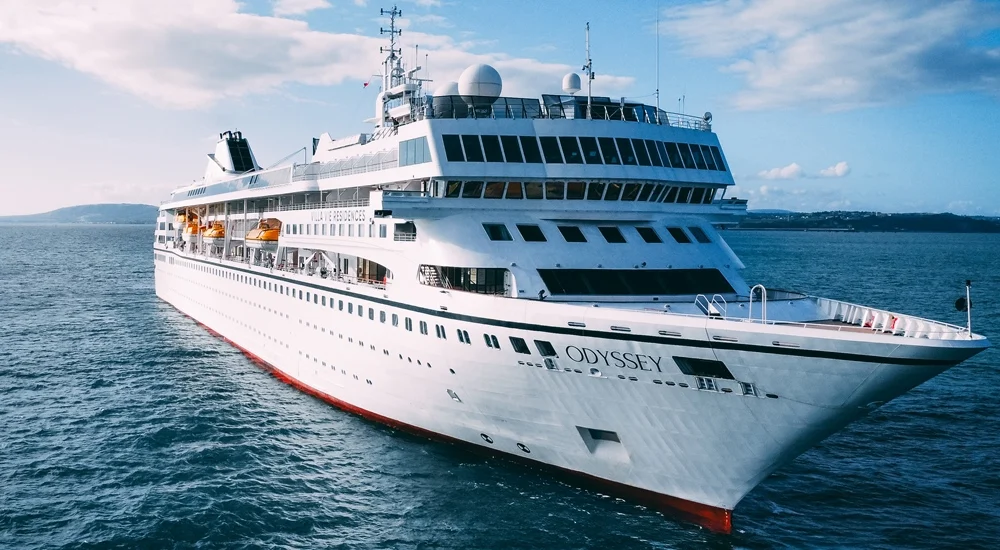
The residential cruise venture Villa Vie Residences came to an abrupt halt on 9th November when its ship, the Odyssey, was arrested in Singapore. The arrest followed the vessel's abandonment of passengers in Cambodia on 27th October, leaving retirees who had invested between US$120,000 and US$440,000 in onboard cabins with just hours to disembark.
The Singaporean Maritime and Port Authority confirmed the arrest, stating: "The vessel has been placed under arrest pursuant to a court order. The crew onboard are reported to be well, and arrangements for their welfare and wellbeing are being managed by the vessel's creditors. There are no passengers on board."
Villa Vie Residences, which marketed the Odyssey as an idyllic cruise-for-life, filed for Chapter 11 bankruptcy on 29th October, citing unsustainable financial pressure from rising fuel prices. Chief executive Mikael Petterson explained: "For us, when our monthly expenses go up from $400,000 to $2 million, where are we going to get the $1.6 million? We've borrowed money, we've stretched our payrolls as far as we can, and we're at a point where it's just at a breaking point where we need capitalisation."
This is the second high-profile failure in the residential cruise niche, following the 2023 collapse of Life at Sea Cruises. The repeated setbacks are likely to dampen consumer appetite and institutional financing for startup "life-at-sea" business models.
Fuel exposure and the unhedged risk
At the heart of Villa Vie's undoing was acute exposure to unhedged fuel spikes. While industry giants like Carnival Corporation, Royal Caribbean Group, and MSC Cruises use complex financial derivatives and massive capital reserves to insulate against market volatility, smaller niche operators remain directly vulnerable to geopolitical shocks.
Villa Vie reported that escalating conflict in Iran drove monthly fuel expenses per cabin from US$1,800 to as much as US$8,000 in Asian waters, rapidly eroding operating margins. The vessel's subsequent detention over roughly US$500,000 in unpaid fuel bills underscores glaring gaps in consumer protection under international maritime law. When a ship is arrested, maritime lien holders and mortgage creditors take strict legal precedence, leaving passengers—classified as unsecured creditors—with slim prospects of recovering their life savings should the vessel go to auction.
Wider implications for the cruise industry
Beyond the residential niche, the fallout carries tangible implications for the wider global cruise industry, particularly across Asia-Pacific's rapidly expanding cruise corridors. In emerging Southeast Asian hubs, port authorities, bunkering firms, and provisioning vendors are expected to tighten credit terms, increasingly demanding upfront payments or bank-backed letters of credit from independent cruise lines to mitigate default risks.
Simultaneously, maritime regulators in major source markets, including the United States and Europe, will likely face renewed pressure to enforce stricter escrow and refund safeguards for operators collecting substantial upfront capital. The fuel-cost squeeze affecting cruise lines is not limited to residential operators; it threatens itinerary profitability across the board, particularly on fuel-intensive, long-haul Asian deployments.
Reputational contagion and consumer confidence
Another pressure point is reputational contagion. According to the Cruise Lines International Association (CLIA), first-time cruisers account for 31 percent of recent passengers and serve as the primary engine for sector growth. Viral imagery of displaced retirees stranded in foreign ports risks denting broader public confidence, compelling established mainstream lines to double down on messaging around their financial resilience and consumer guarantees.
While the Odyssey's demise stems from the structural flaws of an undercapitalised startup, it serves as a stark warning to the wider industry. Sustained energy shocks from Middle East hostilities threaten itinerary profitability across the board, and the legal framework offers little protection for consumers who commit large sums to long-term cruise residencies.
For travel professionals, the lesson is clear: due diligence on operator financial health and fuel-hedging strategies is essential when recommending residential cruise products. The industry must also advocate for stronger consumer safeguards to prevent similar losses in the future.