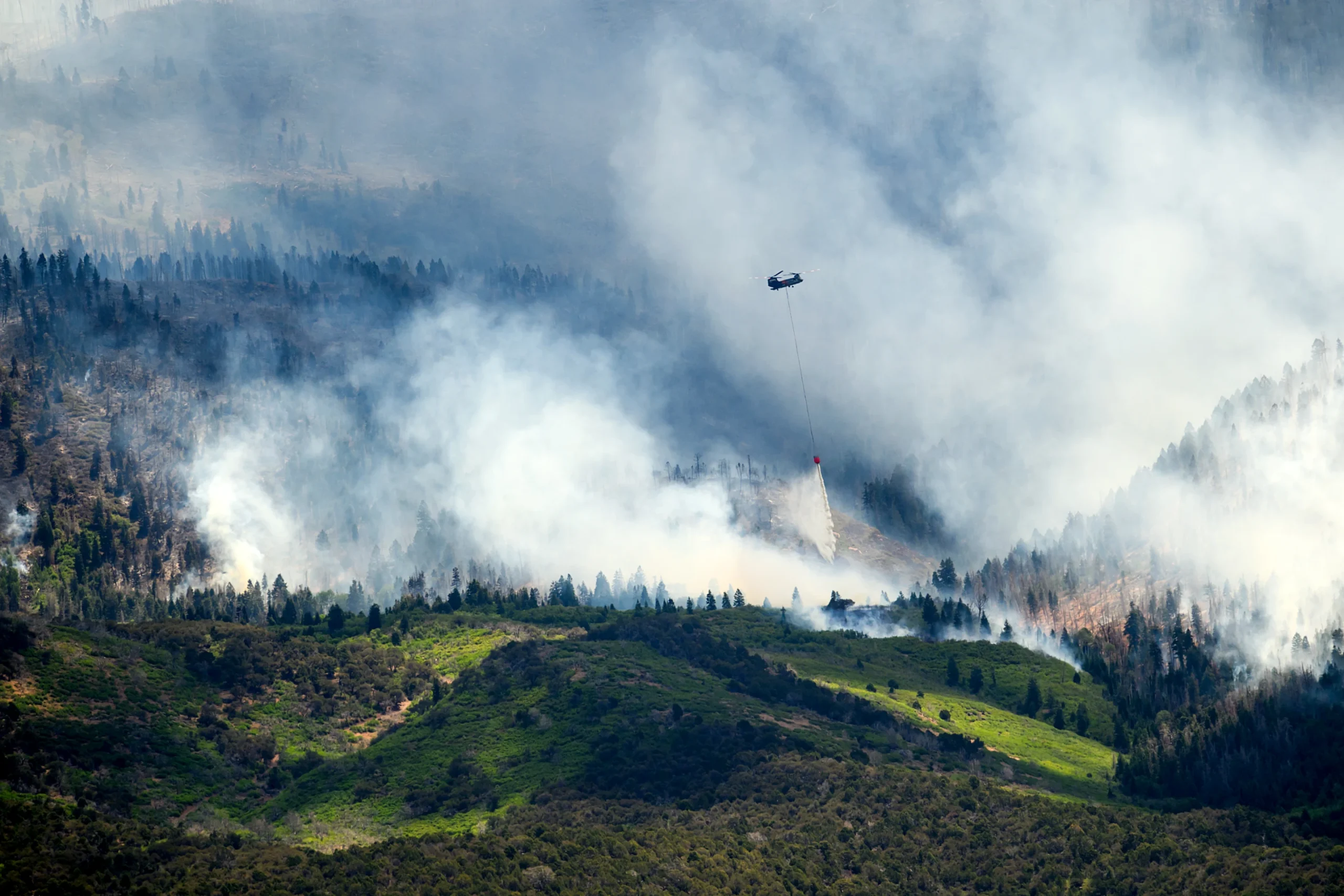
Wildfires sweeping across the western United States are delivering a heavy blow to the summer travel economy, forcing evacuations, closing highways, and cutting off access to popular destinations just as national parks, mountain resorts, and outdoor attractions hit their busiest weeks.
By mid-August, more than 46,500 wildfires had scorched roughly 6.4 million acres nationwide, according to the Associated Press. Firefighter entrapments—where crews are caught or overrun by flames—have reached their highest year-to-date level in two decades, underscoring the severity of the season.
For travel professionals, the disruption extends far beyond the burned acreage. Smoke can drift hundreds of miles, while evacuation orders, road closures, and precautionary power shut-offs can hammer destinations that remain physically untouched. A hotel may be open and an attraction undamaged, yet travellers still cancel because the access road is closed, the air is hazardous, or the forecast looks uncertain.
Spokane fires show how fast disruption hits
The fires around Spokane, Washington, illustrated how quickly conditions can deteriorate. Three blazes that ignited in early August spread toward residential and commercial zones, placing roughly 64,000 people under immediate evacuation orders at the peak. At least 700 structures were destroyed, and more than 250,000 acres were burning across the state at the time.
Smoke blanketed areas well beyond the burn zones, adding another layer of disruption across the drought-stricken Pacific Northwest. A week later, the picture had shifted: nearly 1,700 firefighters had halted the spread of the three major Spokane-area fires, and many residents were returning home. Some roads reopened, though the hardest-hit communities remained inaccessible. The fires collectively burned about 10,000 acres and destroyed or badly damaged more than 900 homes.
For hotels, tour operators, and travel management companies, that rapid swing from evacuation to partial reopening creates a difficult operating environment. Decisions on cancellations, refunds, and itinerary changes often must be made before there is any certainty over how long a fire—or its smoke—will affect a destination. It is no longer enough to ask whether the hotel itself is safe.
Big Sur: wildfire risk meets a major tourism corridor
California's Big Sur coast has faced its own threat during the summer peak. Evacuation orders were issued in August as the Timber Fire burned through mountainous terrain in Monterey County, growing to around two square miles by August 10.
Big Sur presents a particular challenge because its visitor economy depends heavily on road access. Highway conditions can determine whether hotels, restaurants, and attractions receive visitors even when individual properties remain outside an evacuation zone. The commercial damage can therefore arrive well before the flames do.
Travellers confronted with smoke forecasts, changing evacuation maps, or possible highway restrictions can switch destinations, shorten stays, or cancel altogether. For smaller tourism businesses operating through a concentrated summer season, several disrupted weekends can carry an outsized financial cost. The same problem applies across much of the western US, where outdoor tourism often overlaps with the areas most exposed to extreme heat, drought, and wildfire.
National parks face a difficult balancing act
Wildfire conditions are also complicating operations around America's national parks, where peak-season visitor volumes leave little room for disruption. In southwest Utah, the Cottonwood Fire had expanded beyond 144 square miles in June, damaging Eagle Point ski resort and summer cabins and prompting evacuations in surrounding communities. Smoke reached areas around Bryce Canyon, although tourism continued.
Northern Arizona offered a different example of how fire risk can affect travellers without a destination actually burning. Utilities initiated precautionary electricity shut-offs around Grand Canyon Village and Tusayan because of wildfire danger. Visitors could still enter Grand Canyon National Park, but travellers were advised to download maps before arriving and ensure phones and other devices were charged.
For tourism operators, those measures matter. Power cuts can affect payment systems, communications, and accommodation operations. Mobile coverage and navigation become more critical when roads are closed or diversions introduced. Visitors arriving on fixed itineraries may have little flexibility if conditions change midway through a trip.
The Grand Canyon also carries the scars of the previous fire season. In 2025, the Dragon Bravo Fire destroyed the historic Grand Canyon Lodge on the North Rim, along with tourist cabins, employee housing, and other structures. Reuters reported that the blaze expanded sharply after destroying the lodge. For park gateways that rely heavily on seasonal tourism, the effects of such losses can continue long after a fire is contained.
Smoke widens the travel disruption zone
Perhaps the hardest wildfire risk for the travel sector to manage is smoke. By August 5, 94 major wildfires were burning across 13 states, and more than 5.5 million acres had already burned. The fires stretched emergency resources across Washington, Oregon, Idaho, and other western states. Smoke does not respect those boundaries. Depending on wind patterns, poor air quality can reach cities and tourism destinations far removed from an active fire, influencing outdoor activities and traveller decisions without producing the highly visible disruption of an evacuation.
Aviation has experienced the consequences before. During previous severe fire seasons, smoke has forced flight diversions and cancellations at airports across the West, including in Denver, Salt Lake City, and Reno. Airlines have had to adjust schedules and reroute aircraft, adding to operational costs and passenger frustration.
For travel professionals, the takeaway is clear: wildfire risk is no longer a remote concern but a core operational factor for summer planning. As the climate continues to warm, the industry must build resilience into its offerings—whether through flexible booking policies, robust communication with travellers, or contingency plans for power and road disruptions. The summer of 2026 is proving that the cost of inaction is measured not just in acres burned, but in revenue lost.