Xi'an has become the first city globally to deploy a commercial multimodal AI model dedicated to cultural tourism, with the BoGuan Large Language Model now live across travel apps, heritage preservation tools, and short drama production. Developed by Shaanxi Culture Industry Investment Group (SCG) and Huawei, BoGuan was unveiled in September 2025 and upgraded to a multimodal version in 2026, capable of processing text, images, audio, and video.
The model is trained on a dataset exceeding 1.2 petabytes of cultural material, including 31 million images, 4.4 million minutes of video footage, and 510 three-dimensional models drawn from Shaanxi's intangible cultural heritage. "Only with high-quality data can we avoid generic, homogeneous outputs and instead generate accurate patterns and content," said Jin Yan, Chairman of SCG's Digital and Intelligent Culture Technology Group.
Transforming the Visitor Experience
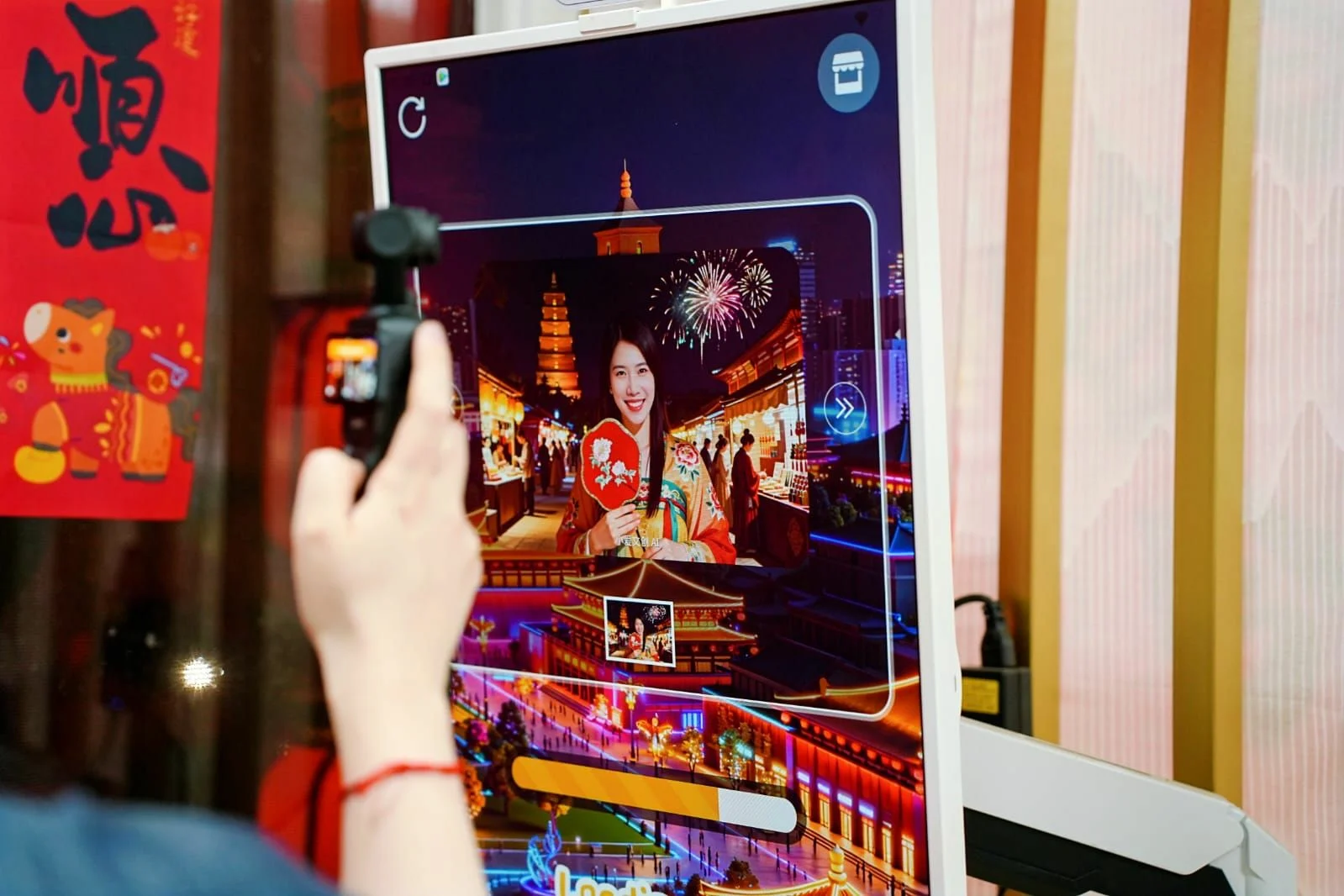
The most immediate change has been in how visitors experience the city. The GO-SHAANXI app, powered by BoGuan, now has more than four million users who can converse with an AI travel companion to build itineraries, get real-time performance recommendations, and navigate attractions. A separate mini-program, Zhiying Camera, lets visitors upload photos and instantly place themselves inside AI-generated scenes from the Tang Dynasty.
At the Grand Tang Mall — one of Xi'an's most visited sites, drawing more than 4.3 million people during the 2026 Lunar New Year — the model has reshaped how the destination monetises foot traffic. Livestreaming powered by the BoGuan-enabled 5G-A network has nearly doubled average user dwell time and increased average spending per visitor by 62%, according to SCG. "The network is no longer just basic infrastructure," said Jin Han, spokesperson for the Grand Tang Mall. "It enhances visitor experience, strengthens smart management capabilities, and supports the production of high-quality cultural tourism content."
Preserving Craft Before It Disappears
Beyond tourism applications, the model is being used to document and digitise traditional crafts at risk of being lost. SCG has collected and labelled data across six categories of endangered intangible cultural heritage in Shaanxi, including Hua County shadow puppetry, Fengxiang clay sculpting, and Xiqin embroidery. The data is used to train BoGuan to accurately reproduce historical techniques, textures, and forms.
For working craftspeople, the practical effect has been significant. Zhang Beiyuan, a dough sculpture artisan whose work blends Shaanxi folk tradition with contemporary references, said the model allows him to complete a piece that previously took two to three months in under a week.
The model also addresses a longstanding problem in AI-generated cultural content: historical inaccuracy. "When it comes to cultural content and historical reconstruction, our principle is always high fidelity and high-quality presentation," Jin said. "We do not compromise content standards for the sake of technical adaptation." BoGuan, trained on detailed records of specific cultural objects, can reconstruct precise materials, proportions, and motifs — a gap SCG demonstrated by comparing outputs for the Gilt-Silver Flask with Dancing Horse Design, now housed in the Shaanxi History Museum.
5G-A Network Built into the Architecture
Underpinning the visitor experience is a 5G-A network deployed by China Telecom Shaanxi and Huawei across the Grand Tang Mall, a 0.987-square-kilometre block housing 46 network sites, of which 31 are 5G-A. The network delivers a peak downlink rate of 3.5 Gbps and uplink of 600 Mbps — roughly ten times the speed of standard 5G — and was designed to handle simultaneous access for tens of thousands of visitors without disrupting the site's Tang Dynasty architectural aesthetic.
"We make the technology invisible, but keep the signal at full bars," said Wang Hao, Director of Mobile Communications Network Business at China Telecom Shaanxi. During the 2026 May Day holiday, the network supported concurrent access for 23,000 users at peak.
"Artificial intelligence is not simply a stack of technologies," said Edric Chu, General Manager of Huawei's Shaanxi representative office. "It has become a key enabler that can activate thousands of years of cultural heritage, reshape travel experiences, and inject new momentum into the industry."
SCG said it plans to replicate the BoGuan model across other tourist attractions in Shaanxi and scale its short drama production base — currently the largest in western China — with a target of completing more than 100 AI-assisted productions in 2026, up from 50 in 2025. For travel professionals, this case study offers a blueprint for integrating AI and 5G-A to boost visitor spend and preserve cultural assets, a model that could be adapted by destinations worldwide. For more on how cultural tourism is evolving, see Beijing Art Season 2026 Draws Record 1.27M Visitors, Bolsters City's Cultural Tourism Appeal and Antigua Carnival 2026: Eleven Days of Soca, Steelpan and Cultural Tourism.