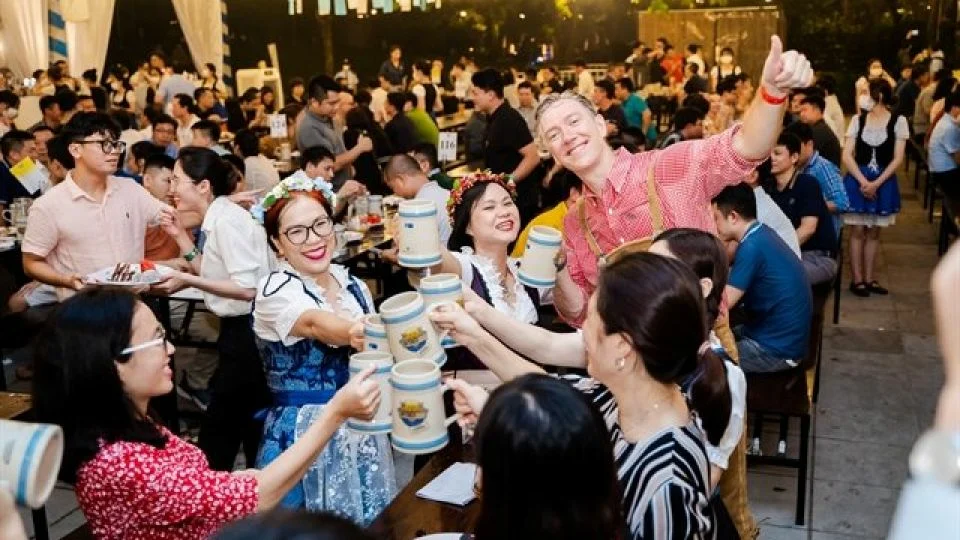
Digital travel platform Agoda has released data showing a marked increase in accommodation searches from Asian markets for Germany's Oktoberfest, with interest extending well beyond the festival's traditional home in Munich. As the 191st edition of the event concluded on 4 October, the platform's search metrics point to a growing appetite among Asian travelers to combine the beer festival with wider exploration of Germany.
Munich's Theresienwiese remains the top draw for Asian visitors, but the data reveals a notable shift: Berlin has emerged as a surprise favorite, recording a 29% year-on-year increase in searches. This suggests that many travelers are pairing the Munich festival with visits to the capital, a trend that aligns with broader patterns of multi-city itineraries across Europe. Frankfurt, Cologne, Hamburg, and Düsseldorf also feature prominently in the top six searched cities, indicating a spread of interest across Germany's major urban hubs.
Beyond the big cities, Bavarian towns such as Füssen, Augsburg, and Garmisch-Partenkirchen are gaining traction, likely due to their Alpine scenery and fairy-tale castles. Stuttgart, home to Germany's second-largest beer festival, the Cannstatter Volksfest, also saw increased search activity, suggesting that some travelers are seeking alternative or additional festival experiences.
China leads the surge, but Japan dominates Munich searches
China stands out with a 98% rise in accommodation searches compared to the same period last year, leading the surge alongside South Korea. India and Japan also recorded healthy increases of 29% and 25%, respectively. Andrew Smith, Senior Vice President of Supply at Agoda, commented: "Oktoberfest has always been one of the world's great cultural events, but what we're seeing now is a new wave of interest from across Asia."
In Munich itself, Japan leads the Asian markets for accommodation searches, followed by India, South Korea, China, and Taiwan. This pattern underscores a preference among Japanese travelers for the authentic Munich Oktoberfest experience, while travelers from other Asian markets are more inclined to explore multiple German cities. The data also shows that only 3% of searches included children, reinforcing Oktoberfest's appeal as an adult-oriented getaway.
For travel professionals, these insights offer actionable intelligence. The rise in searches from China and South Korea aligns with broader trends in Asian outbound travel, as seen in Indonesia's niche tourism push targeting South Korean travelers. Similarly, the growing interest in multi-city German itineraries mirrors the strong pull of European cruises among Singapore travelers, suggesting that Asian travelers are increasingly seeking comprehensive European experiences.
Agoda's platform, available in 39 languages, offers a range of accommodation and flight options that cater to this demand. The company's data-driven approach, which has also been applied to feedback-driven tech upgrades with Hoshino Resorts, continues to provide valuable market intelligence for the travel industry.
As Oktoberfest's global appeal grows, the festival's economic impact on German tourism is likely to expand, with Asian markets playing an increasingly significant role. For hoteliers and tour operators, the data suggests opportunities to package Oktoberfest with broader German itineraries, particularly for travelers from China and South Korea. The trend also highlights the importance of digital platforms in capturing and analyzing search behavior, a key tool for AI-driven development workflows in Southeast Asia and beyond.
With the festival now concluded, industry stakeholders will be watching to see if this Asian interest translates into sustained growth in future years, and whether other German events can similarly benefit from the region's expanding travel appetite.