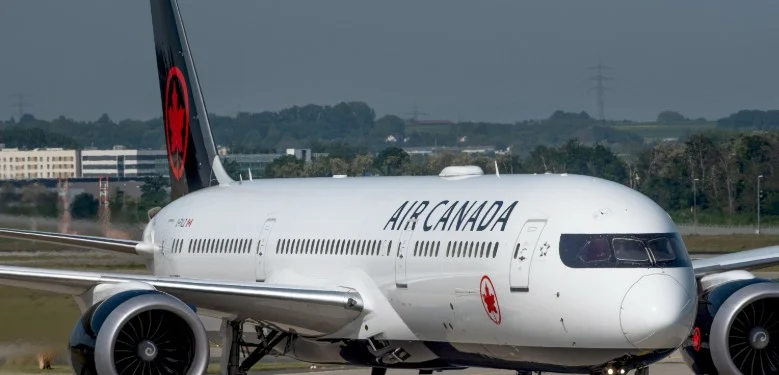
Air Canada is set to shake up the trans-Pacific market with a new year-round non-stop service linking Vancouver and Guangzhou, beginning May 4, 2027. The Canadian flag carrier will operate three weekly flights using Boeing 787-9 Dreamliners, positioning itself as the only North American airline offering direct access to the southern Chinese metropolis.
Guangzhou, the capital of Guangdong province and a linchpin of the Pearl River Delta, has long been a stronghold for China Southern Airlines. The carrier has operated Guangzhou–Vancouver and Guangzhou–Toronto routes for years, and previously extended its network to Latin America via a Guangzhou–Vancouver–Mexico City service. That route underscored the sustained passenger demand between Guangzhou and North America, a market that has been almost exclusively served by Chinese carriers.
For Air Canada, the new service is a strategic play to tap into the Pearl River Delta's vast outbound travel market and feed passengers into its extensive North American network. Vancouver serves as the airline's primary trans-Pacific gateway, offering connections to major Canadian cities and onward links to the United States. By adding Guangzhou, Air Canada aims to capture a share of the high-yield traffic that has historically flowed through China Southern's hub.
Challenging China Southern's Dominance
The Guangzhou–North America corridor has been a lucrative franchise for China Southern, which has leveraged its Guangzhou hub to connect southern China with Vancouver, Toronto, and other points. Air Canada's entry into this market marks a significant competitive shift, giving travelers an alternative to the Chinese carrier's services. The move also aligns with Air Canada's broader strategy of expanding its Asia-Pacific footprint, following recent announcements of new routes such as Toronto–Oslo and Toronto–Shannon.
Industry analysts note that Air Canada's timing is deliberate. With China's aviation market undergoing regulatory changes—including new airline exit rules aimed at curbing overcapacity—the competitive landscape is evolving. Air Canada's move could pressure China Southern to respond, potentially leading to fare adjustments or enhanced services on the route.
For travel agents and tour operators, the new service opens up more options for clients traveling between North America and southern China. The year-round schedule provides stability for business travelers and leisure tourists alike, with convenient connections through Vancouver to cities across Canada and the U.S. Air Canada's partnership with its joint venture partners in the trans-Pacific market could also enhance connectivity for passengers originating beyond Guangzhou.
The airline's choice of the 787-9 for this route reflects its focus on efficiency and passenger comfort. The Dreamliner offers a modern cabin with lie-flat business class seats, making it well-suited for the long-haul journey. Air Canada has been progressively deploying the 787-9 on key Asia-Pacific routes, and Guangzhou will join destinations like Tokyo, Seoul, and Shanghai in its network.
Guangzhou itself is a major economic hub, home to industries ranging from manufacturing to technology, and a gateway to the broader Pearl River Delta region. The city's Baiyun International Airport is one of China's busiest, with extensive domestic and international connections. Air Canada's service will provide a direct link for business travelers and tourists, bypassing the need to connect through Beijing or Shanghai.
The announcement comes as Air Canada continues to rebuild its international network following the pandemic. The carrier has been aggressive in adding new routes and frequencies, particularly in the Asia-Pacific region, where demand has rebounded strongly. The Vancouver–Guangzhou service is expected to be a key component of Air Canada's summer 2027 schedule, and the airline is likely to monitor load factors closely to assess the potential for additional frequencies.
For China Southern, the competitive threat is real. The airline has long enjoyed a near-monopoly on non-stop services between Guangzhou and North America, and Air Canada's entry could erode its market share. China Southern may respond by enhancing its own product or adjusting pricing, but for now, Air Canada's move signals a new era of competition on this important route.
Travel industry stakeholders, including corporate travel managers and online travel agencies like Trip.com, will be watching the route's performance closely. The new service could also stimulate demand for travel to southern China, particularly as the region continues to attract foreign investment and tourism. With its strategic positioning and strong network, Air Canada is well-placed to make inroads into this market.