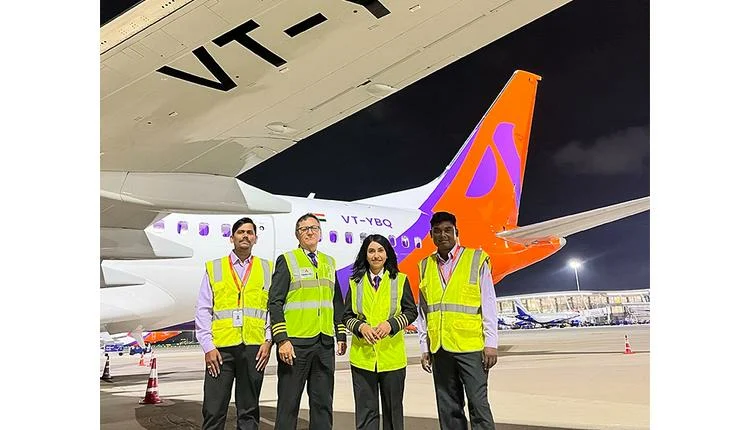
Akasa Air has reached a significant fleet milestone with the induction of its 40th aircraft, a Boeing 737 MAX 8-200 (registration VT-YBQ). The aircraft arrived at Kempegowda International Airport in Bengaluru on 3 July 2026, completing a delivery flight from Seattle via Reykjavik and Cairo. This addition underscores the carrier's rapid expansion since its launch in August 2022.
Fleet Growth and Network Expansion
Within just four years, Akasa Air has established itself as a formidable player in India's aviation sector. The airline now operates 40 aircraft connecting 28 domestic and seven international cities. Its firm order for 226 Boeing 737 MAX aircraft—with 186 more deliveries expected over the next six years—positions it for sustained growth. Akasa Air aims to become one of the top 30 global airlines by the end of the decade.
The latest aircraft is configured with Safran Z200 seats featuring a four-inch recline, ergonomic backrests, and USB ports, enhancing the in-flight experience for modern travellers. This focus on passenger comfort is part of a broader strategy to differentiate in a competitive market. The airline has already served over 28 million passengers since its inception.
Akasa Air's expansion comes as India's aviation sector continues to grow rapidly. The carrier recently launched operations from Noida International Airport with a route to Navi Mumbai, further extending its domestic footprint. For more on that development, see Akasa Air Launches Noida International Airport Operations with Navi Mumbai Route.
Financial and Operational Momentum
The airline's financial performance mirrors its operational growth. Akasa Air's FY2025–26 revenue surged 37% year-on-year, driven by capacity expansion and network additions. This financial strength supports its aggressive fleet acquisition plan. For a deeper dive into the numbers, read Akasa Air's FY2025–26 Revenue Surges 37% on Capacity Growth and Network Expansion.
Industry observers note that Akasa Air's rapid scaling is enabled by the Boeing 737 MAX's fuel efficiency and commonality across its fleet. The carrier's focus on operational reliability and customer service has made it a preferred choice for both leisure and business travellers. Its international network now includes destinations in the Middle East and Southeast Asia, with further expansion planned.
Broader Industry Context
The delivery milestone comes amid global supply chain challenges that have delayed aircraft deliveries for many carriers. The International Air Transport Association (IATA) has identified four key supply chain fixes needed as the aircraft backlog hits 18,000 units. Akasa Air's ability to secure deliveries on schedule highlights its strong relationship with Boeing and lessors. For more on industry-wide constraints, see IATA Targets Four Supply Chain Fixes as Aircraft Backlog Hits 18,000.
As India's aviation market matures, Akasa Air's trajectory offers a case study in disciplined growth. The airline's combination of modern fleet, cost efficiency, and customer-centric product positions it well to capture market share from legacy carriers. With 186 more aircraft on order, the next six years will be critical in determining whether it can achieve its ambition of joining the global top 30.