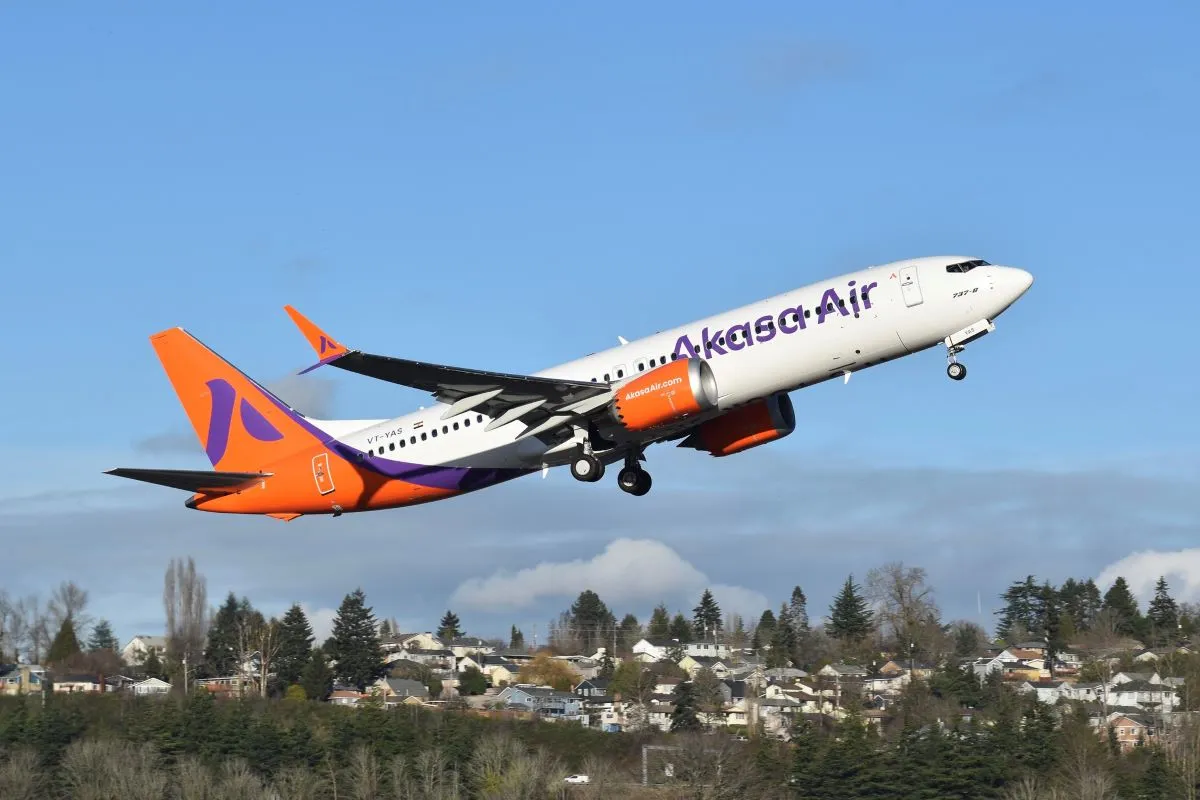
Akasa Air has closed its fiscal year ending 31 March 2026 with operating revenue up 37%, driven by a 30% increase in capacity as measured by Available Seat Kilometres (ASKs). The carrier added 10 Boeing 737 MAX aircraft during the period, bringing its total fleet to 37 units, and reported a 10% improvement in Revenue per Available Seat Kilometre (RASK). EBITDAR margins surged 60%, even as the industry contended with persistent cost pressures.
Network Expansion and International Growth
The airline expanded its network to 26 domestic and six international destinations, with international operations now accounting for more than 23% of total capacity. Akasa Air maintained load factors of approximately 88% and became the fastest Indian carrier to serve 25 million passengers by the end of FY2025–26. The carrier's strategic push into international markets included new routes to the Middle East and Southeast Asia, complementing its domestic footprint.
Chief Financial Officer Ankur Goel highlighted the airline's achievements: "We achieved strong revenue growth, improved margins, expanded our fleet and network, and further strengthened our financial foundation."
Investor Confidence and Diversification
Akasa Air's financial position was reinforced by a strategic investment transaction involving Premji Invest, 360 ONE Asset, Claypond Capital, and the Jhunjhunwala family. This injection of capital reflects sustained investor confidence in the airline's long-term strategy. The carrier also diversified its revenue streams through investments in ancillary products and technology platforms, including enhanced digital retailing and personalization tools.
The airline's focus on ancillary revenue aligns with broader industry trends, as carriers increasingly look to non-ticket income to bolster margins. Akasa Air's technology investments are designed to improve the customer experience and drive incremental revenue from baggage, seat selection, and onboard services.
Outlook for FY2026–27
Looking ahead to FY2026–27, Akasa Air plans to strengthen its presence in both domestic and international markets. The carrier is positioning itself to leverage opportunities at Navi Mumbai International Airport and Noida International Airport, both of which are expected to open new catchment areas and reduce congestion in the Mumbai and Delhi markets. The airline has already announced plans to launch operations from Noida International Airport with a route to Navi Mumbai, as reported in Akasa Air Launches Noida International Airport Operations with Navi Mumbai Route.
With a focus on operational efficiency and customer experience, Akasa Air is committed to building a sustainable and globally competitive airline. The carrier's disciplined capacity management and cost control measures are expected to support continued margin improvement, even as fuel prices and competitive dynamics remain uncertain.
Akasa Air's performance comes amid a broader recovery in Indian aviation, where domestic passenger traffic has rebounded strongly and international travel is gaining momentum. The airline's ability to maintain high load factors while expanding its network positions it well to capture further growth in the world's third-largest aviation market.