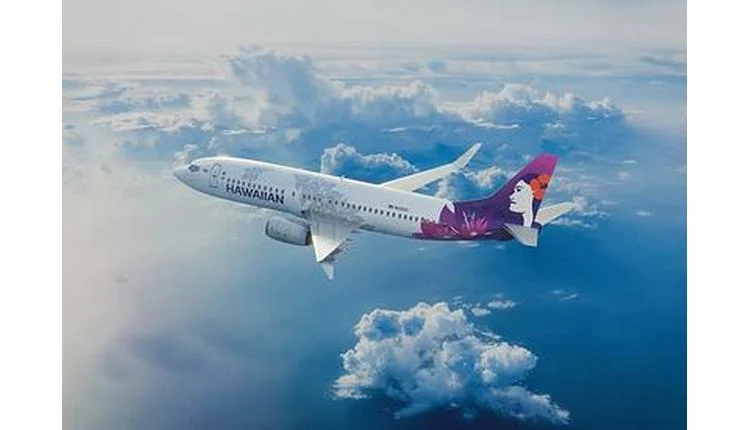
Alaska Airlines has confirmed plans to deploy Boeing 737-800 aircraft on Hawaiian Airlines' inter-island network, marking a significant fleet modernization for the carrier's Neighbor Island services. The transition, scheduled to begin in 2028, will replace the existing Boeing 717 fleet and bring a substantial upgrade in passenger amenities and operational efficiency.
Fleet Modernization and Premium Capacity
The 737-800s will feature double the number of First Class seats compared to the current 717s, along with more than 30 Premium Class seats. This configuration is designed to offer greater upgrade opportunities for loyalty program members across both Alaska Airlines and Hawaiian Airlines. Each seat will be equipped with reclining leather seating, power outlets, USB charging ports, and access to fast, free Starlink WiFi — a connectivity solution already being rolled out across Alaska Air Group's fleet.
Honolulu will serve as the base for these aircraft, which will be operated by locally based crews to maintain continuity in service and local employment. The 737-800 is well-suited for the demanding short-haul, high-cycle operations typical of inter-island flying, offering a proven airframe with lower per-seat costs and greater reliability than the older 717s.
Interim Service and Strategic Context
Before the full fleet transition, Alaska Airlines will begin supplementing Hawaiian's current operations with 737 aircraft starting in October 2025. Initially, the carrier will operate three daily round trips between Honolulu (HNL) and Kahului (OGG) on Maui. This interim deployment allows Alaska to test operational integration and build passenger familiarity ahead of the broader rollout.
The move is part of Alaska Air Group's dual-brand strategy following its acquisition of Hawaiian Airlines. By harmonizing fleets and leveraging the 737's commonality across both carriers, the group aims to reduce maintenance complexity, improve scheduling flexibility, and enhance the overall customer experience. The decision also signals a long-term commitment to the Hawaiian market, which remains a critical component of the group's transpacific and domestic network.
Diana Birkett Rakow, CEO of Hawaiian Airlines, emphasized the strategic importance of the investment: "This decision reflects our commitment to invest in Hawaii for the long term to strengthen Hawaiian Airlines and to honor the local expertise, culture, and care that have made Hawaiian the airline of Hawaii for nearly a century."
Jim Landers, Head of Hawaii Operations, added: "The 737-800 gives us a proven capable platform for the next chapter of Neighbor Island flying."
Industry Implications
For travel professionals, this fleet shift has several implications. The increased premium cabin capacity on inter-island routes will open new opportunities for corporate travel managers and loyalty program partners to offer upgrades and enhanced experiences. The introduction of Starlink WiFi across the fleet also aligns with broader industry trends toward seamless connectivity, a factor increasingly important for business travelers and leisure passengers alike.
The transition also positions Hawaiian Airlines to better compete with other carriers serving the islands, including Southwest Airlines, which operates a 737 fleet on inter-island routes. By standardizing on the 737, Alaska Air Group can achieve greater economies of scale in maintenance, training, and operations — a move that echoes similar fleet rationalization strategies seen at other major airline groups.
For agents and tour operators, the improved product should make Hawaiian inter-island itineraries more attractive, particularly for clients seeking premium experiences. The ability to book First Class seats on short hops between islands could become a differentiator for high-end travel packages.
This development also comes amid broader fleet modernization efforts across the industry. For context, Philippine Airlines recently selected Rolls-Royce Trent XWB-97 engines for its A350-1000 fleet, while Malaysia Airlines integrated IATA Turbulence Aware for real-time weather intelligence, highlighting the industry's focus on both long-haul and operational efficiency improvements.
Alaska Air Group's commitment to the Hawaiian market is further underscored by its investment in local crews and infrastructure. The airline has stated that all 737-800s assigned to inter-island service will be based in Honolulu, ensuring that local employment and operational expertise remain central to the service. This approach mirrors the group's broader philosophy of maintaining distinct brand identities while leveraging shared resources.
As the 2028 transition date approaches, travel industry stakeholders should monitor how Alaska and Hawaiian integrate their loyalty programs, schedule coordination, and customer service standards. The success of this fleet modernization could serve as a template for other airline groups pursuing similar dual-brand strategies in competitive markets.