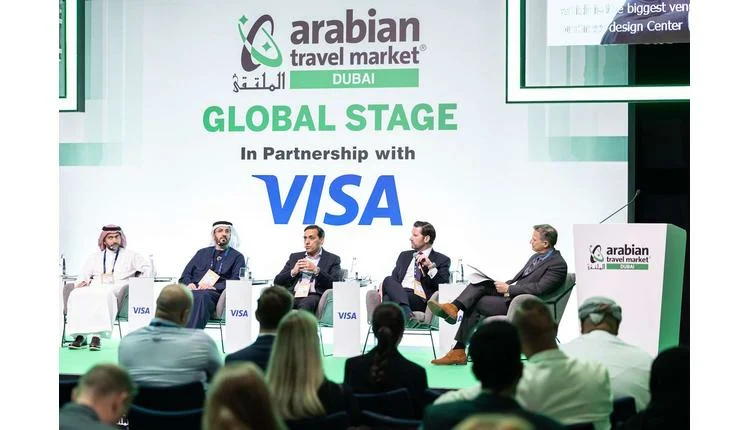
New research commissioned by Arabian Travel Market (ATM) from its official partners STR and Euromonitor International projects a robust growth trajectory for global tourism, with spending in the Middle East and Africa set to rise 47.7% by 2030. The findings, scheduled for release at ATM 2026 in Dubai from 14–17 September, indicate that travel demand is proving resilient even amid ongoing geopolitical uncertainties in the region.
Spending Surpasses Pre-Pandemic Levels
Euromonitor International's report, Travel in an Age of Poly-Crisis, highlights that consumer spending on travel has already exceeded pre-pandemic benchmarks. Travellers are increasingly prioritising experiences over material goods, a shift that is driving sustained demand across both leisure and business segments. The data suggests that as stability returns to affected areas, destinations with strong infrastructure and global connectivity—such as Dubai, Abu Dhabi, and Doha—will recover swiftly.
STR's hospitality outlook reinforces this optimism, noting that hotel performance in key Middle East markets is poised to strengthen as safety perceptions improve. Markets like Saudi Arabia, which is aggressively expanding its tourism sector under Vision 2030, and the UAE are expected to lead the recovery. The research also points to a growing preference for regional destinations, with travellers opting for shorter-haul trips and flexible booking policies to mitigate uncertainty.
Innovation as a Competitive Edge
Technology adoption, particularly in artificial intelligence and digital engagement, is emerging as a critical differentiator for travel companies. Airlines such as Emirates and Qatar Airways, hotel groups like Accor and Marriott International, and cruise lines including MSC Cruises are investing heavily in AI-driven personalisation and contactless services. These innovations are not only enhancing the guest experience but also improving operational efficiency, a key advantage in a volatile environment.
Danielle Curtis, Regional Portfolio Director at RX Global, which organises ATM, commented: "Periods of uncertainty often accelerate change, and today's travel industry is already adapting faster than many anticipated." She emphasised that ATM 2026 will serve as a platform for industry leaders to explore these insights and strategies, reinforcing Dubai's role as a hub for global tourism collaboration and innovation.
Regional and Global Implications
The research aligns with broader trends observed across the industry. For instance, European tourism defied geopolitical headwinds with 5% arrival growth in H1 2026, while destinations like Thailand are targeting Middle East growth with wellness initiatives and new flydubai routes. Meanwhile, the cruise sector is also expanding, as highlighted by CLIA's selection of Alicante for its 2027 European Summit, underscoring the Mediterranean's growing appeal.
For travel professionals—from airline executives at Lufthansa and Singapore Airlines to hoteliers at Hilton and IHG, and tour operators like TUI—the message is clear: investment in technology and regional connectivity will be key to capturing the projected growth. The findings also suggest that travel agents and MICE planners should prepare for increased demand from Middle Eastern outbound markets, particularly for luxury and experiential travel.
ATM 2026 will feature dedicated sessions on these topics, with speakers from leading organisations such as STR, Euromonitor International, and RX Global. The event is expected to attract over 40,000 attendees, including decision-makers from across the aviation, hospitality, cruise, and tourism technology sectors.