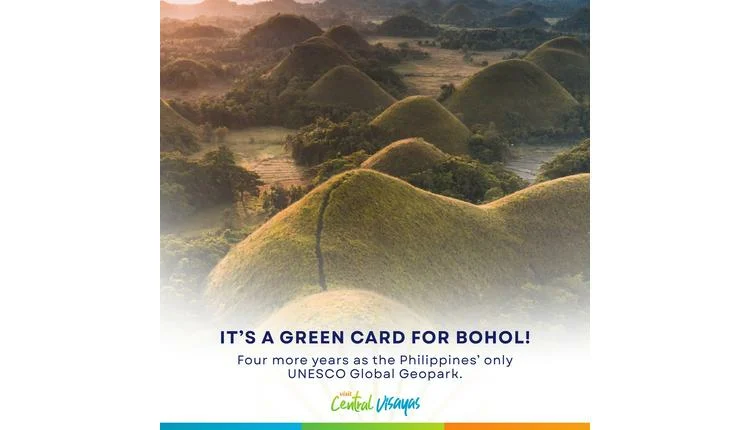
Bohol Island has secured a four-year revalidation of its UNESCO Global Geopark status, a decision confirmed during the 11th session of the UNESCO Global Geoparks Council in Paris. The designation, which remains the only one of its kind in the Philippines, underscores the island's adherence to international standards in geological heritage preservation, conservation, and sustainable development.
The Green Card, as the revalidation is informally known, reflects a coordinated effort among local government units, community groups, and private stakeholders to protect Bohol's natural and cultural assets. Governor Erico Aristotle Aumentado stressed the collective duty to safeguard these resources for future generations, noting that the recognition is both an honor and a responsibility.
Airport sustainability gains recognition
Bohol's sustainability push extends beyond its geopark credentials. The Bohol-Panglao International Airport (BPIA), operated by Aboitiz InfraCapital Bohol Airport Corporation, recently received the Sustainability Initiative of the Year – Philippines award at the 2026 Travel Daily Media Travel Trade Excellence Awards in Singapore. The accolade recognizes the airport's ECO-Airport Project, which includes solar power generation and water conservation measures.
BPIA General Manager Aldwin Uy linked the airport's efforts to the broader tourism strategy: “Bohol's continued recognition as a UNESCO Global Geopark reinforces the importance of developing tourism in a way that protects the very assets that make the island unique.”
The airport's green initiatives are part of a wider trend in the region, where destinations are increasingly leveraging sustainability as a competitive advantage. For travel professionals, Bohol's dual recognition—geopark status and airport eco-award—signals a mature approach to destination management that balances visitor growth with environmental stewardship.
Bohol's experience offers a case study for other destinations seeking UNESCO designation or similar certifications. The revalidation process requires demonstrable progress in conservation, community engagement, and sustainable tourism practices. According to UNESCO guidelines, geoparks must undergo periodic revalidation to ensure they continue to meet these criteria.
The island's tourism stakeholders, including hoteliers and tour operators, are expected to benefit from the renewed status, which can enhance marketing appeal to eco-conscious travelers. The recognition also aligns with broader industry movements, such as UNESCO's partnership with Sofitel Legend to protect cultural heritage, highlighting the growing intersection between luxury hospitality and conservation.
For agents and tour operators, Bohol's revalidation provides a compelling selling point. The island's unique geological features—including the famous Chocolate Hills and tarsier sanctuaries—are now backed by an internationally recognized sustainability framework. This can be a differentiator in a crowded market, particularly for clients seeking responsible travel options.
Bohol's success also underscores the importance of infrastructure in supporting sustainable tourism. The BPIA's eco-initiatives, such as solar power and water recycling, reduce the environmental footprint of air travel to the island, a key consideration for airlines and travel tech providers looking to align with sustainability goals.
As the global travel industry increasingly prioritizes sustainability, Bohol's example may inspire other destinations to pursue similar certifications. The island's four-year revalidation is not just a local achievement but a signal to the industry that long-term commitment to conservation can coexist with tourism growth.
For travel professionals, the takeaway is clear: destinations that invest in sustainability—both in natural heritage and infrastructure—are better positioned to attract discerning travelers and secure international recognition. Bohol's Green Card is a testament to that principle.