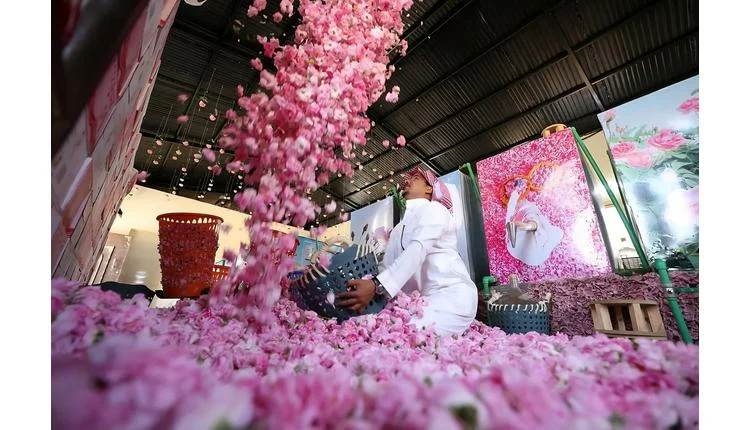
The Taif rose, a blush-pink flower cultivated solely in the mountains of western Saudi Arabia, has become a cornerstone of the global luxury perfume industry. Prized by houses such as Dior, Bvlgari, and Jo Malone, its distinctive scent—often blended with oud or amber—commands premium prices. Each spring, from late March to early April, the region transforms into the 'City of Roses,' with millions of blooms harvested by hand in the early morning to preserve their aromatic compounds. Up to 15,000 blossoms are needed to produce a single vial of rose oil, making it one of the most expensive natural fragrance ingredients on the market.
In December 2024, UNESCO added the cultural traditions surrounding the Taif rose to its Representative List of Intangible Cultural Heritage. This recognition extends beyond the flower itself to the harvesting rituals, community gatherings, and generational knowledge that have sustained Taif's rose culture for centuries. For travel professionals, this UNESCO listing adds a new layer of cultural cachet to Saudi Arabia's growing luxury tourism offerings, particularly as the Kingdom invests heavily in high-end hospitality and experiential travel.
Luxury Travel and the Taif Rose Experience
The Taif rose is not limited to perfumery. Its petals produce rose water used in culinary applications and skincare, while its nectar yields a unique floral honey. Visitors to Taif during the harvest season can witness these traditions firsthand, offering a rare immersive experience that aligns with the broader trend toward fluxury travel—where luxury meets authenticity and deeper cultural engagement. For tour operators and travel agents, this presents an opportunity to craft bespoke itineraries that combine rose harvesting, distillation workshops, and stays at nearby luxury properties such as the forthcoming Six Senses AMAALA on Saudi Arabia's northwest coast, part of the Red Sea Global development.
The Saudi government's push to diversify its tourism portfolio includes initiatives like the package visa pilot, which bundles flights, hotels, and visas for streamlined travel. Such programs make it easier for international visitors—particularly from key source markets like India and China—to access Taif and other cultural destinations. Hotel groups like Accor, which has set a target of 1,600 properties in China, are also eyeing Saudi Arabia's luxury pipeline, including partnerships that could integrate Taif rose experiences into their offerings.
The rose oil's exclusivity and high value have made it a favorite among fragrance connoisseurs, but its appeal extends to the broader luxury sector. Cruise lines such as Ponant, which recently unveiled a 2026–2028 Asia luxury expedition program, could incorporate Taif rose-themed shore excursions or onboard experiences. Similarly, luxury hoteliers might develop signature spa treatments or culinary events centered on the rose, leveraging its UNESCO status to attract discerning travelers.
For travel-tech vendors, the Taif rose story underscores the importance of cultural heritage in destination marketing. Platforms that enable personalized itineraries, such as those offered by GDS systems like Amadeus or Sabre, can highlight Taif rose experiences as part of Saudi Arabia's evolving luxury travel narrative. The rose's global recognition also supports the Kingdom's ambition to position itself as a cultural hub, complementing mega-projects like NEOM and the Red Sea Project.
As the luxury travel industry increasingly seeks unique, authentic experiences, the Taif rose offers a compelling case study in how a single ingredient can drive destination appeal. From hand-picking rituals to UNESCO recognition, this flower encapsulates the intersection of tradition, luxury, and tourism—a combination that travel professionals would do well to watch.