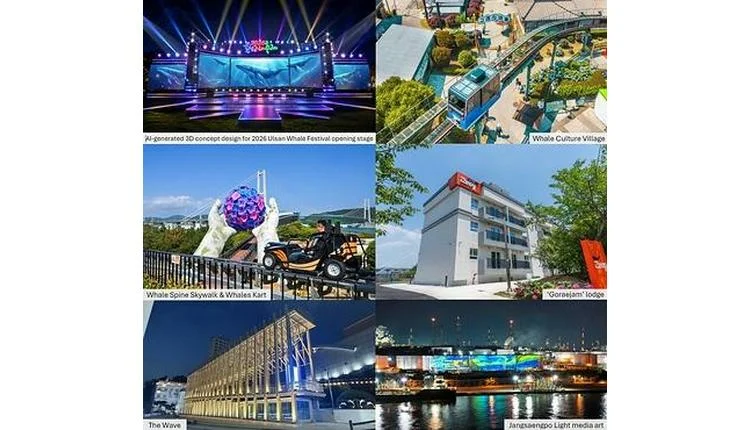
The Ulsan Whale Festival returns for its 30th edition from 15 to 18 October, and this year’s program is designed to cement Jangsaengpo’s status as South Korea’s premier whale-themed eco-tourism destination. Under the banner “A Whale’s Invitation: The 30th Birthday Party,” the festival will blend heritage, community participation, and new infrastructure that travel professionals should note when planning itineraries for the region.
From whaling port to cultural hub
Jangsaengpo, once the epicenter of South Korea’s commercial whaling industry, has undergone a remarkable transformation since the 1986 global ban. Today it holds the distinction of being the nation’s only Whale Culture Zone, drawing visitors with the Jangsaengpo Whale Museum and Whale Culture Village. The festival’s 30th milestone underscores this evolution, offering a case study in how former industrial sites can be repositioned for sustainable tourism.
Mayor Lim Hyeoncheol of Ulsan Namgu District emphasized the festival’s role in showcasing the area’s unique marine heritage. “We invite international travelers to experience Korea’s whale culture and the charm of our oceanfront,” he said, highlighting the event as a key moment in Jangsaengpo’s ongoing reinvention.
New attractions and upgraded amenities
This year’s festival introduces several attractions aimed at extending visitor stays and enhancing the day-to-night experience. Among them is “Whales Kart,” South Korea’s first self-propelled extreme kart track, which adds an adrenaline element to the coastal setting. The Goraedeunggil Whale Spine Skywalk offers panoramic sea views, while the new Goraejam boutique lodge and The Wave cultural facility provide upgraded accommodation and programming options.
For travel trade partners, these additions signal a broader push to position Ulsan as a multi-day destination rather than a stopover. The festival’s community-driven events—including a 300-voice grand chorus, whale lantern crafting, family adventure tours, and augmented reality zones—are designed to appeal to a wide demographic, from families to cultural travelers.
Accessibility and logistics
To ease access, complimentary shuttle buses will operate every 30 minutes between Taehwagang Station and the festival venue. This connectivity is crucial for international visitors relying on Korea’s rail network, and it aligns with broader efforts to integrate regional festivals into national travel itineraries.
The festival’s growth mirrors trends seen across Asia, where cultural events are reshaping travel plans. As noted in October festivals across Asia, such gatherings are increasingly pivotal for destination marketing. Similarly, the Ulsan event offers a template for how heritage can be leveraged for tourism development.
For hoteliers and tour operators, the festival’s timing in mid-October provides a shoulder-season opportunity. The upgraded Goraejam lodge and The Wave facility are part of a broader effort to boost overnight stays, a key metric for regional tourism boards.
The festival also underscores the importance of community involvement in sustaining tourism momentum. Local residents are central to the parade and fireworks, reinforcing the event’s authenticity—a factor that resonates with today’s experience-seeking travelers.
As Jangsaengpo celebrates three decades of transformation, the Ulsan Whale Festival stands as a model for destinations looking to balance preservation with innovation. For travel professionals, it’s a reminder that niche cultural events can drive significant visitor traffic when paired with strategic infrastructure investment.