October has long been a shoulder month for much of Asia, but a dense calendar of cultural festivals is turning it into a prime window for experiential travel. From Phuket's nine-day Vegetarian Festival to Japan's centuries-old Kunchi and India's Durga Puja, these events give travel professionals a concrete reason to market the region beyond its beaches and landmarks.
For destinations, festivals act as a seasonal hook—specific dates around which travellers can plan trips, and around which hotels, airlines, and tour operators can build packages. The key is moving from passive sightseeing to active participation, a shift that resonates with today's experience-driven traveller.
Phuket: A festival that transforms the destination
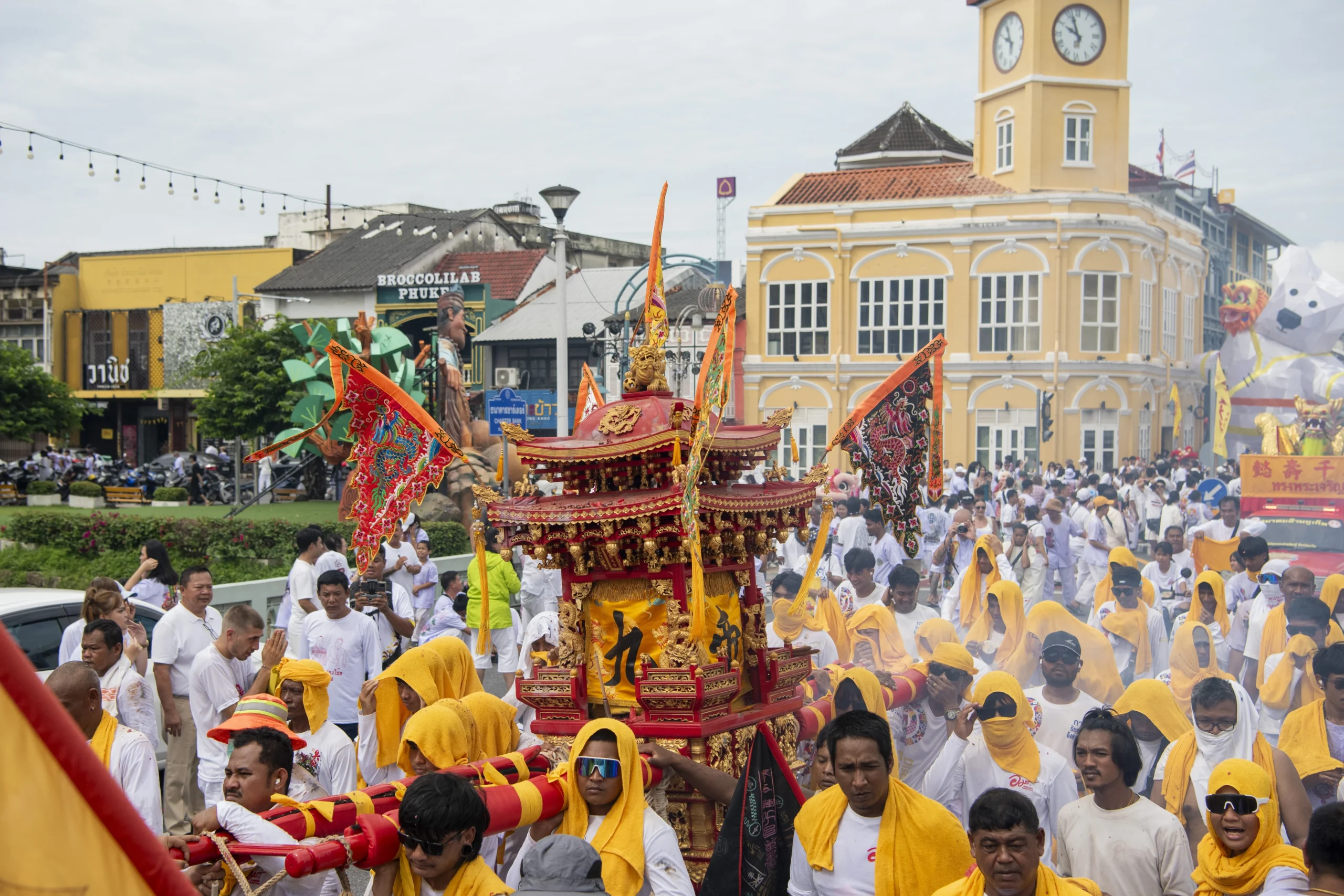
In Thailand, the Phuket Vegetarian Festival (October 10–18, 2026) is one of the region's most distinctive cultural events. Rooted in the island's Chinese-Thai heritage, the nine-day celebration sees devotees in white, processions through the streets, and shrines holding religious ceremonies. Vegetarian food becomes central to daily life, offering visitors a different lens on Phuket—one that places religious traditions and local community life alongside the island's established beach tourism.
For the tourism industry, the festival demonstrates how cultural heritage can create a fresh reason to visit a mature destination. Rather than competing solely on beaches, Phuket can position itself as a place where travellers engage with living traditions. This angle is particularly timely given Virgin Atlantic's planned London–Phuket nonstops starting October 2026, which will bring a new wave of long-haul visitors just as the festival season peaks. Hotels like Le Méridien Phuket are already weaving local culture into their festive programming, signalling that the trade is taking note.
Japan: Autumn matsuri as itinerary anchors
Japan's October calendar offers another example of how seasonal festivals can shape travel plans. The Nagasaki Kunchi (October 7–9) blends Japanese and international influences through elaborate performances, music, floats, and traditional dances. The Japan National Tourism Organization describes it as a celebration with more than 400 years of history, reflecting the city's Japanese, Chinese, and other international connections.
The Takayama Autumn Festival (October 9–10) brings ornate floats and harvest traditions into the historic streets of Takayama, while Kyoto's Jidai Matsuri (October 22) features a procession of around 2,000 participants in period costumes representing different eras of the city's past. These events add a cultural layer to Japan's autumn travel season, giving international visitors a reason to explore beyond the major gateways of Tokyo and Osaka.
For travel professionals, the appeal is not simply watching a parade. Festivals provide a date-specific reason to travel, encouraging visitors to build an itinerary around an event rather than just adding attractions. This can extend length of stay and disperse tourism to lesser-known destinations—a priority for many Japanese prefectures.
India: Travelling around the festival calendar
October marks a major festival period across India. Navratri (October 11–19) is celebrated in different forms nationwide. In Kolkata and eastern India, Durga Puja transforms neighbourhoods into elaborate temporary installations, while in Gujarat, Garba during Navratri brings music, dance, and community celebrations to cities and towns.
The scale and diversity of these celebrations make festivals a critical component of India's cultural tourism proposition. For travellers, the attraction is experiential: seeing how communities celebrate, tasting regional food, encountering traditional arts, and understanding the cultural significance behind the festivities. This aligns with a broader trend toward immersive cultural travel that goes beyond monuments.
From sightseeing to participation
Festival tourism reflects a broader shift towards experiences that allow travellers to engage more closely with destinations. The traditional model often revolves around landmarks—see the temple, visit the museum, photograph the monument, and move on. Festivals offer something different: a time-specific reason to travel, encouraging visitors to plan around an event rather than simply adding attractions to an itinerary. They can also bring travellers into neighbourhoods and communities that sit outside conventional tourist routes.
For destinations, festivals create opportunities for hotels, restaurants, transport operators, guides, cultural venues, and local businesses to participate in the visitor economy. In Phuket, for instance, the festival period can help extend the high season and diversify the island's reliance on beach tourism. Similarly, Japan's autumn festivals can support regional economies beyond the Golden Route.
The challenge of protecting authenticity
But festival tourism also presents a delicate balance. As international interest grows, destinations must manage crowds while ensuring that cultural and religious traditions remain meaningful to local communities. The challenge is to ensure that festivals do not become simply tourist spectacles detached from the communities and traditions that created them.
Instead, destinations can focus on responsible participation—providing visitors with context, encouraging respectful behaviour, and ensuring local communities remain at the centre of the experience. This is particularly relevant as other Asian destinations look to replicate the success of cultural festivals.
Asia's cultural calendar becomes a travel engine
October's festival calendar illustrates how culture can become a tourism asset in its own right. For travel professionals, the takeaway is clear: these events are not just colourful backdrops but strategic tools for driving demand, extending seasons, and deepening traveller engagement. As the industry looks to 2026, festivals across Asia offer a compelling reason to book—and a reminder that the region's appeal goes far beyond its beaches and skylines.