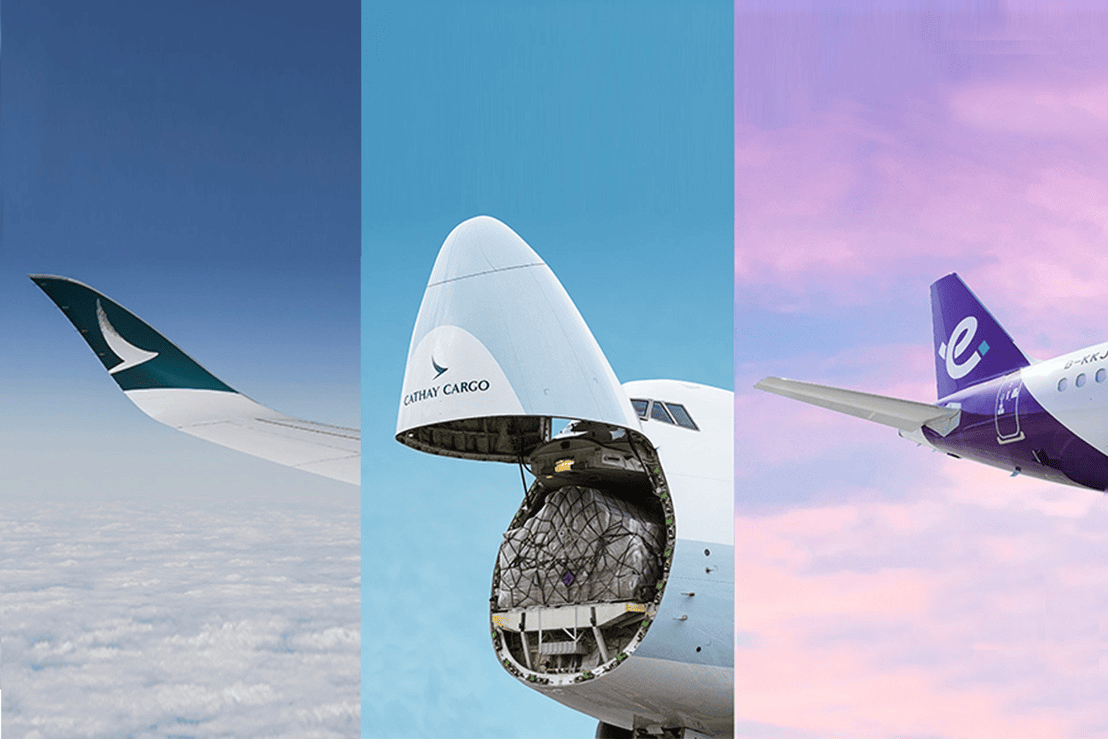
Cathay Group has delivered a robust financial performance for the first half of 2026, with revenue climbing 25.3% year-on-year to US$8.7 billion (HK$68.1 billion). Profit attributable to shareholders surged 71% to US$793 million (HK$6.2 billion), underpinned by strong demand across its passenger, cargo and low-cost operations. The group, which includes Cathay Pacific, Cathay Cargo and HK Express, also raised its first interim dividend by 30% to HK$0.26 per share, payable on 8 October 2026.
The results reflect a broad-based recovery in international travel and airfreight, with the airline's strategic investments in fleet and network expansion paying off. Basic earnings per share rose 75.5% to HK99.5 cents, while available seat kilometres (ASKs) increased 11.8% and revenue passenger kilometres (RPKs) grew 15.3%, pushing the passenger load factor to 87.5%. Cathay Cargo also saw revenue freight tonne kilometres (RFTKs) climb 4.9%, underscoring the resilience of the air cargo market.
Navigating fuel price volatility
The second quarter presented headwinds as escalating jet fuel prices, linked to Middle Eastern tensions, pressured operating costs. Cathay responded by adjusting fuel surcharges and implementing cost-control measures, which helped maintain profitability. The group's ability to adapt to external shocks was a key theme in the chair's inaugural statement, where she highlighted the company's resilience and strategic focus.
"Our performance demonstrates the strength of our diversified business model and the dedication of our team," the chair said. "We remain committed to investing in our people, our fleet and our digital capabilities to sustain long-term growth."
The group's associates also contributed positively, with enhanced earnings from regional investments. This diversified income stream has become increasingly important as Cathay navigates a competitive landscape marked by capacity expansion across Asia-Pacific carriers.
Strategic outlook and regional context
Cathay's results come amid a broader trend of strong performance among Asian carriers. For instance, Vietjet's H1 2026 results showed a 44% revenue surge on international expansion, highlighting the region's aviation momentum. Meanwhile, the group's home hub at Hong Kong International Airport continues to benefit from the city's role as a major transit point for China and the wider Asia-Pacific region.
Looking ahead, Cathay plans to expand its route network, particularly in Southeast Asia and North America, while upgrading its cabin products and digital services. The airline has also been investing in sustainable aviation fuel and modernising its fleet to meet environmental targets, aligning with industry-wide efforts to reduce carbon emissions.
For travel professionals, Cathay's performance signals sustained demand for premium travel and cargo services. The airline's ability to maintain high load factors despite fuel price pressures suggests that pricing power remains strong in key markets. As the group continues to grow, it will be a key player to watch in the competitive Asia-Pacific aviation sector.
The group's financial strength also supports its dividend policy, which has been restored to pre-pandemic levels. With a solid balance sheet and a clear strategic direction, Cathay is well-positioned to capitalise on future opportunities, including the ongoing recovery of Chinese outbound travel and the expansion of its low-cost subsidiary HK Express.