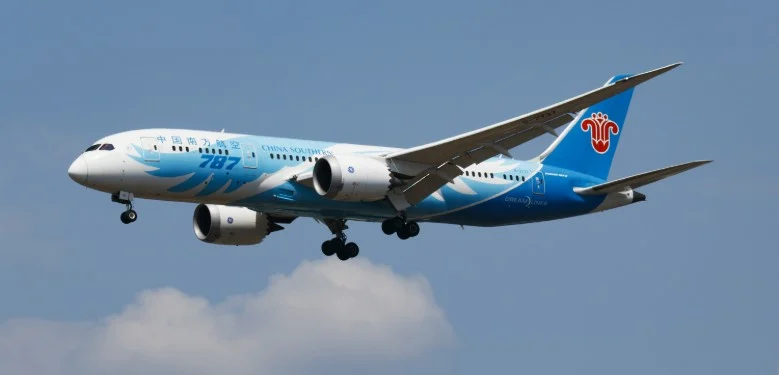
China Southern Airlines has officially closed the book on its Boeing 737-700 operations. The carrier retired its last remaining example, registered B-5285, in August, marking the end of a 22-year relationship with the type.
Between 2004 and 2026, China Southern operated a total of 37 Boeing 737-700s, primarily across its regional subsidiaries in Xinjiang, Henan, Hubei, and Guangxi. These aircraft typically seated around 128 passengers in a two-class layout.
The retirement is more than a routine fleet milestone. It reflects China Southern's broader strategy to reduce reliance on higher-cost aircraft and optimize its overall fleet composition. The 737-700, with its shorter fuselage and lower seat count, carried a higher cost per seat compared to the airline's Boeing 737-800s, many of which are configured with 180 all-economy seats. The type also lagged the newer Boeing 737 MAX in fuel efficiency.
For airlines, operating a smaller aircraft does not proportionally reduce operating expenses. Fuel, crew, landing fees, maintenance, spare parts, and parking costs remain largely fixed, so the cost per available seat kilometer (CASK) climbs as seat count drops. That financial reality has driven China Southern to phase out types with weaker profitability.
Fleet simplification takes center stage
China Southern's recent fleet decisions have increasingly favored a streamlined, more efficient narrowbody base. The airline has been consolidating around the 737-800 and 737 MAX families, while also expanding its Airbus A320neo and A321neo orders. The retirement of the 737-700 is a logical next step in that evolution.
Industry observers note that the move aligns with a broader trend among Chinese carriers to modernize fleets and cut unit costs. The country's aviation market has faced intense competition and fluctuating demand, making cost discipline a top priority.
China Southern's regional subsidiaries, which operated the 737-700, will now rely on larger narrowbodies, potentially affecting route planning and frequency decisions. However, the airline has not indicated any immediate network changes stemming from the retirement.
The phase-out also comes amid wider shifts in the Asia-Pacific aviation landscape. For instance, China-Japan air capacity has plunged 40% as diplomatic tensions persist, underscoring the volatile demand environment that carriers must navigate.
Meanwhile, China Southern continues to explore international partnerships, such as the planned joint venture between Vietnam Airlines and ANA, which could reshape regional competition.
For travel professionals, the retirement signals a shift in China Southern's operational profile. Agents and corporate buyers should expect more consistent cabin configurations and potentially improved onboard product as the airline standardizes its narrowbody fleet.
The airline has not announced any immediate replacement orders, but its existing backlog of 737 MAX and A320neo aircraft will likely fill the gap. As China Southern continues to refine its fleet, the focus remains on efficiency and profitability in a challenging market.