For decades, expedition travel decisions began with a map: Antarctica, the Galápagos, the Arctic. But new data from Aurora Expeditions signals a fundamental shift. The single most important factor for today's expedition traveller is no longer the destination—it is the expertise of the team on board.
In a survey of more than 700 expeditioners, 95.3% rated the expertise of the expedition team as the most critical factor when selecting an operator. Itinerary came a close second at 94.2%, followed by small ship size (93.3%) and landing opportunities (92.9%). The findings underscore a deeper, more intentional evolution in how travellers explore the world.
From 'Where' to 'How': The New Expedition Calculus
Wildlife and nature encounters remain the biggest inspiration for expedition travel, cited by 74% of respondents. Adventure and active exploration ranked second at 70%. Bucket-list ambitions still hold at 33%, but they are increasingly paired with learning and enrichment (29%) and photography (29%). The question has shifted from where to who—and what those people know.
Justin Ewin, Aurora’s Global Head of Product, explains: “It’s no longer just about where you go, but how you experience it. The expertise of the expedition team plays a critical role in shaping that experience, from interpreting wildlife encounters to providing deeper context around the environments we visit.”
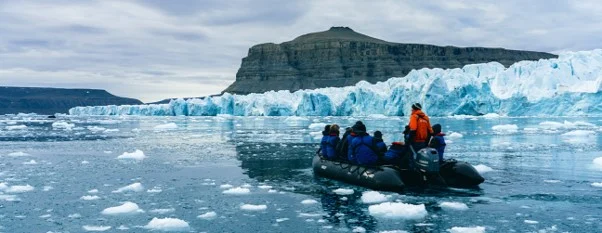
Aurora’s most recent Antarctic season delivered more than 800 landings across over 30 voyages, supported by a 1:7 guide-to-guest ratio. That level of small-group, expert-led access is difficult to replicate on larger vessels, and it is precisely what today’s travellers are seeking.
Expedition travel has long been marketed as a once-in-a-lifetime event. But the new data suggests that framing is losing its grip. Around 20% of Aurora’s passengers are now repeat guests, returning to explore new regions and deepen their connection with the natural world. This shift from tick-box travel to ongoing exploration means operators must think differently about long-term relationships and programme design. It is no longer just about selling a first trip; it is about building a journey that keeps people coming back.
Solo travel is accelerating across the cruise and expedition sector. According to CLIA, 12% of cruise travellers chose to sail solo in 2024—double the previous year. At Aurora, that figure is even higher: 26% of its passengers sail solo, well above the industry average. In response, Aurora is expanding solo capacity across its fleet. Its newest ship, the Douglas Mawson, includes dedicated solo cabins and up to 10 solo staterooms per sailing with no single supplement, making it easier for independent travellers to explore without paying extra.
The big takeaway is clear: the best expedition trips are no longer just about the map. They are about access, context and leadership. Travellers want to be with people who can interpret wildlife, explain ecosystems and bring depth to every landing. They want small ships, real landings and a guide who knows their way around the ice, the jungle or the open ocean.
For Aurora, that means investing in expertise, small-group formats and flexible itineraries that let people explore more deeply. For travellers, it means choosing operators who treat their guides as the heart of the experience, not just a nice bonus. As the industry evolves, operators like Aurora are setting a new standard—one where expert guidance is the cornerstone and depth of experience is the baseline.
For travel professionals, this research reinforces the importance of curating experiences that prioritize human expertise over mere destination marketing. Whether you are an airline executive, hotelier, or tour operator, the message is the same: the guide is the product.