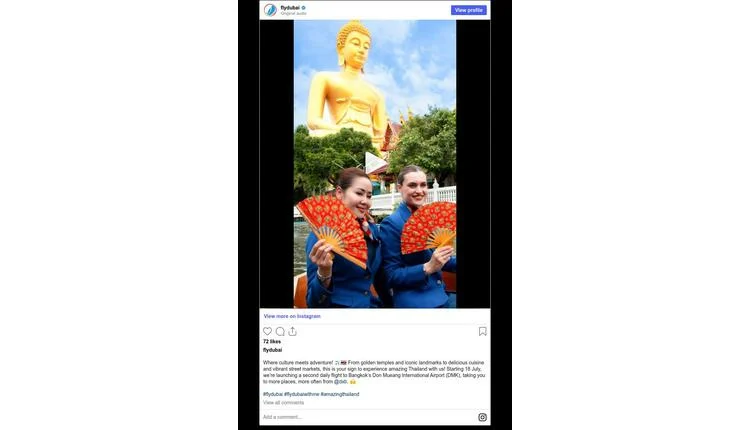
Dubai-based carrier flydubai is accelerating its Southeast Asian expansion with a second daily frequency to Bangkok, set to launch on 18 July. The move comes just weeks after the airline inaugurated daily flights to Don Mueang International Airport (DMK) on 1 July, underscoring robust demand on the Dubai–Bangkok corridor.
The additional rotation will lift flydubai's total weekly services to Thailand to 21, encompassing the Bangkok route and increased frequencies to Krabi. Sudhir Sreedharan, Divisional Senior Vice President of Commercial Operations at flydubai, noted: “Just weeks after welcoming Bangkok as our latest destination, we are pleased to build on the strong demand for this route by introducing a second daily flight from Dubai.”
Operational Details and Hub Strategy
Both daily flights will operate from Terminal 3 at Dubai International Airport (DXB) to Don Mueang, offering passengers greater flexibility for connections and point-to-point travel. The decision to serve DMK rather than Suvarnabhumi (BKK) positions flydubai to capture both budget-conscious leisure traffic and the growing low-cost carrier segment in Thailand's capital.
The expansion is part of flydubai's broader strategy to deepen its footprint in Thailand while reinforcing Dubai's role as a global aviation hub. The carrier's codeshare agreement with Emirates allows passengers to combine itineraries across a combined network of over 240 destinations worldwide, with seamless baggage transfer and coordinated schedules.
In addition to the Bangkok ramp-up, flydubai has recently launched flights to Benghazi, Libya, and plans to restart services to Aleppo, Syria, on 20 July — a route it previously suspended. The airline will also begin flights to Pokhara, Nepal, on 23 September, further diversifying its network across the Middle East, South Asia, and Southeast Asia.
Product Enhancements and Fleet
flydubai's Boeing 737 MAX and Next-Generation 737 aircraft serving the Bangkok route feature upgraded cabin interiors, including lie-flat seats in Business Class and ergonomically designed Economy seats. Passengers can access a range of meals and the airline's inflight entertainment system, ice.
The carrier's focus on product consistency aligns with its dual role as both a low-cost carrier and a full-service partner for Emirates. Industry observers note that the second daily Bangkok flight is likely to appeal to both leisure travelers and corporate accounts seeking more schedule options.
Thailand's tourism sector has been actively courting Middle Eastern carriers. The Tourism Authority of Thailand has targeted wellness and luxury segments to attract high-spending Gulf visitors, a strategy that aligns with flydubai's capacity increase. For travel agents and tour operators, the additional seats open up new packaging opportunities for combined Dubai–Bangkok itineraries, especially during the peak summer season.
flydubai's move also reflects broader trends in Gulf carrier expansion into secondary Thai airports. The airline's choice of Don Mueang over Suvarnabhumi mirrors similar strategies by other low-cost operators and positions it to capture transfer traffic from domestic Thai routes operated by partners.
With the second daily flight, flydubai now offers more than 3,000 weekly seats on the Dubai–Bangkok sector, providing significant capacity for both business and leisure demand. The airline's codeshare with Emirates means that passengers can book through either carrier's sales channels, with coordinated schedules that minimize layover times.
For travel professionals, the expanded service represents a tangible opportunity to grow Middle East–Southeast Asia traffic. As flydubai continues to add frequencies and new destinations, its network now spans 125 points across 58 countries, making it a key player in the region's aviation landscape.