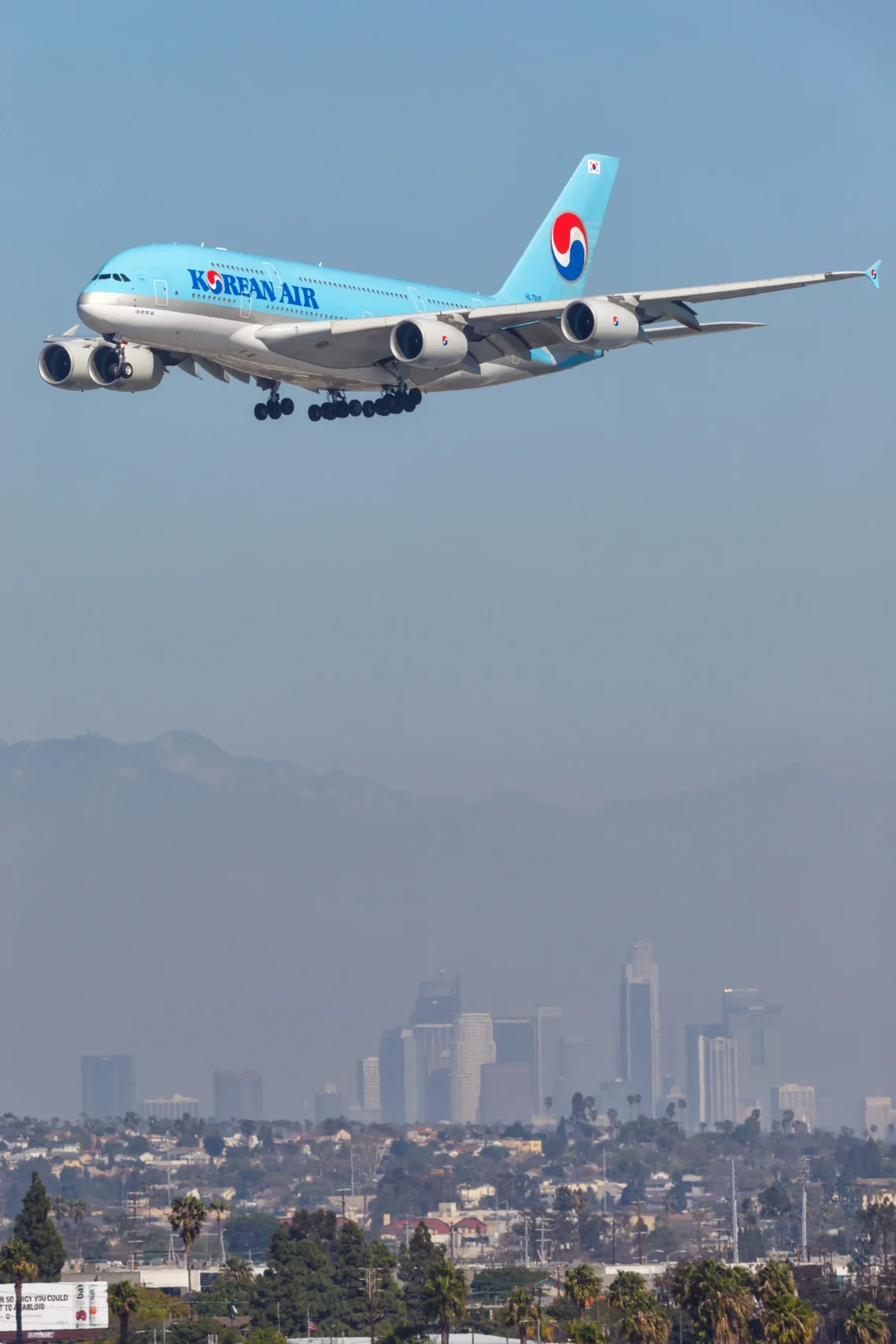
Korean Air has posted a dramatic surge in third-quarter net profit, rising tenfold year-on-year to 929.7 billion won (US$692.2 million), according to preliminary results released this week. The flag carrier attributed the leap to strong passenger and cargo demand, alongside a firmer won, which boosted the value of its international revenues.
Operating profit for the July-to-September period climbed 12% to 421.2 billion won, while sales jumped 26% to a record quarterly high of 5.04 trillion won. The airline's passenger revenue increased by 496.3 billion won to 2.91 trillion won, fueled by a surge in inbound travel to South Korea. Cargo revenue rose by 365.6 billion won to an estimated 1.43 trillion won, supported by robust shipments of high-value goods such as semiconductors and AI-related products.
Passenger demand and cargo tailwinds
The strong performance underscores the resilience of Asia-Pacific carriers as international travel continues to recover. Korean Air's passenger business benefited from a steady influx of tourists to Seoul and other destinations, while its cargo division leveraged the ongoing boom in AI-driven electronics and semiconductor logistics. The airline's cargo network, which includes key routes to the Americas and Europe, has been a critical profit driver.
"Our third-quarter results reflect the strength of our dual passenger-cargo strategy," said a Korean Air spokesperson. "We are seeing sustained demand from both leisure and business travelers, and our cargo operations are capitalizing on the global demand for advanced technology products."
The carrier's performance also comes as it continues to integrate its acquisition of Asiana Airlines, a move that is expected to reshape the competitive landscape in Northeast Asia. Korean Air's leadership, including CEO Walter Cho, has been recognized for steering the airline through this transformation. Cho was recently named CAPA's 2026 Asia Airline Executive of the Year, a testament to his strategic vision.
Fuel cost concerns for Q4
Despite the strong quarter, Korean Air cautioned that its passenger business may face headwinds in the fourth quarter due to rising fuel costs, exacerbated by the ongoing conflict in the Middle East. Jet fuel prices have been volatile, and the airline's ability to manage these costs will be crucial in maintaining its financial momentum.
"The fourth quarter is traditionally a softer period for passenger travel, and with fuel prices on the rise, we are closely monitoring our cost structure," the spokesperson added. "We remain confident in our ability to adapt, but the external environment is challenging."
The airline's outlook is also shaped by its ambitious fleet expansion. Earlier this year, Korean Air placed a landmark US$44.8 billion order with Boeing, signaling a major renewal of its Asia-Pacific fleet. This investment is expected to enhance fuel efficiency and operational flexibility in the long term, though it adds near-term capital expenditure pressure.
Industry analysts note that Korean Air's diversified revenue streams, including its cargo and maintenance businesses, provide a buffer against passenger market volatility. The carrier's cargo operations, in particular, have benefited from the global surge in e-commerce and high-tech manufacturing, a trend that shows no signs of abating.
As the airline navigates the fourth quarter, its performance will be closely watched by travel industry stakeholders, from GDS operators to corporate travel buyers. The carrier's ability to balance yield management with cost control will be key to sustaining its growth trajectory.
For travel professionals, Korean Air's results offer a snapshot of the broader market dynamics: strong demand for international travel, the continued importance of air cargo, and the persistent challenge of fuel price volatility. The airline's strategic moves, including its fleet renewal and merger integration, position it well for the long term, even as short-term headwinds loom.