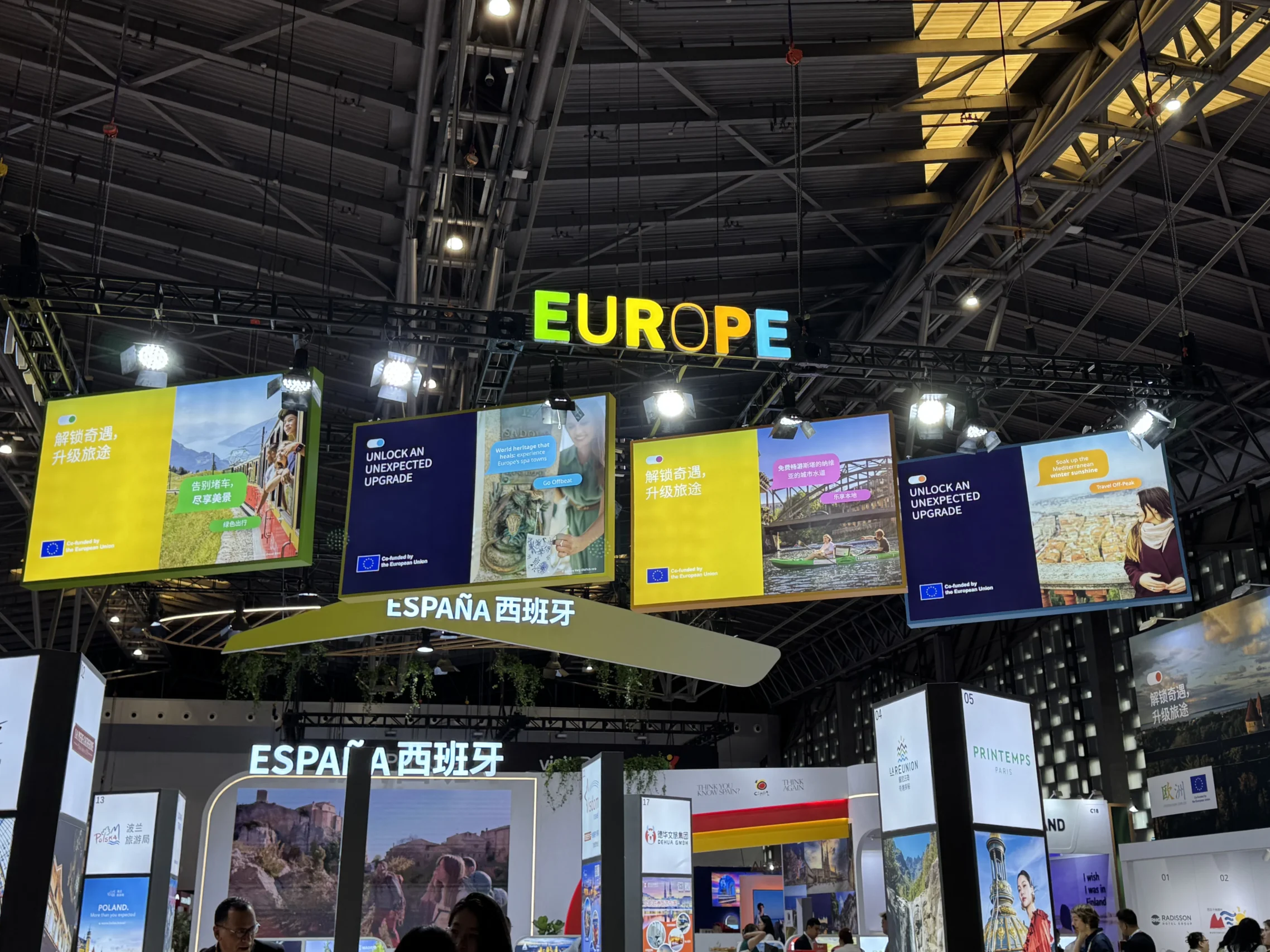
At the Sino-European Dialogue held during ITB China 2026 on 26 May, Albin Loidl, president of the German Travel Association (DRV), delivered a keynote that reframed tourism as a diplomatic and economic bridge between Europe and China. Speaking before an audience of industry leaders, Loidl argued that in a world marked by geopolitical friction, travel remains one of the most effective tools for building mutual understanding.
“Tourism has always been much more than an economic activity. Tourism creates trust; it builds culture and family; and tourism transforms the world,” Loidl declared. His remarks come at a time when Chinese inbound tourism from Europe is poised for recovery, yet faces structural hurdles that require coordinated action from both sides.
Europe as a Fragmented but Vital Source Market
Loidl stressed that European travelers are not a monolith. “German travelers behave very differently from French travelers. Nordic travelers differ from Southern Europeans. And, in general, they each ask themselves ‘What story will I bring home? What emotional value does this journey bring?’” he explained. For Chinese destinations, this means tailoring marketing and experiences to distinct national preferences rather than applying a one-size-fits-all approach.
China’s millennia of history and its leadership in digital technology—from mobile payments to high-speed rail—offer a compelling narrative for curious Europeans. However, Loidl cautioned that the real opportunity lies in addressing practical barriers that deter potential visitors.
Visa Reforms and Digital Infrastructure as Conversion Factors
Contrary to perceptions that European travelers are reluctant to visit China, Loidl clarified: “Travellers do not reject China; that’s an important distinction. But going to China poses issues for Europeans even before departure. The challenges posed by visa application, flight costs and booking, and tourist systems that are difficult to navigate fall into this category.”
He praised China’s recent expansion of visa-free policies for several European countries, calling it “a powerful message that China is open and welcomes international visitors.” Yet he emphasized that more must be done on the ground. “European travelers expect familiar and simple payment solutions, language accessibility, along with improved connectivity and communication networks. These may appear like technical details, but, in truth, these are conversion factors,” Loidl said.
This aligns with broader industry trends. For instance, China's inbound tourism surge has highlighted infrastructure gaps that need addressing to sustain growth. Similarly, initiatives like the Trusted Thailand initiative demonstrate how digital trust platforms can boost traveler confidence—a model China could adapt for European source markets.
Storytelling and Local Interaction as Competitive Advantages
Beyond logistics, Loidl underscored the growing European demand for meaningful cultural immersion. “We have to build culture and history with the everyday life of locals. Let the visitors compare their own cultural settings with that of the people they are visiting and discover the differences and similarities. It's always great to witness that people share so much in common, no matter how near or far apart they are,” he said.
China’s vast cultural diversity—from the ancient alleyways of Beijing’s hutongs to the futuristic skyline of Shenzhen—offers European travelers a spectrum of experiences that are both enlightening and deeply personal. Loidl argued that storytelling is the bridge: enabling visitors to hear local narratives and share their own creates emotional bonds that transcend transactional tourism.
The DRV president concluded that the future of European inbound tourism to China depends on a holistic strategy. “Active promotion of major destinations is not enough. We need education, accessibility, and emotional connection between travelers and locals alike,” he said. For Chinese tourism boards, hotel groups like Jin Jiang or Marriott, and airlines such as Air China or Lufthansa, this means investing in multilingual content, seamless booking systems, and curated local experiences that resonate with European sensibilities.
As China continues to expand its visa-free regime and upgrade its tourism infrastructure, the message from ITB China 2026 is clear: trust, built through travel, is the currency that will drive the next phase of Europe-China tourism growth.