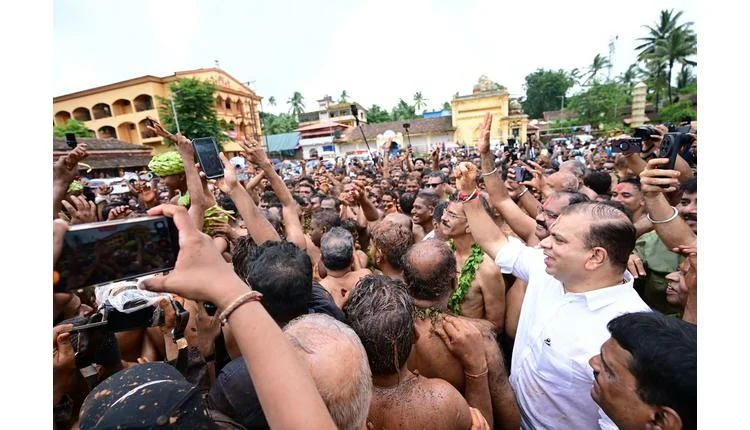
On 26 July 2026, the village of Marcel in Goa became a focal point for cultural tourism as thousands of devotees and visitors took part in Chikhal Kalo, a traditional mud-play festival held near the Shree Devki Krishna Temple. The event, which pays homage to the childhood of Lord Krishna, drew participants of all ages who engaged in mud play and traditional games, creating a vibrant atmosphere of community celebration.
Goa Tourism Minister Rohan A. Khaunte attended the festivities and underscored the festival's role in the state's cultural identity. 'Celebrating Chikhal Kalo with the people is always a special experience because festivals like these truly reflect the soul of Goa,' he said. Khaunte used the occasion to promote the 'Goa Beyond Beaches' initiative, a strategic push by the Goa Tourism Development Corporation to diversify the destination's appeal beyond its famed coastline. The initiative aims to position Goa as a year-round cultural and heritage destination, leveraging events like Chikhal Kalo to attract both domestic and international travelers seeking authentic experiences.
Cultural tourism and new pilgrimage routes
The minister also highlighted the Ekadasha Teerth Yatra, a newly launched program designed to encourage exploration of Goa's ancient temples. This initiative aligns with broader trends in Indian tourism, where state governments are investing in spiritual and cultural circuits to draw visitors away from overcrowded beach hubs. For travel professionals, such developments signal opportunities to package niche itineraries that combine festival participation with temple visits and local homestays.
Chikhal Kalo's growing visibility comes as Goa seeks to extend its tourist season beyond the traditional November-to-February peak. The festival, which typically occurs during the monsoon months, offers a unique selling point for tour operators and travel agents looking to promote off-season travel. The event's family-friendly nature and its roots in Hindu mythology make it particularly appealing to the Indian diaspora and cultural tourists from markets such as the UK, Germany, and Russia.
For hoteliers and hospitality providers in North and South Goa, the festival presents a chance to collaborate with local authorities on curated packages. Properties like the Alila Diwa Goa and the W Goa could leverage the event to offer guests guided excursions to Marcel, combining luxury stays with authentic cultural immersion. Similarly, cruise lines operating out of Mormugao port, such as those run by Costa Cruises or Royal Caribbean International, might consider adding shore excursions that align with the festival calendar.
The Goa Tourism Development Corporation has been actively working with travel-tech platforms to improve booking infrastructure for such events. Integration with global distribution systems like Amadeus and Sabre could streamline access for international travel agents. Meanwhile, the state's focus on cultural festivals mirrors a broader shift in destination marketing, as seen in Saudi Arabia's efforts to attract Chinese travelers by promoting heritage sites alongside modern attractions.
Chikhal Kalo concluded with continued mud play, reinforcing its status as a symbol of Goa's enduring traditions. The event underscored the importance of passing these customs to future generations, ensuring they remain a vibrant part of Goan life. For the travel industry, the festival represents a tangible example of how cultural heritage can drive sustainable tourism growth, creating economic benefits for local communities while preserving intangible cultural assets.