Hong Kong's flagship travel trade event is set to return in June 2027, with organizers sharpening their focus on the Greater Bay Area's (GBA) high-value outbound segment. The 41st ITE (Leisure) and 22nd ITE-MICE will take place from 10–13 June at the Hong Kong Convention and Exhibition Centre, maintaining its dual trade and consumer day structure.
For international suppliers—from destination management companies and hotel groups to cruise lines and attractions—the commercial centerpiece remains the GBA, a region that includes Hong Kong, Macao, and nine Guangdong cities such as Guangzhou and Shenzhen. According to ITE organizers, the GBA's combined GDP stands at US$2.15 trillion, while Hong Kong's outbound travel figures underscore the market's spending power: residents spent US$30.3 billion on outbound travel in 2025, averaging 15.7 departures per capita.
Hong Kong also accounts for 40% of GBA families with net assets exceeding RMB10 million, making it a prime catchment for luxury and experiential travel products. For overseas exhibitors, the immediate draw is the concentration of trade buyers: ITE reports that two-thirds of its 2026 trade buyers came from the GBA, offering direct access to intermediaries serving one of Asia's most lucrative outbound markets.
Trade attendance on the rise
ITE 2026 attracted 602 exhibitors from 69 countries and regions. Trade buyer numbers climbed 11% to 8,442, with 20% hailing from Guangdong, 16% from other mainland provinces, and 17% from other Asian markets. Travel agents made up 54% of trade visitors, while MICE professionals accounted for another 22%.
The show's dual role is evident: beyond outbound leisure, meetings, incentives, conferences, and exhibitions remain a core pillar. The first two days of ITE 2027 will be reserved for B2B activity, including business-matching sessions, trade seminars, exhibitor presentations, KOL networking, and an industry forum on travel policy and market trends. This focus aligns with broader regional competition for corporate groups, as seen in Sri Lanka's MICE push and other destinations vying for high-yield business.
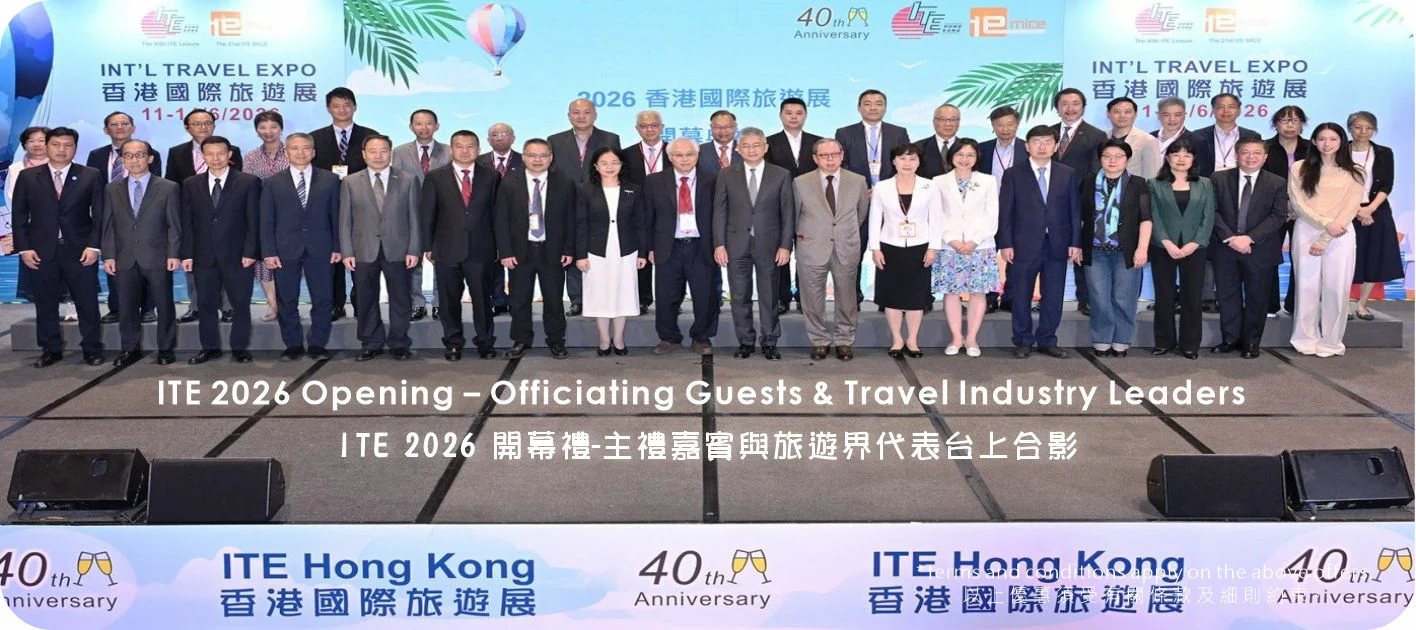
Mainland China's participation remains strong. At the 2026 edition, the Ministry of Culture and Tourism organized its largest pavilion at the show, featuring exhibitors from 20 provinces and municipalities, including Beijing and Shanghai. The Hong Kong Tourism Board and the Travel Industry Council of Hong Kong are official supporters.
Consumer days: a direct line to independent travelers
The second half of ITE shifts to consumer engagement, allowing exhibitors to connect with frequent independent travelers. Over 74,000 public visitors attended ITE 2026; an organizer survey found that 75% had taken multiple holidays in 2025, and 63% planned to increase travel budgets in 2026.
This audience is increasingly vital for suppliers looking beyond traditional distribution channels to reach independent travelers, particularly for long-haul, luxury, and special-interest products. The B2C programme includes more than 100 travel seminars, themed displays, and KOL-led activities. Exhibitors can also secure complimentary 25-minute seminar slots and run on-stand consumer engagement activities.
Mobile payments are a notable trend: 43% of public visitors expressed interest in booking and paying for travel products on-site via mobile. Direct sales are permitted, subject to Hong Kong laws. Digital interest is also strong—ITE's trade website recorded 881,102 visits between March and July 2026, including 290,670 in June alone.
Booking details for 2027
Booth rates for ITE Hong Kong 2027 start at US$485 per square metre for raw space and US$530 per square metre for a shell scheme. An early-payment discount of 10% applies to bookings completed by 10 November 2026.
As mainland China's outbound demand continues to reshape Asia-Pacific travel flows, ITE's pitch to international suppliers centers on its strategic location. Hong Kong offers access not only to its own mature outbound market but also to buyers and consumers across the wider GBA. For tourism businesses planning their 2027 Asia strategy, the combination of trade appointments, MICE buyers, and direct consumer exposure gives the Hong Kong show a distinct position on the regional exhibition calendar.