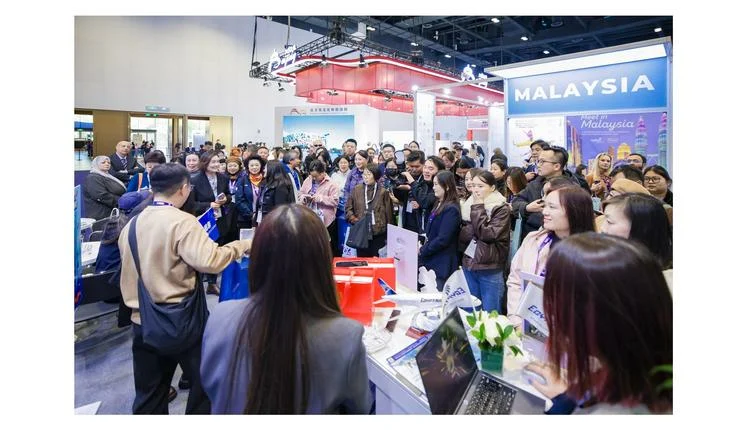
The inaugural China International MICE Exchange (CIMX) opened its doors on 3 November at the China National Convention Centre Phase II in Beijing, marking a new entry point for international buyers seeking access to China's business events market. Organised by Messe Berlin China, the three-day event runs through 5 November and has drawn 150 exhibitors, 350 hosted buyers, and representatives from 50 trade media outlets.
Organisers have scheduled 4,000 pre-arranged business meetings, positioning CIMX as a focused marketplace for destinations, venues, hotels, airlines, and event technology providers. The format is designed to accelerate direct supplier–planner connections, a priority for a sector still rebuilding cross-border momentum.
Destination and airline partners set the tone
Tianjin, Hainan, and the Shanghai Lingang Special Area are the Official Destination Showcase Partners, each presenting tailored incentives and infrastructure updates for event organisers. EGYPTAIR has signed on as the Official Airline Partner, underscoring the event's reach beyond Asia. Malaysia fields the largest international delegation, a signal of Southeast Asia's growing appetite for Chinese outbound MICE business.
David Axiotis, Vice President and Managing Director of Messe Berlin China, framed the launch as a long-term commitment. "The launch of CIMX in Beijing marks a significant milestone for Messe Berlin and our long-term commitment to China's MICE and business travel market," he said.
The conference programme features 120 speakers across 40 sessions, covering topics from hybrid event design to incentive travel trends in Asia. Networking functions, including luncheons and an opening dinner, are built into the schedule to encourage informal deal-making and cultural exchange.
CIMX arrives at a time when Beijing's global route connectivity is shifting. Recent analysis shows Bangkok and Delhi have leapfrogged Beijing Capital in global route reach, a factor that may influence how international planners weigh access to the Chinese capital. For MICE buyers, the event's venue—the newly expanded Phase II of the China National Convention Centre—offers a modern, large-scale setting that competes with regional hubs.
The debut edition also reflects broader trends in the industry. As destinations like Hualien extend their tourism campaigns through November, the MICE calendar is stretching beyond traditional peaks. CIMX's November slot gives planners a late-year opportunity to lock in contracts for 2026 and beyond.
For hoteliers and venue operators, the event provides a direct line to Chinese corporate clients and international intermediaries. The presence of technology providers highlights the growing role of digital tools in event management, from registration platforms to AI-powered matchmaking.
With the global MICE industry projected to grow steadily, CIMX's Beijing debut is a calculated bet on China's return as a top-tier business events destination. The organisers' emphasis on pre-scheduled meetings and hosted buyers suggests a pragmatic approach—less about spectacle, more about measurable outcomes.
As the event continues through 5 November, further announcements are expected on partnerships and future editions. For travel professionals monitoring the Asia-Pacific MICE landscape, CIMX is now a fixture to watch.