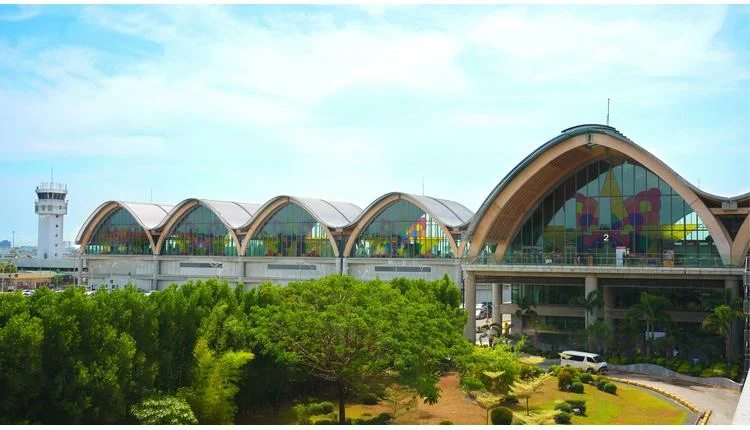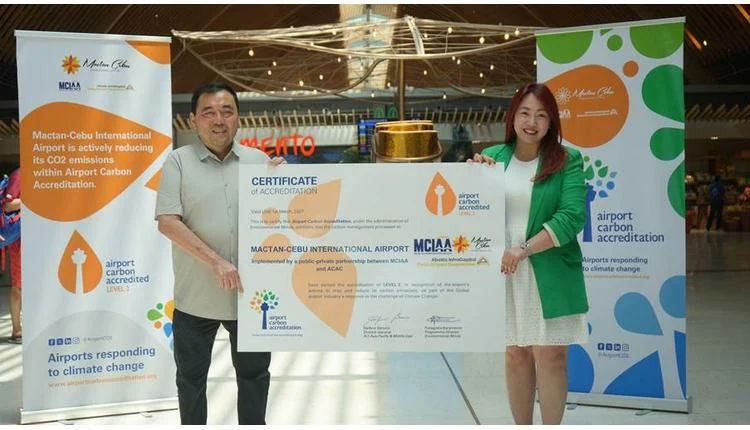
Mactan-Cebu International Airport (MCIA) has secured Level 2 Airport Carbon Accreditation from Airports Council International (ACI) Asia-Pacific and Middle East, making it the first and only airport in the Philippines to reach this tier. The certification underscores the airport's commitment to embedding sustainability into its daily operations and long-term strategy.
The Level 2 status recognizes MCIA's completion of a verified greenhouse gas inventory and the successful implementation of carbon management measures that have cut carbon intensity per traffic unit. The airport, operated by Aboitiz InfraCapital Cebu Airport Corporation (ACAC) in partnership with the Mactan-Cebu International Airport Authority (MCIAA), has been actively pursuing emission reductions across its facilities.
Key emission reduction initiatives
MCIA has rolled out a series of measures to lower its environmental footprint. These include upgrades to its building management system for better energy efficiency, the installation of a 1.64 MWp rooftop solar power system, and a full conversion to LED lighting across the terminal. These steps have contributed to a measurable decline in carbon intensity, a key metric for the accreditation.
Ricia Montejo, General Manager of ACAC, highlighted the significance of the achievement: "This ACA Level 2 validates that our team is making real, measurable progress in embedding sustainability into every aspect of our operations." Her remarks reflect the collaborative effort between the private operator and the government authority.
Julius G. Neri, Jr., CEO of MCIAA, added: "This achievement is a clear testament to what strong public-private synergy can deliver for sustainable infrastructure in the Philippines." The partnership model at MCIA has been a template for other airport developments in the region.
Ambitious carbon reduction targets
Under its updated Carbon Management Plan, MCIA aims to reduce Scope 1 and Scope 2 emission intensity by over 90% by 2029, with a long-term goal of achieving net-zero carbon emissions by 2050. The airport continues to invest in green infrastructure and innovative technologies, reinforcing its position as a leader in sustainable aviation in the Philippines.
The accreditation comes as airports worldwide ramp up their climate action efforts. For instance, Tower Bridge applies heat-blocking film to its walkways, a different kind of sustainability measure. In the aviation sector, Adelaide Airport rolls out Amadeus self-service to enhance passenger experience, while airport terminals shift from transit machines to human-centred spaces, reflecting broader industry trends.
MCIA's achievement also aligns with the growing emphasis on air-to-air transfers at Mactan-Cebu, which could improve connectivity and operational efficiency. As the airport continues to grow, its sustainability credentials will be a key differentiator for airlines and passengers alike.
The Level 2 accreditation is a significant milestone for the Philippines, positioning MCIA as a regional example of how airports can balance growth with environmental responsibility. With its clear roadmap and ongoing investments, MCIA is set to remain at the forefront of sustainable airport operations in Southeast Asia.