Mactan-Cebu International Airport (MCIA) served as the primary gateway for the 48th ASEAN Summit, handling arrivals of ministers, delegates, and heads of state through a coordinated effort between government agencies and private stakeholders. The airport's role underscores the growing capacity of Philippine aviation infrastructure to support major international gatherings.
Operational Preparations and Infrastructure Upgrades
In the lead-up to the summit, MCIA implemented several enhancements to ensure seamless passenger flow. These included ramp repainting, structural upgrades to terminal facilities, and refined coordination of arrival and departure procedures. The Department of Transportation (DOTr) and the Civil Aviation Authority of the Philippines (CAAP) worked closely with airport management to align operations with security and protocol requirements.
Among the high-profile arrivals were Singapore Prime Minister Lawrence Wong and Timor-Leste Prime Minister Xanana Gusmão, whose delegations were processed through dedicated lanes. The airport's ability to handle such VIP movements reflects its readiness for future conventions and large-scale events, a point emphasized by MCIA General Manager Ricia Montejo: "MCIA has proven it is fully equipped to serve as the premier gateway for future global conventions."
Public-Private Partnership in Action
The summit's success at MCIA highlights the value of public-private partnerships in airport management. CAAP Director General Retired Lt. Gen. Raul L. Del Rosario noted, "The successful preparations reflect the value of strong coordination between government agencies, airport authorities, and private sector partners." This model is increasingly relevant as airports across Asia seek to upgrade infrastructure without relying solely on public funding. For context, similar collaborative approaches are being explored at other Philippine gateways, such as Laguindingan Airport, where geopolitical impacts on tourism are under discussion.
Cultural Hospitality and Regional Positioning
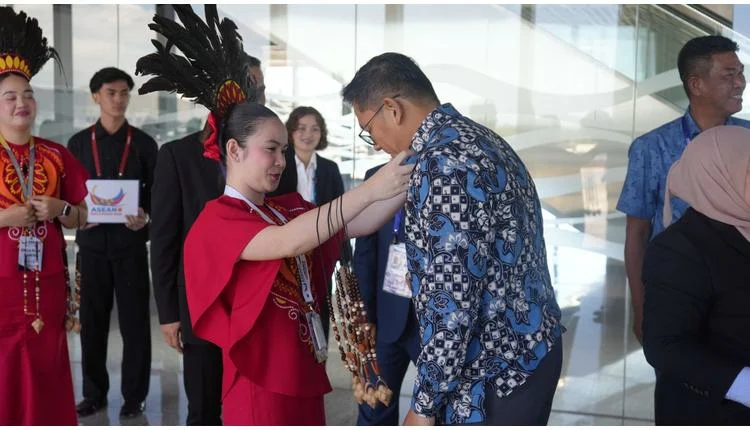
To welcome delegates, MCIA staged performances by Sinulog dancers and rondalla musicians, adding a distinctly Filipino cultural touch. This aligns with broader efforts by Philippine tourism authorities to position the country as a warm and capable host for MICE events. The airport's performance during the ASEAN Summit also strengthens Cebu's case as a hub for international conferences, complementing the country's growing appeal in the Southeast Asian visitor market, where infrastructure investments are yielding results.
For travel professionals, MCIA's successful handling of the summit signals that secondary gateways in the Philippines are maturing. The airport's ability to manage complex logistics—from VIP security to cultural programming—positions it as a viable alternative to Manila's Ninoy Aquino International Airport for both business and leisure traffic. As the region's aviation landscape evolves, airports like MCIA that demonstrate operational readiness for high-profile events will attract more airline partnerships and route development.