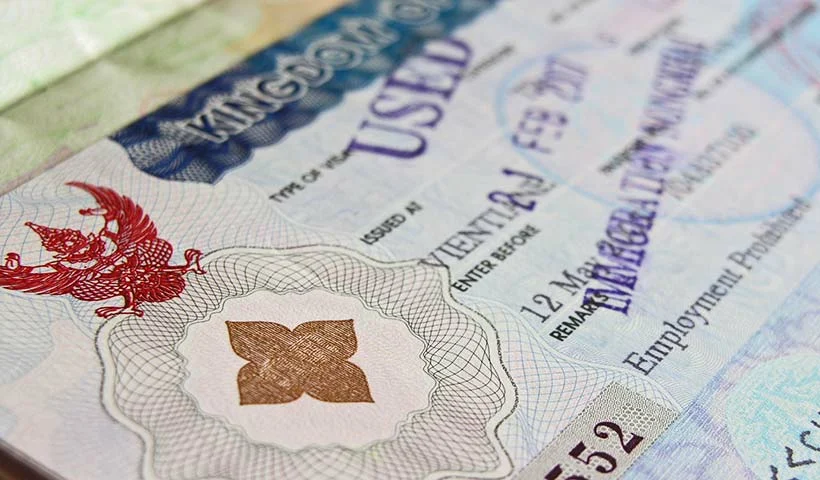
Thailand has announced a major revision to its visa-exemption policy, reducing the permitted stay for visa-free travellers from 60 days to 30 days. The new rules, published in the Royal Gazette on 31 August, will take effect on 15 September 2026 and apply to passport holders from 60 countries, including the United Kingdom, the United States, and Australia.
The move reverses the 60-day visa exemption introduced in July 2024, which had been welcomed by long-stay travellers and digital nomads. The Thai government cited considerations of national security, tourism management, and economic interests as the rationale for the rollback.
Impact on travellers and tour operators
For travel professionals, the change is significant. Backpackers, gap-year students, and those planning extended winter itineraries across Southeast Asia will now need to factor in visa extensions or alternative arrangements. Jurgen Himmelmann, co-founder and CEO of Global Work & Travel, highlighted the practical implications: "This is a significant change for anyone planning a longer trip to Thailand because 30 days can pass incredibly quickly when you're travelling."
Travellers who arrive before 15 September 2026 will not be affected and can stay for the duration stamped on their immigration entry. However, those entering on or after that date will need to explore visa options if they intend to remain beyond 30 days. The Royal Thai Embassy has indicated that the 30-day visa-exempt stay may be extended for an additional 30 days at the discretion of immigration officers, but this is not guaranteed.
Himmelmann advises travellers to review their plans: "If you've got a 35, 40, or 50-day Thailand trip booked for later this year, this is something I'd check now." Tour operators and travel agents should proactively inform clients with bookings that extend beyond the new limit.
Broader implications for the region
The reduction could also influence regional travel patterns. Thailand has long been a hub for multi-country backpacking routes, and a shorter visa-free window may push some travellers to redistribute their time across neighbouring destinations such as Vietnam, Cambodia, or Laos. For airlines and hotels, the change could affect demand for extended stays, particularly in popular resort areas like Phuket, Koh Samui, and Chiang Mai.
Thailand's tourism industry has been recovering strongly, with record arrivals in recent years. The government's decision to tighten visa rules suggests a shift towards higher-value tourism, prioritising quality over quantity. This aligns with other initiatives, such as the development of a unified national tourism hub and the upcoming remote baggage check system.
For the luxury segment, the change may have limited impact, as high-end travellers often hold longer-stay visas or use premium services. However, mid-market and budget operators should prepare for increased demand for visa extensions and alternative routing.
Travel advisors are urged to monitor official Thai guidance and communicate clearly with clients. As Himmelmann notes, "The key is to plan ahead and understand the new rules before you travel." With the effective date still months away, there is time for the industry to adapt, but early communication is essential.